
Attic Insulation: Repair or Replace? How Los Angeles Homeowners Decide
Most attics don’t need a full replacement. They need a surgical repair. But you’d never know that from the way some contractors quote the job, because replacement pays more. Here’s the honest framework: repair is the right call when damage is localized and the material still holds its R-value. Replacement is required when contamination runs through the entire attic, fire or smoke has compromised the material, or moisture saturation has destroyed the insulation’s structure. If you’d rather not climb up there yourself, call (254) 272-5876 and we’ll give you a written answer.
We’ve pulled enough insulation out of Los Angeles attics to know the real score. In neighborhoods like Sherman Oaks, Westchester, and Eagle Rock, the decision usually comes down to three things: what the material is, where the damage sits, and what your R-value actually is today. Not what it was in 1987.
The Three Conditions That Objectively Require Full Replacement
Not every stained batt is a lost cause. But three conditions leave no room for debate. If you hit any of these, repair is a waste of money, and any contractor who says otherwise is doing you a disservice.
Rodent contamination throughout the material. If rats or squirrels have nested across the attic, their droppings and urine don’t just smell. They carry hantavirus, salmonella, and leptospirosis. Spot cleaning can’t reach what’s soaked into the fiberglass or cellulose. In Los Angeles, roof rats are a year-round problem, not a seasonal one. They get in through vents, eaves, and gaps around plumbing stacks. By the time you notice the scratching, the insulation is usually compromised across a wide area. Full removal and replacement is the only safe answer. We use products from Owens Corning and GreenFiber on replacement jobs, and our technicians wear full PPE during removal. You should not be the one pulling that material out by hand.
Fire or smoke damage. Los Angeles homeowners know this better than most after recent wildfire seasons. Even a small attic fire that was contained quickly leaves smoke residue that penetrates insulation fibers. That residue releases volatile organic compounds for months afterward. You can’t wash fiberglass. You can’t vacuum smoke out of cellulose. If the material smells like a campfire or carries soot staining, it goes.
Moisture saturation that has collapsed the material. Blown-in cellulose and fiberglass lose their loft when wet. A leak that ran for weeks before anyone noticed turns insulation into a matted, compressed layer that holds almost no insulating value. It also breeds mold and draws termites, which are a constant pressure in the Los Angeles basin. If the material feels damp to the touch, clumps when squeezed, or has visible mold growth, replacement is not optional. It’s a health and structure issue.
When Partial Repair Is the Right Call
Here’s where good contractors and bad contractors separate. A localized problem does not require a gut job.
Localized damage from a roof penetration. Say a plumbing vent boot failed over a hallway bath. Water came through, soaked a three-foot circle of batts, and the roof is now fixed. That damaged section gets removed, the decking dries out, and new batts go in. The rest of the attic is untouched. This is a repair, and it should cost a fraction of a full replacement. In our experience across Los Angeles, this is the most common scenario we see. The roof leak is fixed in a day. The insulation damage is a small circle. But some contractors will quote the entire attic anyway.
A single displaced batt or blown-in section. Wind, a previous contractor, or an overzealous homeowner in the attic can shift batts out of place. A single displaced section creates a thermal hole: heat pours through it in summer, and cold air finds it in winter. Fixing it means reseating the batt or topping up a thin area with additional blown-in material. We install Johns Manville and Knauf products and can match existing material closely enough that you’d never spot the patch.
Air sealing failures without material degradation. Sometimes the insulation is fine and the problem is air leakage around recessed lights, attic hatches, or partition walls. That calls for air sealing, not insulation replacement. We’ve gone into Los Angeles homes where the homeowner was quoted $8,000 for new insulation when the actual fix was $600 of sealing and a top-up. Those two situations look similar to an untrained eye. They are not the same job.
How to Measure Your Current R-Value Yourself
You don’t need specialized equipment to check whether your attic insulation still does its job. You need a ruler, a flashlight, and a depth chart. Here’s the method.
First, identify your material. Fiberglass batts are pink, yellow, or white rectangles. Blown-in fiberglass looks like loose, fluffy cotton. Cellulose looks like gray, shredded newspaper. Rockwool is dense and darker, usually gray-brown. The material matters because the R-value per inch varies.
Use these numbers:
- Fiberglass batts: roughly R-3.2 per inch
- Blown-in fiberglass: roughly R-2.5 per inch
- Blown-in cellulose: roughly R-3.4 per inch
- Rockwool: roughly R-3.3 per inch
Measure the depth in three or four places across the attic and average them. Multiply that average depth by the R-value per inch. That’s your current total R-value.
Under California’s Title 24 energy code, new attics in Los Angeles are required to meet R-30 in most cases, and many efficiency programs push R-38 or higher. If your measurement comes back at R-11, you’re running about a third of what code expects. That’s a replacement-and-top-up situation, not a repair. If you’re at R-30 and the only issue is one wet corner, repair makes sense. The number tells you the answer. We give every homeowner we visit in Los Angeles a written summary of the measured R-value before and after the job. You should expect that from anyone you hire.
The Cost Math: Repair vs. Replacement Over Five Years
Los Angeles doesn’t have brutal winters, so the energy savings from insulation are different here than in Minneapolis. The big cost driver in LA is summer cooling. An attic that hits 140 degrees in August pushes heat down into the living space, and your air conditioner runs longer to fight it.
Here’s the rough math we use when homeowners in Los Angeles ask us to compare options.
- Partial repair (localized damage): $400 – $1,200 depending on material match and attic access.
- Top-up to R-38 from R-19 across a 1,200 sq. ft. attic: $1,500 – $2,800 for blown-in fiberglass or cellulose.
- Full removal and replacement with air sealing: $3,500 – $7,500 depending on square footage, contamination level, and R-value target.
The energy savings from going from R-19 to R-38 in a typical Los Angeles home with central air is usually $180 – $350 per year at current SCE and LADWP rates. That means the top-up pays for itself in five to eight years, while the repair pays for itself in one to three. The full replacement has a longer payback on energy alone, but it also eliminates contaminants, improves indoor air quality, and protects the home’s structure. Those benefits don’t show up on a utility bill, but they’re real.
When a repair is genuinely sufficient, and a contractor quotes full replacement anyway, the extra $4,000 they’re asking for buys you nothing measurable. That’s the conversation we have with homeowners in Los Angeles every week. Sometimes replacement is right. Sometimes it’s not. The number tells you which.
How to Get a Written Scope That Forces Honest Bidding
There’s a simple way to separate honest contractors from upsellers. Ask for a written scope of work that specifies exactly what gets removed, what stays, and why.
A legitimate scope looks like this: “Remove and dispose of approximately 400 sq. ft. of water-damaged fiberglass batts in the northeast corner of the attic. Install new R-38 faced batts (Johns Manville) in that area. Leave remaining 800 sq. ft. of existing R-30 blown-in fiberglass untouched. Air seal top plates at 6 locations.”
A vague scope looks like this: “Insulation replacement, full attic, includes labor and materials.”
The first one lets you compare bids line by line. The second one lets the contractor charge you for work they may never do. We write scopes the first way. Every job we do in Los Angeles comes with a written price before work starts, and the number on the invoice matches the number you approved. No surprises, no “we found something extra.” The Garrison Standard exists for exactly this reason: you know what you’re paying for before a tool comes off the truck.
When to Call a Pro
Insulation work sits in a strange middle ground. It’s not as dangerous as electrical or roofing, but it’s not as forgiving as painting a wall either. Here’s where we tell Los Angeles homeowners to stop the DIY and call someone trained.
Any rodent or pest contamination. As we said above, you do not want to handle that material. Hantavirus is a real risk in Los Angeles County. Professionals with PPE, containment, and proper disposal are the only safe route.
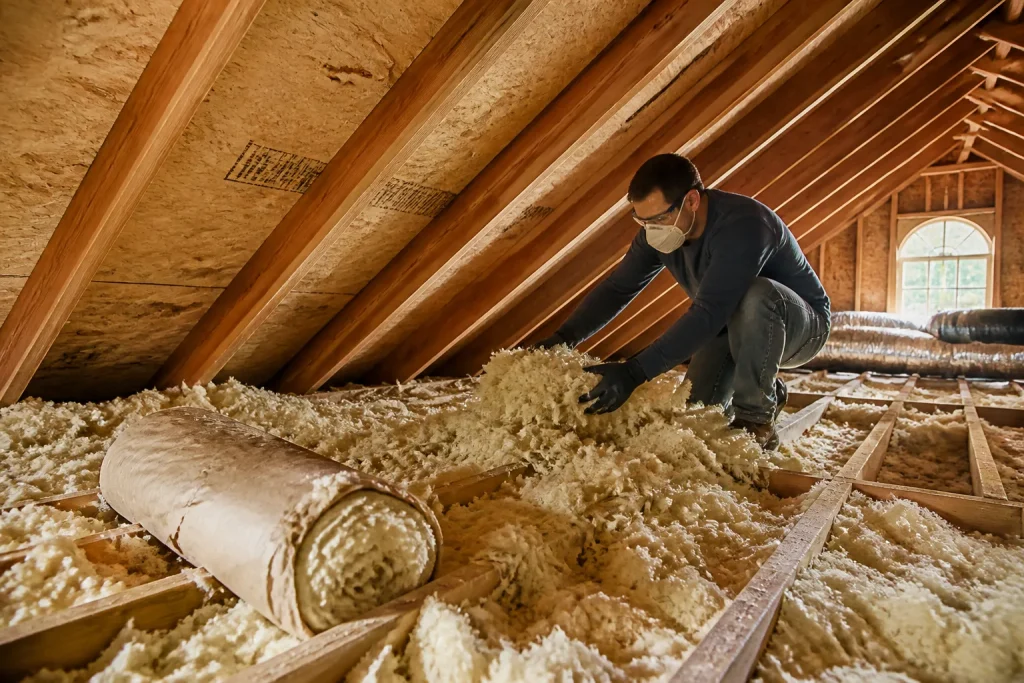
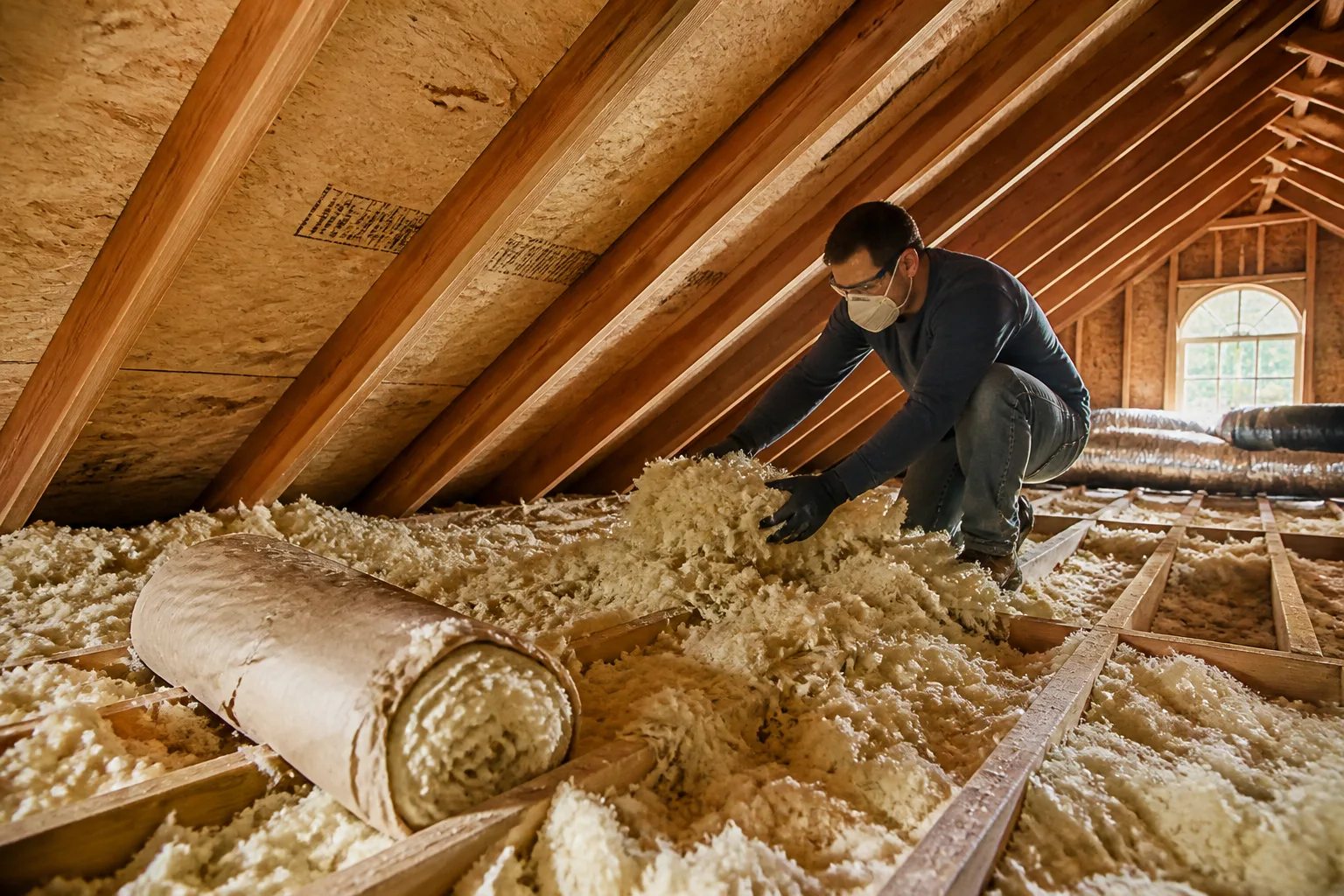
Blown-in removal. Pulling out loose fill requires a commercial vacuum. You can rent one, but the dust is significant, and without proper filtration you’re spreading fiberglass particles through the house. We run HEPA-filtered removal equipment and contain the work area before we start.
Moisture-driven mold. If you suspect mold, don’t disturb it. Disturbing mold releases spores. A trained eye can tell you whether the material needs full removal or whether the mold is surface-level and treatable.
Anything involving knee walls or sloped ceilings. Attics in older Los Angeles homes, especially in areas like Hancock Park or Pasadena built in the 1920s and 30s, often have irregular framing and tight access. Working around old knob-and-tube wiring or unvented roof assemblies requires someone who’s seen it before.
If you’re not sure which category your attic falls into, call us. A phone call with a live person costs nothing, and you’ll get a straight answer about whether you need a repair, a top-up, or a full replacement. We answer 24/7 at (254) 272-5876.
The Bottom Line
Here’s the decision matrix in plain terms. Localized damage, no contamination, solid R-value: repair. Low R-value across the whole attic: top-up. Rodent contamination, smoke damage, or saturated material: full replacement. The measurement tells you the answer, and a written scope forces honest pricing.
If you’re in Los Angeles and want a second opinion backed by measurements and a written price, Alden Attic Insulation home is a good place to start. We’ve been doing this, we’re independent, and every job is covered by the Done Right Promise: if it fails within a year, we come back and fix it at no charge. Call (254) 272-5876 for a free estimate. A real person answers.
Related services in Los Angeles: Attic Insulation in Los Angeles, Blown In Insulation in Los Angeles, and Insulation Removal in Los Angeles.
Frequently Asked Questions
Repair is almost always cheaper. A localized repair runs $400 – $1,200, while full removal and replacement typically costs $3,500 – $7,500 in the Los Angeles market. Repair makes sense when damage is contained and the rest of the material still holds adequate R-value. Call (254) 272-5876 for a written estimate.
Measure the depth with a ruler and multiply by the R-value per inch of your material type. If the result is below R-19, you’re significantly under-insulated by Title 24 standards for Los Angeles. Also check for dampness, rodent droppings, matted or compressed areas, and any smoke smell.
Yes, as long as the existing material is dry, uncontaminated, and not moldy. Blown-in fiberglass or cellulose can be added directly on top of older material to reach R-38 or higher. This is often the smartest money a Los Angeles homeowner can spend on attic efficiency.
It depends on the cause. Insurance typically covers insulation damaged by sudden, covered events like a roof leak from wind damage or a fire. It generally does not cover gradual deterioration, rodent contamination, or age-related settling. Check your policy before assuming coverage.
Written by the team at Alden Attic Insulation.
Need Insulation Help?
Call Alden Attic Insulation - licensed & insured, here with fast after-hours help in Los Angeles.
(254) 272-5876