
Icynene Attic Insulation in Los Angeles: A Homeowner’s Guide
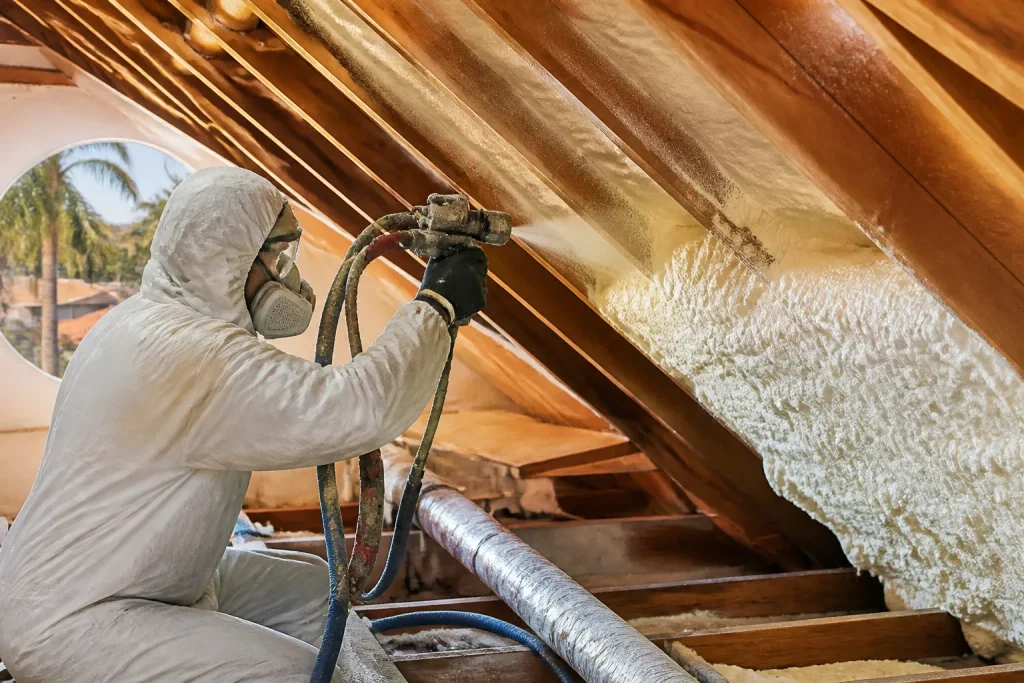
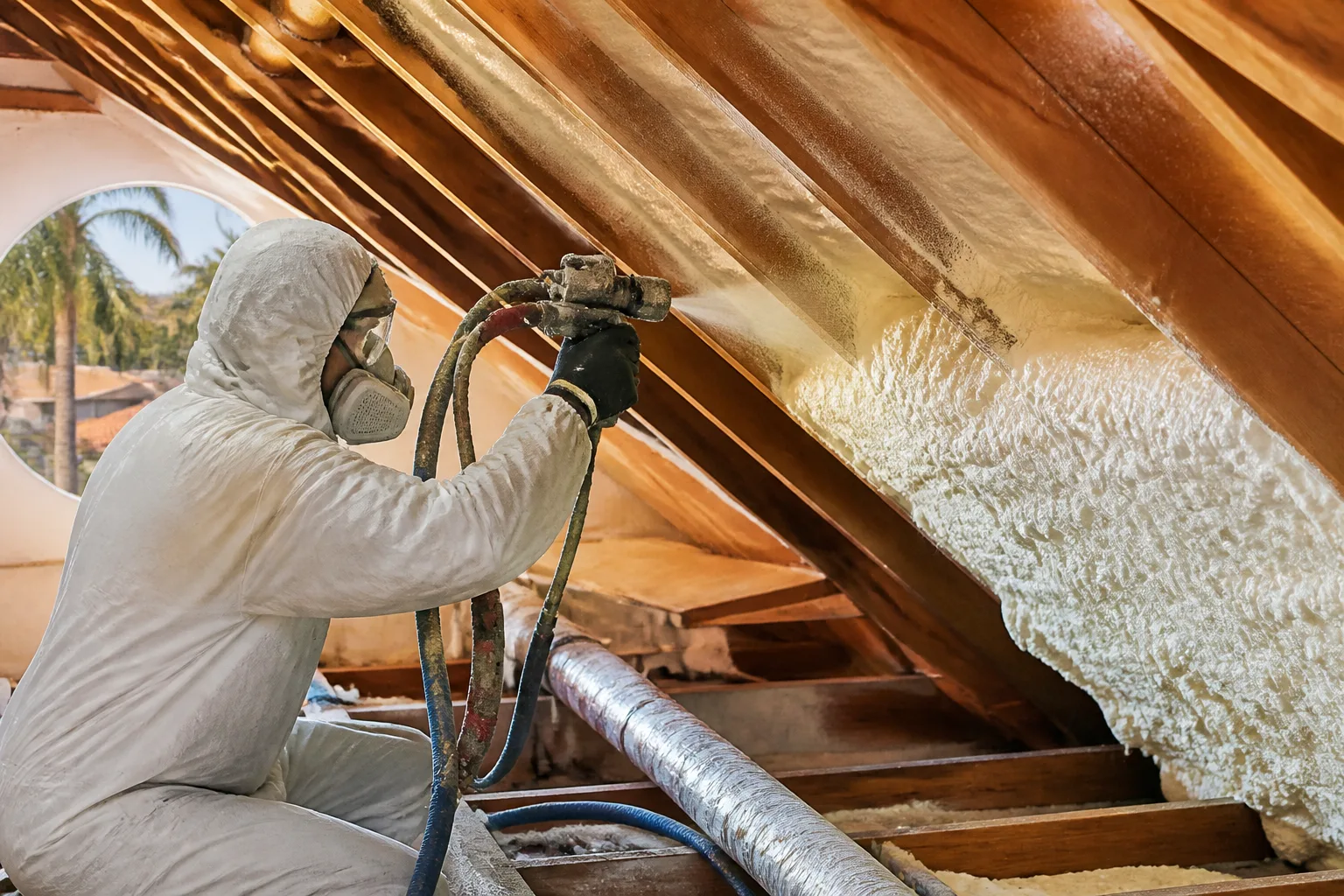
Icynene is a brand, not a product category. It makes both open-cell and closed-cell spray foam, and those two materials behave so differently in a Los Angeles attic that they’re practically separate decisions. Most LA homeowners don’t get that distinction explained before they sign a contract, and choosing the wrong type costs thousands in either unnecessary spending or underperformance. Here’s what you actually need to know before anyone puts a spray rig in your attic.
What Icynene Actually Is (And What It Isn’t)
Icynene is a Canadian manufacturer of spray polyurethane foam insulation. The company was acquired by Huntsman in the late 2010s, but the brand remains on trucks and quotes throughout Los Angeles. When a contractor says “we install Icynene,” they’re telling you the brand of the foam, not which kind of foam it is. That matters because Icynene makes open-cell foam (typically their Classic line) and closed-cell foam (their ProSeal line), and they serve different purposes in an LA attic.
Open-cell foam is soft and spongy, with an R-value around 3.5 to 3.8 per inch. It expands aggressively, fills irregular cavities, and does a solid job of air sealing. Closed-cell foam is rigid and dense, with an R-value near 6.5 to 7 per inch. Closed-cell also acts as a vapor barrier and adds structural rigidity to wall assemblies. Open-cell does neither. In a Los Angeles attic, that difference determines whether you’re getting an appropriate retrofit or an overpriced one.
We’ve seen this confusion play out across Los Angeles neighborhoods. A homeowner in Silver Lake gets quoted $8,000 for closed-cell foam in a vented attic that would perform fine with open-cell at half the material cost, simply because the salesperson led with “premium.” That’s not expertise, it’s upselling. We install Icynene products alongside brands like Knauf and CertainTeed, and we’ll tell you plainly when open-cell is the right call and when closed-cell actually earns its price. For more on how material choice fits into a full attic job, see our guide on Attic Insulation in Los Angeles.
Open-Cell vs. Closed-Cell Icynene in an LA Attic
Los Angeles sits in Climate Zone 3, which means our attics fight heat more than cold. The standard for attic insulation here is R-30 to R-38, and the California Energy Commission expects that number to be real, installed thickness, not optimistic marketing. Open-cell Icynene hits R-38 at roughly 10 to 11 inches of foam. Closed-cell hits it at just under 6 inches. That thickness difference changes how much foam you buy, how much you spend, and whether the install is a one-day job or a two-day one.
For most LA homes, open-cell Icynene in the attic roofline is sufficient and, frankly, the smarter spend. The foam air-seals the attic, which is the primary benefit in a climate where temperature swings are moderate but air leaks drive energy bills. Open-cell’s lower R-value per inch is fully compensated by its ability to stop air movement. The Department of Energy recognizes air sealing as a significant component of attic performance, and in Los Angeles, where we rarely see sustained freezing temperatures, open-cell’s air-sealing capability does the heavy lifting.
Closed-cell Icynene becomes the right answer when the attic has specific conditions. Homes within a few miles of the coast in Playa del Rey or Marina del Rey deal with persistent marine-layer moisture, and closed-cell’s vapor barrier function prevents that moisture from condensing inside the roof deck. Homes with unvented cathedral ceilings also benefit from closed-cell’s rigidity and higher R-value per inch, since rafters only offer so much depth. And if the roof deck has existing water damage or the homeowner plans to finish the attic as living space, closed-cell provides a moisture barrier that open-cell cannot. If your existing insulation needs to come out before spray foam goes in, we handle that too. See Insulation Removal in Los Angeles for how we approach it.
Ventilation Changes With Spray Foam (And Why Contractors Skip It)
Traditional attics in Los Angeles are vented. Soffit vents pull air in, ridge vents let it out, and the attic stays close to outside temperature. Spray foam changes that arrangement completely. When you insulate at the roofline with Icynene, the attic becomes a conditioned or semi-conditioned space, and the ventilation strategy has to change with it. The attic is now inside the thermal envelope of the house.
What this means in practice: soffit vents and ridge vents should be sealed or made irrelevant in a spray foam attic. Leaving them open introduces outside air into a space that’s now meant to be controlled, and that outside air carries moisture. In Los Angeles, where nighttime temperatures can drop 30 degrees from daytime highs, that moisture condenses on the underside of the roof deck. Over time, you get mold, rotted sheathing, and a failed roof. The spray foam didn’t fail. The ventilation design did, because nobody bothered to change it.
We pulled insulation out of a house in Eagle Rock last year where the previous contractor sprayed the roofline and left the gable vents untouched. The homeowner reported “musty smell” that turned out to be condensation on the roof deck, hidden behind foam. Fixing it required removing sections of foam, drying the deck, and re-insulating correctly. That job cost more than the original install. A proper Icynene attic job in Los Angeles includes addressing ventilation with the same care as the foam application itself.
When to call a pro: spray foam is not a weekend project. The two-part chemical mixture requires precise temperature control at the gun, the foam expands rapidly and can overfill cavities, and the exothermic reaction during curing generates heat that can damage framing if applied too thick in one pass. More importantly, the chemicals are hazardous before they cure. If you’re considering Icynene in your Los Angeles attic, get a contractor who can document their equipment calibration and their pass thickness. That’s not paperwork for paperwork’s sake, it’s the only way to verify the R-value you paid for.
Title 24 and Los Angeles Compliance for Spray Foam
California’s Title 24 energy code sets mandatory insulation requirements for any attic work, and Los Angeles enforces it during permitted inspections. For spray foam specifically, Title 24 requires that the installed R-value be verified. With fiberglass batts or blown-in insulation, R-value is pretty straightforward: you read the label and you measure the depth. Spray foam complicates this because the R-value depends on how thick each pass was applied and how consistently the foam cured.
Icynene open-cell foam in a Los Angeles attic needs to hit R-30 minimum for most retrofit situations, and that means roughly 8 to 9 inches of foam. Some LA jurisdictions and some rebate programs want R-38, which pushes the required thickness to 10 to 11 inches. Closed-cell Icynene needs less physical depth, but it must still meet the same total R-value. A contractor who says “oh, spray foam doesn’t need as much” without quoting the specific climate-zone requirement is guessing, and their guess won’t hold up when the inspector checks.
Title 24 compliance with spray foam also means the installer has to run through a quality insulation installation (QII) process, which includes third-party verification in many LA building departments. QII isn’t optional for most permitted work in Los Angeles, and spray foam installs get scrutinized more closely because the inspector can’t see through the foam to confirm what’s behind it. That’s another reason the written documentation matters. If a quote for Icynene in Los Angeles doesn’t itemize thickness, total R-value, and QII verification, you don’t have a real quote yet.
If you’re weighing spray foam against other materials for your home, our guide to Blown In Insulation in Los Angeles covers the alternative that most LA attics actually end up using, and why it’s often the better first move.
What a Legitimate Icynene Quote in Los Angeles Should Itemize
Most spray foam quotes in Los Angeles are astonishingly thin. A one-line description like “spray foam attic, R-38” tells you nothing about what you’re buying, and that thinness is where bad contractors hide. A quote from Alden Attic Insulation itemizes the following, and you should expect any legitimate quote for Icynene in Los Angeles to do the same:
- Specific product line: Icynene Classic (open-cell) vs. Icynene ProSeal (closed-cell) or the exact equivalent from another manufacturer like Rockwool for batts. If the quote just says “Icynene,” ask which line.
- Thickness per pass: Spray foam is applied in passes, typically 1 to 2 inches per pass, with cure time between coats. The quote should state pass thickness, because that determines whether the final R-value claim is achievable.
- Total R-value achieved: Not “up to R-38.” A real number, verified after installation by depth markers and, where required, third-party inspection.
- Cure time before re-entry: Spray foam off-gases during and shortly after application. The quote should state how many hours you need to stay out of the house, typically 24 hours, sometimes longer for closed-cell.
- Ventilation scope: What happens to existing soffit vents, ridge vents, and gable vents. This line item is absent from most quotes, and its absence is the single biggest warning sign.
At Alden Attic Insulation home, we’re part of the Garrison Partners family, which has operated under The Garrison Standard. That standard means the written price is in your hand before any equipment comes off the truck, and the crew that shows up is background-checked, uniformed, and arrives inside the window they committed to. For Icynene work specifically, we’ve found that homeowners in Los Angeles who see a fully itemized quote are the ones who end up satisfied with the result. The ones who get a one-liner are the ones who call us later to fix it.
Resale and Home Inspection Reality for Spray Foam Los Angeles Attics
Spray foam in an attic is a material fact, and in a Los Angeles real estate transaction, material facts get disclosed. That’s true whether you’re selling a home in Sherman Oaks or buying one in Highland Park. The disclosure itself isn’t a problem. The problem arises when the spray foam install wasn’t permitted, wasn’t documented, or wasn’t installed to the thickness the seller’s listing claims. All three happen regularly in this market.
Home inspectors in Los Angeles increasingly flag spray foam attics for three reasons. First, an unpermitted spray foam job can hide roof deck damage, because the foam adheres tightly to the sheathing and makes visual roof inspection nearly impossible without destructive testing. Second, a closed-cell foam attic that wasn’t properly ventilated can trap moisture against the deck, and inspectors know to look for staining around roof penetrations. Third, a home that claims “R-38 attic insulation” with no third-party verification of the foam’s thickness is a red flag for the lender’s appraiser.
If you’re installing Icynene in a Los Angeles home you plan to sell within five years, the smart move is to pull the permit, keep the documentation, and file the completion card. Buyers in this market have gotten more diligent about insulation inspection, and a documented spray foam install is a selling point, not a liability. An undocumented one is a negotiation concession. We regularly get calls from LA homeowners who just bought a house with spray foam in the attic and can’t find any records for it. The conversation they had with their agent never mentioned that the foam’s warranty doesn’t transfer without installation documentation.
Most attic insulation projects in Los Angeles run $4,500 to $12,000 depending on square footage, current R-value, and whether removal is required first. Spray foam sits at the higher end of that range. Batts and blown-in alternatives like CertainTeed fiberglass or Knauf products run lower. The difference is often justified when air sealing is the priority, but it’s only justified when the right foam goes in with the right ventilation plan behind it.
The Bottom Line
Icynene in a Los Angeles attic is a genuine upgrade when open-cell foam is applied at the roofline, the ventilation is redesigned for a conditioned attic, and the installed R-value is documented. Closed-cell Icynene has its place in coastal homes and unvented cathedral ceilings, but it’s overkill for most standard LA attics, and paying for it without a moisture or space reason is wasted money. The single most important question you can ask any contractor quoting Icynene in Los Angeles is not “how much per board foot” but “what happens to my soffit vents.” If they don’t have a clear answer, keep looking.
If you’re in Los Angeles and want a straight answer about what your attic actually needs, Alden Attic Insulation offers free estimates with a written price before any work starts. Call (254) 272-5876 and we’ll send a technician who can explain the difference between open-cell and closed-cell Icynene in ten minutes, without a slide deck.
Frequently Asked Questions
Cured Icynene foam is inert and does not off-gas under normal attic conditions. The safety consideration is during application and the 24-hour cure window, when the two-part chemical reaction is still completing. Stay out of the house during that period, and confirm with your installer that they’re following the manufacturer’s cure time for Los Angeles temperature conditions.
Open-cell Icynene needs roughly 10 to 11 inches to hit R-38, which is the target for most Los Angeles attic retrofits. Closed-cell Icynene hits R-38 at around 6 inches. The exact requirement depends on your climate zone and whether the attic is vented or unvented. A legitimate quote will state the thickness per pass and the total R-value, not just the product name.
In a Los Angeles home, spray foam at the roofline creates a tighter thermal envelope, but “too tight” is rare in existing construction. Most LA houses have enough incidental air leakage through walls, windows, and doors that a sealed attic won’t create indoor air quality problems. If you’re doing a whole-house gut renovation with foam everywhere, that’s the one scenario where mechanical ventilation should be part of the plan.
Icynene on the attic floor of a vented attic is a poor use of the material. Spray foam’s primary benefit is air sealing, and that benefit comes from sealing the building envelope at the roofline. If you’re insulating the floor of a vented attic, blown-in fiberglass or cellulose gives you the same R-value for far less money. Spray foam belongs at the roofline, and that install requires the attic to become unconditioned or semi-conditioned space with a revised ventilation strategy.
Written by the team at Alden Attic Insulation.
Need Insulation Help?
Call Alden Attic Insulation - licensed & insured, here with fast after-hours help in Los Angeles.
(254) 272-5876