
GreenFiber Attic Insulation in Los Angeles: A Homeowner’s Guide
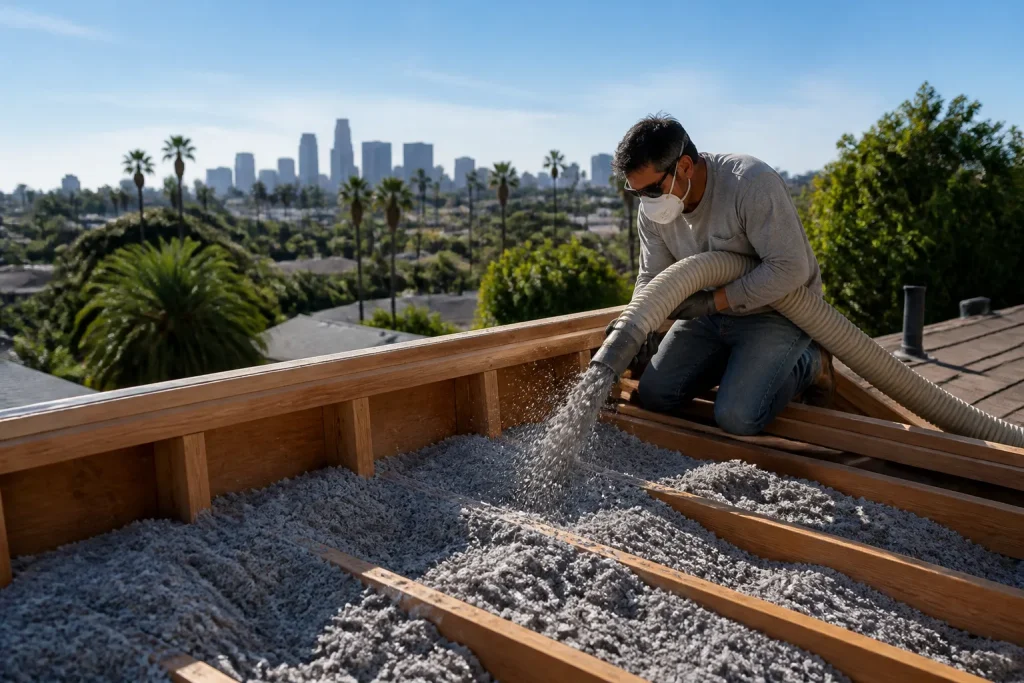
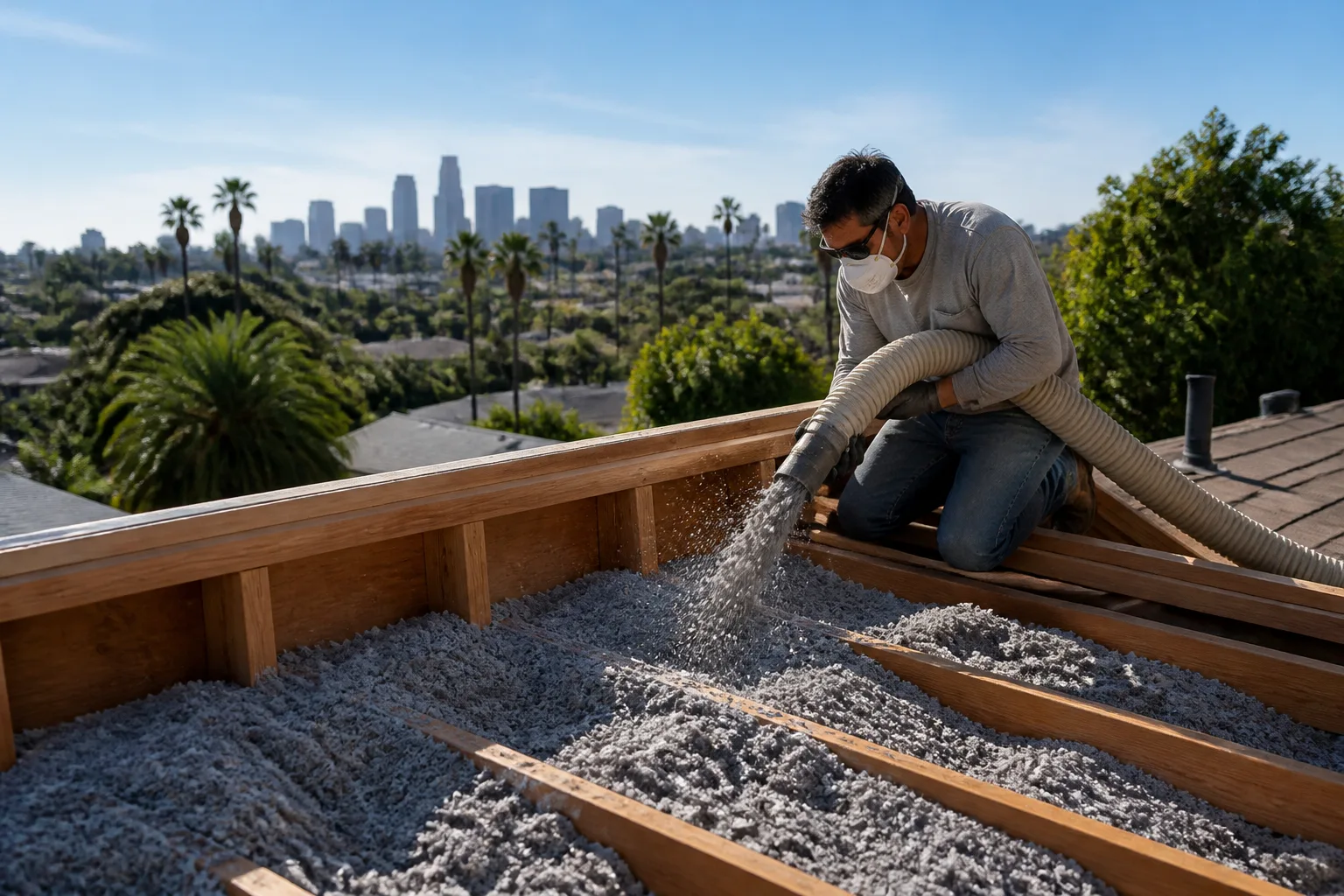
GreenFiber attic insulation in Los Angeles is a blown-in cellulose product made from 85% recycled paper fiber, and it typically runs $1.40 to $2.10 per square foot installed, depending on the R-value you’re targeting and the condition of your existing attic. The spec that actually matters on your invoice isn’t the depth in inches; it’s the settled R-value the contractor puts in writing. If you’d rather not sort through density charts and bag counts, call (254) 272-5876 and we’ll give you a free estimate with the settled R-value written on it.
GreenFiber sounds like a compromise because it starts as newsprint. It isn’t. But the installation spec on your invoice will tell you whether the crew treated it like one. We’ve walked into Los Angeles attics where a contractor blew the material in light to hit a depth number, and the homeowner paid full price for what settled into roughly R-25. You need to know what you’re actually buying before the blower hose comes off the truck.
The Cost of GreenFiber Attic Insulation in Los Angeles
Most GreenFiber attic insulation projects in Los Angeles run between $1,800 and $4,600 for a typical 1,200 to 2,000 square foot attic brought up to R-38. The spread depends on whether the attic is empty, partially insulated, or needs the old material pulled first. Here’s how the numbers break down:
- Blown-in GreenFiber to R-38 over bare attic: $1.40 – $1.80 per square foot
- Topping off existing insulation to R-38: $0.90 – $1.30 per square foot
- Full removal of old insulation plus GreenFiber install: $2.80 – $4.10 per square foot
- Air sealing before blowing (attic floor penetrations): $400 – $900 for a typical LA home
GreenFiber publishes a settled R-value of 3.7 per inch. That means R-38 requires about 10.3 inches of settled material, not 10.3 inches of fluffed material the day it’s blown. Blown cellulose loses 15 to 20 percent of its height as it settles in the first few months. A competent crew calculates the installed depth to account for that, so the settled depth lands where the R-value says it should. This is the single most common place Los Angeles installers cut corners, because it’s invisible to the homeowner and only shows up on the first hot August electric bill.
Compare that to Owens Corning blown fiberglass, which carries a settled R-value of about 2.2 to 2.7 per inch depending on the product. You need noticeably more inches of fiberglass to reach the same R-value. That’s one reason cellulose performs well in tight attic spaces where rafter depth limits how much material you can pile in. It’s also why we work with GreenFiber and Johns Manville products alongside fiberglass options; different attics call for different materials, and the spec should drive the choice.
Why Cellulose Handles LA Heat Differently Than Fiberglass
Los Angeles has a diurnal temperature swing most insulation guides ignore. Summer days push attic temperatures past 140 degrees; overnight, that same attic drops into the 60s. The insulation isn’t just resisting heat transfer; it’s cycling through thermal expansion and contraction every single day for years.
Cellulose has real thermal mass. Dense-packed cellulose stores heat during the day and releases it slowly overnight, which evens out the temperature curve inside the attic. Fiberglass batts don’t do this; they resist heat transfer but don’t store or buffer it. In practical terms, a GreenFiber-insulated attic in a Los Angeles summer tends to hit lower peak temperatures than a fiberglass-batt attic of the same R-value, because the cellulose is absorbing some of that radiant heat before it reaches the living space.
There’s a second factor: air movement. Fiberglass batts lose R-value when air moves through them. The USDA Forest Products Lab has documented R-value drops of 30 percent or more in fiberglass at temperature differences as small as 20 degrees, because natural convection loops form inside the batt. Cellulose, denser and more fibrous, resists this. For a city like Los Angeles where overnight lows in the coastal zones can be 25 degrees below daytime highs, that convective loss is not a rounding error; it’s a measurable efficiency leak.
The one spec that unlocks all of this is density. GreenFiber should be installed at a settled density somewhere around 1.5 to 2.2 pounds per cubic foot for attic floor applications. Below that, you lose the air-blocking and thermal-mass benefits and you’re just paying for fluff. If your contractor cannot tell you the settled density or settled R-value in writing, you don’t have a spec; you have a hope.
What California Title 24 Requires for Los Angeles Attics
California’s Title 24 building energy standards set the minimum attic insulation for new construction and major remodels in Los Angeles at R-30 for climate zones 6 and 8, which cover most of the LA Basin. For zones with hotter inland summers, like parts of the San Fernando Valley, R-38 is the better real-world target even when code technically allows R-30.
Here’s what that looks like in GreenFiber:
- R-30: about 8.1 inches settled cellulose
- R-38: about 10.3 inches settled cellulose
- R-49: about 13.2 inches settled cellulose, overkill for most LA homes unless you’re in a zone with real winter heating demand
Most Los Angeles homes built before the mid-1980s have R-11 to R-19 in the attic, if they have anything at all. That’s a fraction of the Title 24 minimum. Bringing an older home up to R-38 with GreenFiber is typically the highest-return energy upgrade a homeowner can make, ahead of new windows and ahead of a new HVAC system, measured in dollars saved per dollar spent. We’ve seen summer electric bills in Los Angeles drop 20 to 28 percent after a proper R-38 cellulose install, though every home differs.
How to Check Your Contractor’s Math: Bag Counts and Coverage
GreenFiber is delivered in compressed bags. A standard 25-pound bag of GreenFiber loose-fill attic insulation covers roughly 40 to 45 square feet at R-30 settled, or about 30 to 34 square feet at R-38 settled. So for a 1,500 square foot attic at R-38, you should see somewhere around 44 to 50 bags go through the machine.
This is a rough cross-check, not a contract term, but it catches the worst abuses. If a crew shows up with 22 bags for a 1,500 square foot attic at R-38, you know the number won’t hold. Either they’re planning to blow it thin, or they’ve got another job afterward and your material is getting split.
The other spec worth putting in writing: after the install is complete, the depth should be uniform within half an inch, and the material should be flat, not mounded in peaks and valleys. Peaks settle into valleys. A crew that blows it flat and then adds a small amount of overfill for settling is doing the job by the book.
We pulled a job last year in Eagle Rock where the previous contractor had blown cellulose at roughly R-19 across 1,400 square feet and written “R-38” on the invoice. The homeowner counted twelve bags. For R-38, that attic needed thirty-three. That’s not a minor discrepancy; that’s someone selling half a job at full price. When to call a pro: if you can’t verify the spec because the contractor won’t give you a settled R-value in writing, that’s your answer. Walk away and call someone who will.
Moisture, Roof Leaks, and the Limits of Cellulose
Cellulose absorbs and releases moisture without failing. The borate treatment in GreenFiber isn’t just fire retardant; it also makes the material resistant to mold and fungal growth. Minor humidity swings from Los Angeles marine air won’t degrade it. A one-time drip from a punctured pipe won’t ruin it the way it ruins fiberglass, which mats down and loses R-value permanently once it’s been wet.
The place where that tolerance runs out is an active roof leak. Standing water on cellulose, day after day, will eventually overwhelm the borate treatment and compromise the material. Not in a week. But a roof leak that’s been dripping for six months will turn a section of your attic insulation into a soggy mat that needs pulling and replacement. The fix is not to avoid cellulose; it’s to fix the roof before you insulate. If your roof has a known leak, we’d rather see you repair it first and insulate second. Insulating over a failing roof is spending money twice.
One related note: if you’re replacing old insulation in Los Angeles, the removal matters as much as the install. Older attics sometimes contain vermiculite or degraded fiberglass that should come out before new material goes in. Our Insulation Removal in Los Angeles service handles that, and we’ll tell you honestly whether your existing insulation can be topped off or should be pulled. Not every attic needs full removal, and we don’t sell it unless it’s actually warranted.
The Bottom Line
GreenFiber is a strong fit for Los Angeles attics because it buffers the city’s daily heat cycles better than fiberglass and delivers more R-value per inch, provided it’s installed at the correct settled density. The three numbers you want in writing before any GreenFiber job: settled R-value, settled depth in inches, and total square footage covered. Any contractor who won’t commit to all three is guessing.
If you’re in Los Angeles and want an attic insulated with GreenFiber, or you want to know whether your existing insulation is doing its job, we’re glad to help. Alden Attic Insulation offers free estimates with the settled R-value written on the quote before any work begins. Call (254) 272-5876. We answer the phone with a live person, any hour, and we’ll give you a straight answer, even if the straight answer is that your attic is fine and you don’t need us yet.
For more on what goes into a proper attic insulation job, see our Attic Insulation in Los Angeles page, or read about Blown In Insulation in Los Angeles for how cellulose compares to other blown materials. And if you’re just getting started, the Alden Attic Insulation home page covers the full picture, including our Done Right Promise: the work is guaranteed in writing for a full year, and if it fails, we come back at no charge.
Frequently Asked Questions
Yes. GreenFiber’s settled R-value of 3.7 per inch makes it one of the most efficient blown-in choices for Los Angeles attics, especially older homes with limited rafter depth. Its thermal mass also buffers the city’s hot-day, cool-night temperature swings better than fiberglass. Call (254) 272-5876 for a free estimate on a GreenFiber install.
Most Los Angeles projects run $1,800 to $4,600, depending on square footage and whether old insulation needs removal first. The per-square-foot cost for blowing GreenFiber to R-38 over a bare attic averages $1.40 to $1.80 in the LA market. Every quote from us includes the settled R-value in writing before work starts.
About 10.3 inches of settled material. Installers must blow it thicker than that initially because cellulose settles 15 to 20 percent in the first few months. If a contractor quotes you depth without accounting for settlement, the final R-value will come up short. We provide the settled R-value in writing on every quote; call (254) 272-5876 to get one.
The material itself is inexpensive, around $13 to $16 per 25-pound bag at Los Angeles home centers, but a DIY blow-in typically lands at 70 to 80 percent of the settled R-value a pro install achieves, and you lose the spec guarantee entirely. For most homeowners, the labor cost of a pro install pays for itself in the first LA summer through lower cooling bills and a written warranty.
Written by the team at Alden Attic Insulation.
Need Insulation Help?
Call Alden Attic Insulation - licensed & insured, here with fast after-hours help in Los Angeles.
(254) 272-5876