
5 Mistakes to Avoid With Blown In Insulation
Most blown-in insulation failures in Los Angeles attics trace back to decisions made before the blower truck ever arrives. The two biggest culprits: skipping air sealing and miscalculating depth for the material being used. Get those wrong and you’ll pay for a second job within a few years. Here are the five mistakes we see most often, and how to avoid them.
Key Takeaways
- Air sealing comes before insulation, never after. Insulation cannot stop air leaks.
- R-value per inch differs by material. Cellulose, fiberglass, and rockwool settle differently, and your depth target has to match what you’re actually blowing.
- HVAC equipment and ductwork in the attic need a plan before insulation goes in, or you’ll bury access points and knock flex duct loose.
- Soffit vents get blocked when depth isn’t managed at the eaves. Blocked vents mean moisture problems.
- A verbal depth promise means nothing. Get the settled-depth measurement and bag count in writing.
Mistake #1: Skipping Air Sealing Before Blowing
This is the most common job we re-do in Los Angeles, and the homeowner almost never knows it’s the reason their energy bills barely moved. Someone blows a fresh layer of insulation over an attic floor that’s never been air sealed. The result looks full. It even feels warmer up there. But the house still drafts, the AC still runs long, and the bill doesn’t change enough to notice.
Here’s the reality: insulation slows heat transfer. It does not stop air movement. The cracks and gaps around recessed lights, top plates, plumbing penetrations, and attic hatches are highways for conditioned air. In Los Angeles, where summer attic temperatures regularly pass 140 degrees, the air leaking through those bypasses carries heat straight into the living space. Adding R-38 over those openings doesn’t close them. It just covers them.
We always recommend air sealing before the blower truck arrives. It’s not a quick spray-and-go either. A proper air seal means foam sealing top plates, foam or caulk around can lights rated for insulation contact, weatherstripping the attic hatch, and sealing around flues and vents with the correct material. Only then does blowing insulation make sense. The depth cannot compensate for the bypasses. Ever.
Mistake #2: Using the Wrong R-Value Target for the Material
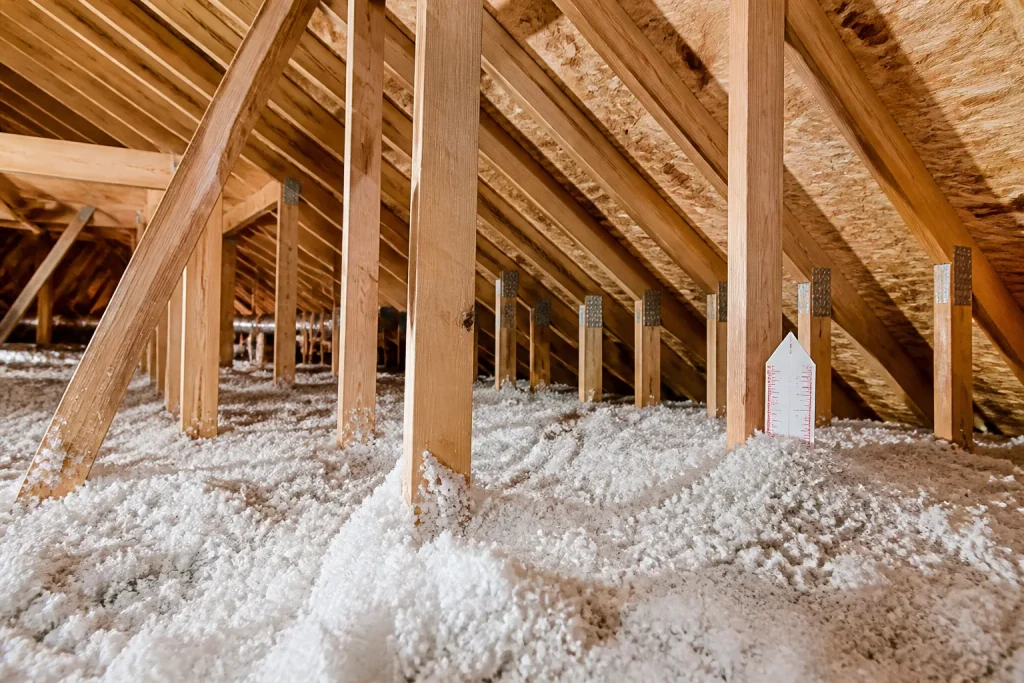
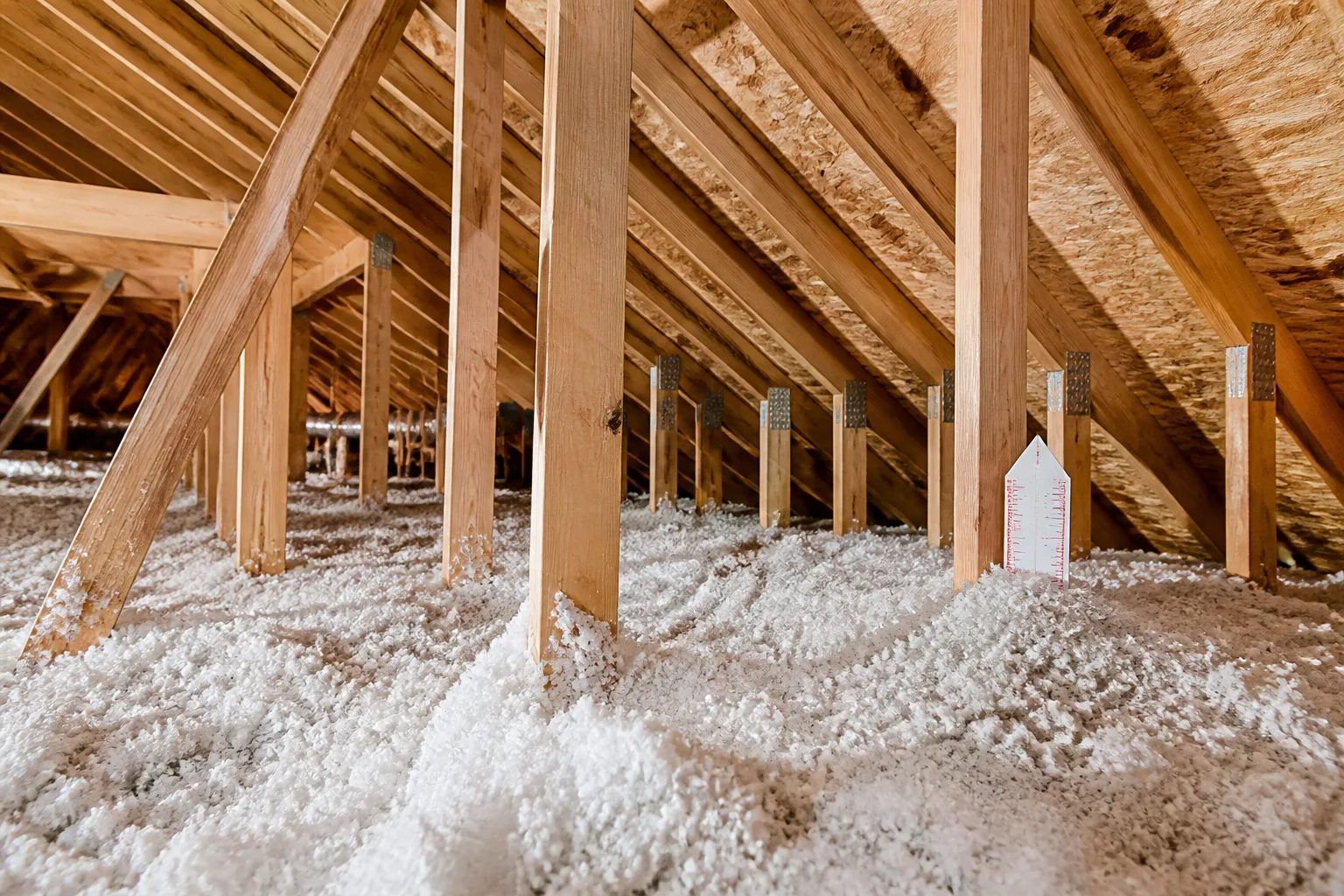
Different blown-in materials settle at different rates, and the R-value per inch is not the same across the board. That matters when someone quotes you a depth. Blown fiberglass settles more than cellulose. Rockwool settles less than both. If a contractor quotes “12 inches” without saying what material they’re blowing, you don’t actually know what R-value you’re getting.
Here’s the settled R-value per inch for common materials:
- Blown fiberglass: roughly R-2.2 to R-2.7 per inch, and it settles noticeably in the first year.
- Blown cellulose: roughly R-3.2 to R-3.8 per inch, with moderate settling.
- Blown rockwool: roughly R-3.0 to R-3.3 per inch, with minimal settling.
A contractor who says “we’ll blow 18 inches” without naming the material is guessing. To hit R-38 with fiberglass, you need more inches than you do with cellulose. If the estimate inflates the R-value per inch for fiberglass, the number on the quote looks better than the number in your attic. We install blown-in insulation using materials from Owens Corning, GreenFiber, and Rockwool, and every quote we write states the material, the settled-depth target, and the expected R-value. A homeowner should be able to read that and check the math themselves. If the contractor won’t give you those three numbers before the technician leaves the shop, find another contractor.
Mistake #3: Not Accounting for HVAC Equipment and Ductwork
Plenty of Los Angeles homes have the furnace or air handler sitting right in the attic, with flex duct running out from it. Blowing insulation around that equipment without a plan causes two problems that show up as service calls later.
First, the insulation buries access points. The furnace panel, the service shutoff, the condensate drain line, and the return plenum all disappear under two feet of cellulose. When the HVAC tech shows up for a tune-up or repair, he has to dig. That’s not the end of the world, but it’s your labor cost for him to uncover it. Second, and more common, the blower hose knocks flex duct loose. The pressure from a blower hose can pull a flex duct off its collar at the plenum or a register boot. It looks connected until the AC kicks on and conditioned air starts blowing into the attic instead of the bedroom. You don’t notice for weeks, until the room won’t cool and the bill goes up.
A proper blown-in job in Los Angeles accounts for all of it before blowing starts. We walk the attic, mark equipment access, secure flex duct connections, and build or install equipment platforms where needed. The insulation goes around and over, but never buries the service points. It’s the kind of thing that separates a disciplined install from a fast one.
Mistake #4: Blocking Soffit Vents at the Eaves
Soffit vents exist for one reason: to let outside air into the attic so hot, moist air can escape through the ridge or roof vents. That airflow keeps the attic dry and cooler. When someone blows insulation all the way to the roof deck at the eaves, the insulation covers the soffit vents and shuts the whole system down.
In Los Angeles, where the winter brings rain and the summer brings heat, a blocked soffit vent turns the attic into a closed, hot, damp box. Moisture from the living space rises into the attic and has no way out. That moisture condenses on the underside of the roof sheathing. You get mold, you get rotted decking, and you get a roofing replacement you didn’t budget for. And the attic gets hotter, so the AC works harder.
The fix is straightforward: baffles. A baffle is a simple piece of foam, plastic, or cardboard that keeps the insulation from touching the roof deck at the eaves while leaving the soffit vent open. It’s a few dollars of material and a few minutes of labor per bay. Skipping it because “the insulation will hold it away” is how we get called back to remove moldy insulation in Encino and Sherman Oaks. Before anyone blows insulation into your Los Angeles attic, the soffit vents need to be inspected and baffles installed wherever depth would reach them.
Mistake #5: Accepting a Verbal Depth Guarantee Instead of a Written Settled-Depth Measurement
A contractor says he’ll blow 16 inches. You watch him run the hose for an hour. The attic looks full. That’s not the same as 16 inches, and it’s certainly not the same as the settled depth you’ll have a year from now.
Blown-in insulation settles. Fiberglass settles more than cellulose. If the installer blows to 16 inches and walks away without a written target, you don’t know what he actually blew. You know what he said. And in a year, you’ll know what settled. That’s too late.
What you want is a settled-depth measurement in the contract. The number should match the material and the R-value target. You also want a bag-count audit. The number of bags installed tells the real story. Every bag has a coverage rate printed on it. If the job calls for 60 bags and the truck unloads 42, you didn’t get 60 bags’ worth of insulation. A bag count is simple math and it doesn’t lie. A written guarantee that says “we blew to R-38 settled depth” means nothing if there’s no bag count and no measurement to back it.
This is the kind of thing the Done Right Promise covers at Alden Attic Insulation. Every blown-in job includes a written settled-depth target, a bag count, and a written guarantee that runs a full year. If the insulation fails to perform within that window, we come back and make it right at no charge. That’s The Garrison Standard, and it applies to every job, every attic, every time.
When to Call a Pro
None of these five mistakes are hard to avoid if someone experienced is in charge. But they’re all invisible to most homeowners until the problem shows up. You can’t see a bypass behind a recessed light from the living room. You can’t see a soffit vent blocked at the far eave without crawling over. You can’t guess settled R-value from looking at fluff. This is not a job where you save money by figuring it out as you go.
If you’re in Los Angeles and you’re planning a blown-in insulation job, get someone on the attic floor who has done it enough times to know what goes wrong. We do blown-in insulation, attic insulation, and insulation removal all over Los Angeles, and every job starts with the same walkthrough: air sealing, ventilation, equipment access, material selection, and a written plan with the settled-depth number on it.
Related services in Los Angeles: blown in insulation in Los Angeles, attic insulation in Los Angeles, and insulation removal in Los Angeles.
The Bottom Line
The five mistakes that cost homeowners a second blown-in insulation job are all decisions made before the blower truck parks at the curb. Skipping air sealing. Guessing an R-value for the wrong material. Burying HVAC equipment and ductwork. Blocking the soffit vents. And trusting a verbal depth promise instead of a written settled-depth number with a bag count to back it.
Avoid those five, and a blown-in insulation job tends to go exactly as planned. It keeps the attic cooler, the house more comfortable, and the energy bills where they should be. If you’re in Los Angeles and want a free estimate with a written price before any work starts, call Alden Attic Insulation at (254) 272-5876. A live person answers, 24/7.
Frequently Asked Questions
Can you blow insulation over existing insulation?
Yes, you can blow new insulation over existing material, but only after the old insulation and the attic floor have been inspected. If air sealing was never done, adding more insulation on top just covers the bypasses without closing them. We recommend air sealing first, then blowing over the existing material to the target settled depth.
How much does blown-in insulation cost in Los Angeles?
Most blown-in insulation projects for a typical Los Angeles attic run $1,800 to $4,500, depending on square footage, current R-value, material choice, and whether air sealing is included. The price changes with depth target and access. Call (254) 272-5876 for an exact quote. Estimates are free, and the written price is in your hand before any work starts.
Which is better: blown-in cellulose or blown-in fiberglass?
For most Los Angeles attics, cellulose gives you a higher R-value per inch and less settling than fiberglass. Fiberglass is lighter and sometimes cheaper per bag. Rockwool is the most stable but carries a higher material cost. The right answer depends on your attic, your target R-value, and whether you need extra fire resistance. We install all three and show the settled-depth math for each before you choose.
How long does blown-in insulation last?
Blown-in insulation lasts 20 to 30 years in a dry attic, but its performance depends on staying dry and staying in place. Cellulose settles over the first two years and then stabilizes. Fiberglass settles more. If a roof leak or blocked soffit vents introduce moisture, the insulation degrades fast and needs removal and replacement. The best insurance is a proper install with ventilation inspected first.
Written by Alden Attic Insulation at Alden Attic Insulation home, serving Los Angeles.
Need Insulation Help?
Call Alden Attic Insulation - licensed & insured, here with fast after-hours help in Los Angeles.
(254) 272-5876