
Insulation Removal: Repair or Replace? How Los Angeles Homeowners Decide
Most attic insulation problems in Los Angeles don’t need full removal. But when they do, the deciding factor is rarely the age of the material. It’s whether the failure is localized or systemic. A single water stain under a repaired roof leak? That’s a spot repair. Rodent activity across half the attic? That’s removal, every time. Here’s how to tell which situation you’re in, and what it costs.
If you’d rather skip the diagnosis and have someone look at it, call (254) 272-5876 for a free estimate from Alden Attic Insulation home.
The Three Conditions That Make Full Removal the Only Responsible Answer
We get calls from Los Angeles homeowners every week who want us to “patch up” an attic that genuinely cannot be patched. Not because we want to sell a bigger job, but because leaving contaminated or failed insulation in place creates problems that get worse with time. There are three situations where we will always recommend full removal, and we’ll explain exactly why for each.
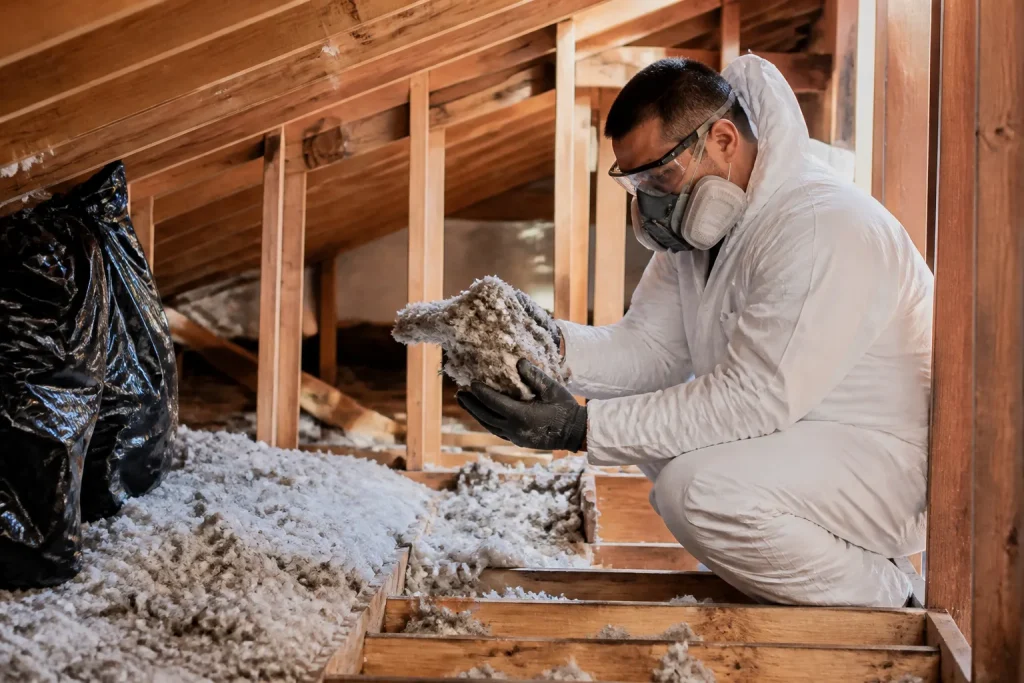
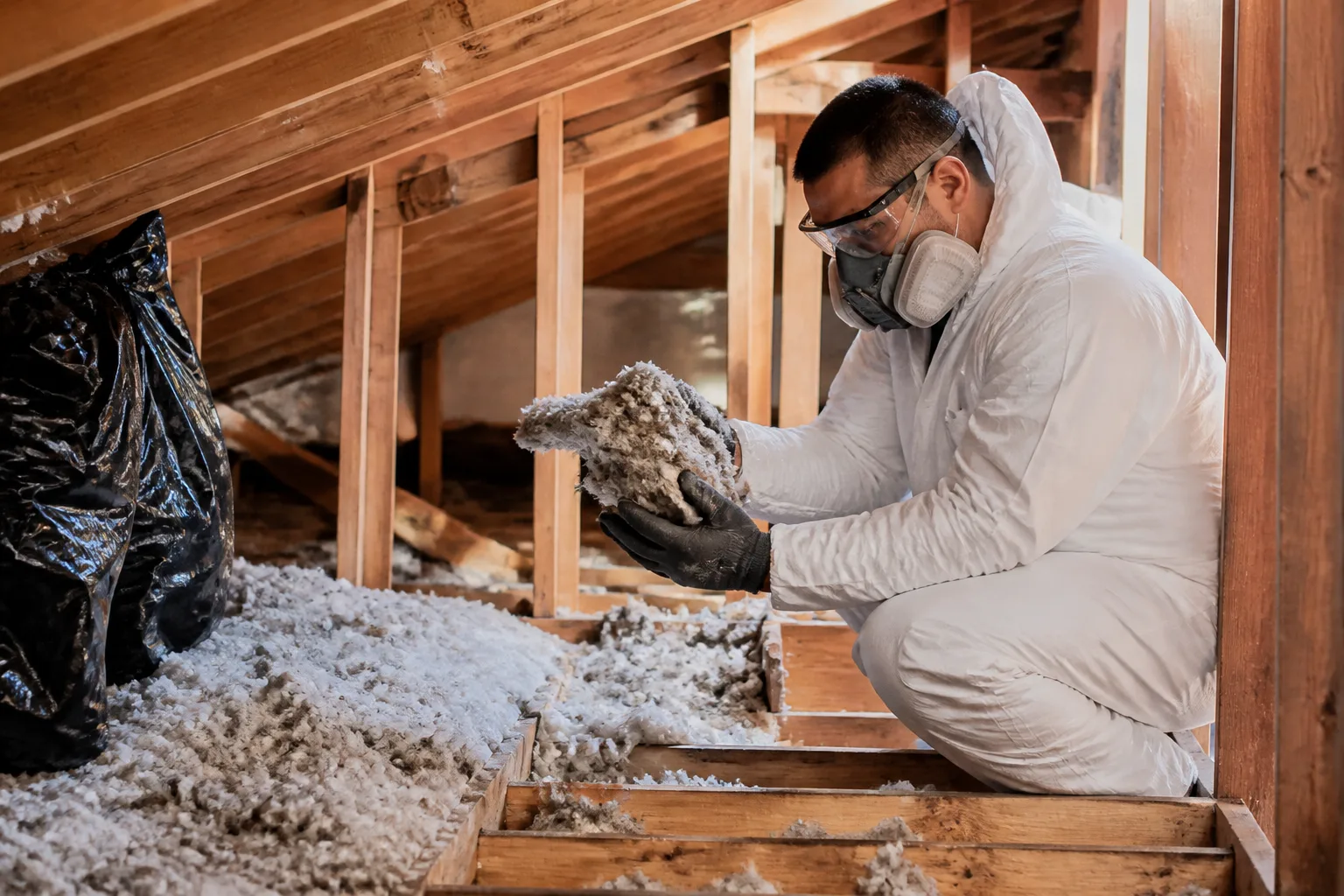
1. Rodent infestation with fecal contamination. Roof rats and squirrels are the two species we see most in Los Angeles attics. Roof rats, particularly in the hillside neighborhoods like Mount Washington, Echo Park, and Silver Lake, are astonishingly good at getting through a gap the size of a quarter. Once they’re in, they nest in the insulation. Their droppings and urine don’t just sit on top of the material. They soak through it, clumping fiberglass into matted sections that lose their loft, which means they lose their R-value. The contamination spreads further than the visible mess. And in a hot attic, the ammonia smell of old rodent urine gets pulled into the living space through ceiling penetrations. Spot removal of the visible waste doesn’t fix the invisible spread. Full removal does.
2. Vermiculite or asbestos-era material. Homes in Los Angeles built before roughly 1985, particularly in mid-century neighborhoods like the San Fernando Valley’s ranch tracts and areas around Westchester, may have vermiculite insulation. Not all vermiculite contains asbestos, but the only way to know is lab testing. If testing confirms asbestos, this is not a DIY project and it’s not a spot repair. The material must be removed by a licensed abatement contractor under specific containment protocols. We don’t handle asbestos remediation ourselves, but we tell every homeowner the same thing: get the test done before anything else moves.
3. Systemic compression below 50% of original depth. Blown-in fiberglass and cellulose settle over time. That’s normal. A 10 to 15 percent depth loss over a decade is expected. But when insulation is compressed to half its original depth or less, across a large section of the attic, the R-value has dropped far enough that spot fluffing won’t restore it. We see this most often in Los Angeles homes where the attic has been used for storage for years, or where previous contractors crawled through repeatedly during HVAC work and flattened everything. Compression is a math problem, not a material problem. At 50 percent depth, you’re paying to heat and cool air that the attic can’t hold back. Full removal and reinstall is the fix.
When Partial Removal Is Legitimate
Not every attic issue requires gutting the space. Partial removal has a real place in the Insulation Removal in Los Angeles decision tree. The key is confirming that the problem is genuinely contained.
Isolated water damage with no mold spread. If a roof leak or a failed bathroom exhaust fan vent damaged a section of insulation, and the source has been repaired, and the surrounding material is dry and uncompromised, then cutting out the affected area and replacing it is the right call. We do this regularly. The important part is the inspection: we check moisture levels in the surrounding insulation, not just the wet-looking spots. Water wicks sideways in an attic, and what looks dry at the edge can be carrying 25 percent moisture content a few feet away. If the moisture reading comes back clean, partial removal is defensible and significantly cheaper.
Localized pest activity with early detection. If you hear one squirrel in one corner of the attic and you address it within the first few weeks, the contamination footprint is usually small. In those cases, removing the affected insulation plus a margin of clean material around it can work, provided the entry point is sealed properly. The catch: in Los Angeles, roof rats rarely travel alone, and by the time most homeowners hear them, there’s a colony. Early detection is the exception, not the rule.
The danger of a contractor cutting scope to win the bid. This is worth saying plainly. We’ve walked into Los Angeles attics where a previous contractor quoted partial removal on a space with obvious rodent traffic across the entire footprint. The quote won the job, the work was done, and six months later the homeowner called us because the smell was back. A repair that doesn’t match the actual scope of the problem isn’t a deal. It’s a deferred full removal at a higher total cost. If a contractor quotes partial removal without a written inspection report documenting the contamination boundary, ask for one. If they won’t provide it, that’s your answer.
Why Los Angeles Attics Fail Differently Than Colder Climates
The repair-or-replace calculation changes by region, and Los Angeles has a specific set of conditions that shifts the math toward removal more often than you might expect.
Roof rats and squirrels are year-round residents here. In colder climates, pest pressure is seasonal. Rodents move indoors when the temperature drops, then back out in spring. In Los Angeles, our mild winters mean roof rats and squirrels live in attics twelve months a year. They breed year-round. A single female roof rat can produce four to six litters annually. That’s why per capita, Los Angeles has some of the highest rates of attic rodent contamination in the country. It’s not a cleanliness issue. It’s biology and climate colliding with an abundant food supply and older housing stock.
HVAC equipment in the attic complicates everything. A large percentage of Los Angeles homes have the furnace and air handler installed in the attic, with ductwork running through the insulation. This matters for two reasons. First, if the ducts leak, they pull attic air into the living space. That air is carrying whatever’s in the insulation, including rodent waste particulate. Second, HVAC service calls mean technicians walking through the blown-in insulation, compressing it. Over years of service calls, the compression adds up. In colder climates, furnaces are often in basements, which keeps foot traffic out of the insulation entirely.
Heat accelerates material degradation. Los Angeles attics routinely hit 140 degrees in summer. That heat bakes fiberglass binder, making older insulation brittle and less effective at holding its loft. Cellulose settles faster in heat. It also accelerates the breakdown of rodent waste, making odor problems worse. An insulated attic in a mild climate can go decades between failures. In Los Angeles, the heat, the pests, and the attic HVAC converge to shorten that timeline.
What Full Attic Insulation Removal and Reinstall Costs in Los Angeles
You should expect full removal and reinstallation of attic insulation in Los Angeles to run between $2.50 and $4.50 per square foot, depending on access, contamination level, and the material you choose for the replacement. A typical 1,200-square-foot attic falls in the $3,000 to $5,400 range. Smaller attics with easy access can come in lower. Attics with tight clearances, steep roof pitches, or heavy contamination run higher.
Here’s a breakdown of the line items that should appear on a written quote:
- Removal labor and disposal: $0.80 to $1.50 per square foot. This covers extraction, bagging, and hauling to a disposal facility, including dump fees.
- Air sealing: $0.50 to $0.90 per square foot. This is the step a lot of contractors skip, and it’s the one that matters most. Sealing top plates, wire penetrations, can lights, and duct boots is what keeps conditioned air in the house and pests out. For the brands we work with, like Owens Corning and Johns Manville, the air sealing is the foundation the insulation sits on top of.
- New insulation material: $0.80 to $1.60 per square foot for blown-in fiberglass. Spray foam runs significantly higher and is a different conversation. Knauf and Rockwool both make blown-in products we install regularly. The choice between them depends on your R-value target and budget.
- Rodent exclusion or pest barrier work: $200 to $600, depending on entry points. This is pest control adjacent, not insulation work, but without it, the removal is pointless.
If a quote comes in under $2.00 per square foot for full removal and reinstall, ask what’s being omitted. Usually it’s the air sealing or the disposal fees, both of which you’ll pay for downstream. The number that matters is the one on the written quote, not the one from the phone.
Why the Decision Should Come From a Written Inspection Report
Nobody can accurately diagnose an attic’s insulation over the phone. Not us, not any honest contractor. The repair-or-replace decision requires looking at the material, measuring its depth, checking moisture levels, identifying contamination boundaries, and assessing air sealing. That’s an inspection, not an estimate call.
A written inspection report should document, at minimum:
- Insulation type, brand if visible, and current depth in multiple zones of the attic
- Measured R-value at time of inspection and a comparison to recommended R-value for the Los Angeles climate zone
- Moisture readings in damaged areas and adjacent dry-looking areas
- Evidence of rodent activity, including type of pest, extent of contamination, and entry point locations
- Condition of air sealing at top plates, penetrations, and duct connections
- Photos of everything listed above
If a contractor gives you a repair-or-replace recommendation over the phone without having looked in the attic, you’re not getting a diagnosis. You’re getting a sales pitch. At Alden Attic Insulation, part of Attic Insulation in Los Angeles service, we don’t give a final number until one of our background-checked, uniformed technicians has been in the attic and documented what’s actually there. The written price comes after the inspection, and it’s the number you approve or decline. No surprises at invoice.
When to Call a Pro
You should call a professional if you notice any of the following in your Los Angeles attic: visible rodent droppings or nesting material in the insulation, unexplained musty or ammonia-like odors upstairs, insulation that has settled to less than half its original depth, water stains on the ceiling below the attic, or rising cooling bills without a change in usage patterns. These are all signals that something in the attic envelope has failed. The longer each one goes unaddressed, the more expensive the fix becomes.
Removal work involving rodent waste should not be done as a DIY project. Hantavirus and other pathogens can be present in rodent droppings, and the airborne particulate from disturbing contaminated insulation is a genuine health risk. The same goes for any attic where vermiculite is present and untested. If you’re in the Los Angeles area and think your attic needs a professional assessment, we’d rather you call someone qualified than get sick trying to handle it yourself.
Our insulation removal and Blown In Insulation in Los Angeles work uses products from brands you can look up on your own before committing: Owens Corning, Johns Manville, Knauf, and Rockwool among them. You’ll know exactly what’s going into your attic, because it’s written in the quote.
The Bottom Line
The repair-or-replace decision in Los Angeles comes down to whether the failure is localized or systemic. Rodent contamination is rarely localized. Water damage from a repaired leak often is. Compression is systemic when it crosses half the attic. Partial removal is legitimate when the inspection proves a contained problem. Full removal is the answer when the inspection proves otherwise.
If you’re in Los Angeles and need someone to look in your attic and give you a straight answer backed by a written report, Alden Attic Insulation offers free estimates. Every job comes with a written price before work starts and a written guarantee. If it fails in that year, we come back at no charge. Call (254) 272-5876 and a live person answers, 24/7.
Frequently Asked Questions
Is it cheaper to repair attic insulation than to remove and replace it?
Yes, when the damage is genuinely localized. A spot repair on a contained water stain might run $300 to $800, while full removal and reinstall for a 1,200-square-foot attic typically runs $3,000 to $5,400 in Los Angeles. But a repair that fails because the problem was actually systemic costs more than doing it right the first time. The inspection determines which category you’re in. Call (254) 272-5876 for a free inspection and written estimate.
How do I know if my attic insulation has rodent contamination?
Look for visible droppings on top of the insulation, tunnels or runways through the material, nesting areas, or a persistent ammonia smell near the attic access. In Los Angeles, roof rats are the usual culprit. If you see any of these signs, don’t disturb the material yourself. Have a professional assess the extent and recommend removal or partial remediation. A written inspection report should document the contamination boundary.
Can I remove attic insulation myself to save money?
We don’t recommend it, especially if there’s any chance of rodent contamination. Disturbing rodent waste releases airborne particulate that can carry pathogens. Removal also requires proper disposal, which means knowing where the material can be dumped in Los Angeles. And the air sealing step, which is where much of the energy benefit comes from, requires skill to do correctly. The savings from DIY almost never outweigh the health and quality risks.
How long does full insulation removal and reinstall take?
For a typical 1,200-square-foot attic in Los Angeles, expect one to two days for the full job. Removal takes half a day to a full day depending on access and contamination level. Air sealing and new insulation installation take another day. The technicians should arrive on time, in uniform, and leave the attic cleaner than they found it. At Alden Attic Insulation, the price you approve before work starts is the price on the invoice when we’re done, backed by a written guarantee.
Written by the team at Alden Attic Insulation.
Need Insulation Help?
Call Alden Attic Insulation - licensed & insured, here with fast after-hours help in Los Angeles.
(254) 272-5876