
Preparing Your Home’s Insulation for Winter in Los Angeles
Los Angeles averages about 36 nights per year below 50°F. That’s not brutal, but here’s what most homeowners miss: once overnight temperatures dip under 55°F, an under-insulated attic starts costing you money within two weeks. The fix is usually one inspection and one afternoon of work, not an annual weatherization project. If you’d rather not climb into the attic yourself, call (254) 272-5876 and we’ll do the inspection for free.
At Alden Attic Insulation home, we’ve spent over twenty years looking at Los Angeles attics, and winter prep here is different from what people in Chicago or Boston need. It’s less about emergency sealing and more about fixing what’s been quietly underperforming all year. Here’s how to do it right.
Key Takeaways
- Los Angeles winter prep is a one-time attic audit, not a seasonal ritual
- Below 55°F overnight, heat loss through an under-insulated ceiling shows up on your gas bill within two weeks
- The three highest-yield inspection points: blown-in depth, exposed joists, attic hatch gaps
- The attic hatch is the most under-addressed thermal bypass in LA homes
- Most fixes cost $150 to $900 and are done in a single visit
Why Winter Prep in Los Angeles Is Really a One-Time Fix
The problem with mild winters is that they let problems hide. In Minneapolis, a cold snap exposes every gap in your thermal envelope within 48 hours. In Los Angeles, you can go five years without noticing that your attic insulation has settled from R-38 to effectively R-19, because the furnace never has to work hard enough to make the deficiency obvious. You feel it as a slow, steady overage on your gas bill, not a freezing bedroom.
What that means practically: preparing your home’s insulation for winter in Los Angeles is about auditing what’s already there, then correcting it once. Blown-in fiberglass and cellulose settle over time. Batt insulation gets compressed by boxes, old holiday decorations, and the occasional contractor who walked through it to run a cable. Those losses don’t come back. So the job isn’t weatherproofing per winter; it’s restoring your attic to the R-value it should have had all along.
In our experience, the homeowners who do this once and never think about it again are the ones who see the clearest payoff. If you’re wondering whether Attic Insulation in Los Angeles matters for a house that only sees a handful of genuinely cold nights, the answer is yes, because the heat loss happens every single night from November through March, not just during cold snaps.
What to Look for in an Attic Before Winter
Here’s the inspection most LA homeowners can do themselves in fifteen minutes, with a flashlight and a tape measure. These three points catch the vast majority of under-insulation problems we find during professional assessments.
1. Blown-in insulation depth below 8 inches
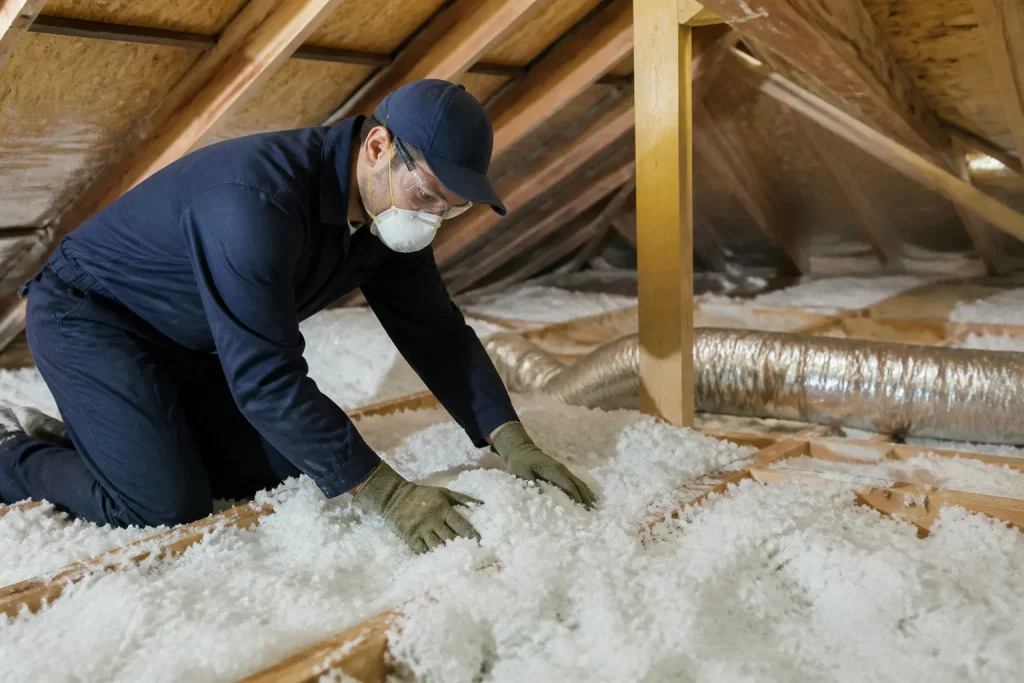
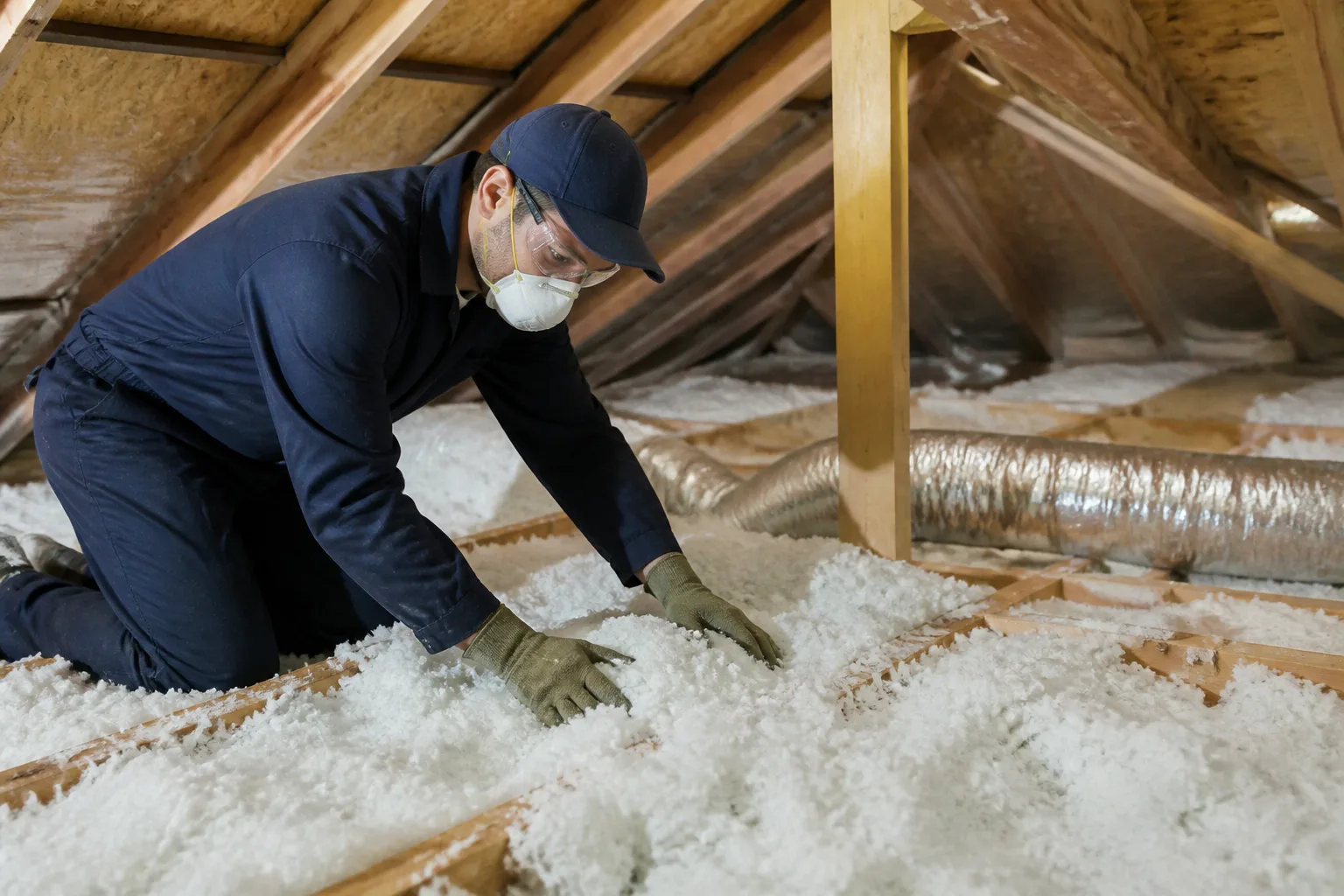
If you have blown-in fiberglass or cellulose, measure the depth in a few spots away from the attic hatch. You want at least 8 inches of settled material for a minimum R-30 in the Los Angeles climate. More is better. If you’re seeing 4 to 6 inches across large areas, the insulation has settled or was under-installed to begin with. The fix is topping it off with fresh blown-in material, typically a single afternoon of work.
2. Visible joists through fiberglass batts
Fiberglass batts are supposed to sit flush with the top of the ceiling joists. If you look across the attic floor and see joists poking above the insulation surface, the batts are either compressed or the wrong thickness for the cavity. Either way, the joists become thermal bridges, conducting heat straight from your living space into the attic. In Los Angeles, where most attics are vented, that heat escapes the house entirely.
3. Gaps around the attic hatch
This one surprises people. The attic hatch or pull-down stair represents maybe 1% of the ceiling area, but it can account for 5 to 10% of total ceiling heat loss if it’s uninsulated or missing weatherstripping. Look for daylight around the edges. Reach up and feel for a draft on a cool evening. It’s the highest-yield small fix in the entire house, and we’ll get into specifics on it below.
Why the Attic Hatch Is the Most Overlooked Problem in Los Angeles Homes
We’ve been in attics from Tarzana to Eagle Rock, and the single most consistent finding is an attic hatch that’s never been weatherstripped. Homeowners will spend $4,000 on new windows and never think about the hole in the ceiling where the access panel doesn’t quite seal.
Here’s the physics in plain terms: warm air rises, and your attic hatch is at the highest point of the conditioned envelope. If there’s any gap around it, that warm air exits through the hatch, into the attic, and out the ridge vent. It’s a chimney effect that runs year-round, but you pay for it most directly in winter when the furnace is cycling more often.
A properly insulated and weatherstripped hatch in Los Angeles typically costs $150 to $350 to fix, including material and labor. The job involves attaching a foam board or insulated cover to the attic side of the hatch, applying compression weatherstripping to the frame, and adjusting the latch so it pulls the panel tight. It takes a technician about an hour. If we’re already doing Insulation Removal in Los Angeles or a full attic upgrade, we handle the hatch as part of the scope at no additional charge.
The ROI Math: Why Mild Winters Make Attic Insulation Pay for Itself Faster
There’s a persistent assumption that attic insulation only matters in cold climates. The opposite is true for Los Angeles, and here’s why: when your baseline HVAC load is already low, a properly insulated attic cuts a larger percentage of your heating bill than it would in a colder city.
Think about it this way. A homeowner in Chicago runs their furnace hard for five months a year. Attic insulation cuts their heating cost by maybe 15%, but that 15% is spread across a big number, so the payback period is long. A homeowner in Los Angeles runs their furnace lightly for three to four months. The total heating bill is modest, but insulation cuts a larger fraction of it, because the heat loss through an R-38 ceiling is proportionally bigger when the outside temperature is 48°F than when it’s 15°F. Mild cold is exactly where ceiling heat loss dominates, because there’s less temperature difference driving other losses through walls and windows.
In practical terms, most Los Angeles homeowners who bring an under-insulated attic up to R-38 or R-49 see the difference on their gas bill within the first heating season. Not a dramatic difference, but a measurable one, typically 10 to 20% off the winter heating portion. For a house spending $60 to $90 a month on gas heat in winter, that’s $25 to $70 per winter season, and it compounds every year. The insulation doesn’t wear out.
DIY Depth Check vs. Professional Inspection: Where to Draw the Line
We’re happy to tell homeowners to check their own attic insulation, because the basic assessment is genuinely simple. If you can safely open the hatch, shine a light around, and take a few depth measurements, you’ll know whether you’re in the ballpark. Here’s the threshold we suggest:
Do it yourself if: you have easy access to the attic, the insulation looks dry and undisturbed, there’s no evidence of rodents or roof leaks, and you’re just checking depth and coverage. Write down the numbers. That’s your baseline.
Call for a professional written assessment if: you see pest droppings, trails, or nesting material; the insulation looks wet, stained, moldy, or compressed in large areas; your home was built before 1980 and may have disturbing material that shouldn’t be disturbed by a homeowner; you smell something musty you can’t identify; or you find framing damage, wiring that looks home-run, or rodent-chewed cables. These conditions change the job from simple top-off to something that needs documentation and a plan.
On older Los Angeles homes, we occasionally find insulation that shouldn’t be handled without proper training and containment. That’s not a scare tactic; it’s reality. If your house predates the 1990s and you don’t know what’s up there, let us look first. A professional assessment costs nothing, and you’ll get a written price before any work starts, which means you can walk away with the information and think about it.
When to Call a Pro
If your inspection turns up evidence of pests, water damage, or insulation that looks old enough to have a social security number, don’t dig deeper yourself. We pulled a bat colony out of an attic in Silver Lake a few years back where the homeowner thought they had a “draft problem.” The right call is to have a background-checked technician do a full assessment, document what’s there, and give you a written scope and price before anything is disturbed. Alden’s process is exactly that: the written price is in your hand before a single tool comes off the truck, and every job carries the 365-Day Done Right Promise in writing.
If you’re considering Blown In Insulation in Los Angeles, the winter months are actually a good time to schedule. Contractors are less slammed than in summer, and you’ll see the benefit on your bill before the season ends.
The Bottom Line
Preparing your home’s insulation for winter in Los Angeles is not an annual chore. It’s a one-time audit that catches settled blown-in, compressed batts, and the ever-present attic hatch gap, then fixes all three in a single visit. The math works in your favor specifically because Los Angeles winters are mild: a properly insulated attic removes a larger fraction of a smaller heating bill, and you notice it faster.
If you’re in Los Angeles and want a professional assessment, Alden Attic Insulation offers free estimates. We install Knauf, Rockwool, and CertainTeed products, we’re independently owned and operated under The Garrison Standard, and every job comes with a written price before work begins and a written 365-day guarantee after it’s done. Call (254) 272-5876 to schedule.
Frequently Asked Questions
Most attic insulation projects in Los Angeles run $1,200 to $3,500 depending on square footage, current R-value, and access. A simple top-off of blown-in insulation in a 1,200-square-foot attic typically runs $1,200 to $1,800. Attic hatch sealing alone runs $150 to $350. Every Alden job includes a written price before work starts, so the number you approve is the number on the invoice. Call (254) 272-5876 for an exact quote, estimates are free.
In most Los Angeles homes, topping off settled blown-in insulation is significantly cheaper than removal and replacement. Removal is only necessary when insulation is wet, moldy, pest-damaged, or contaminated. If your existing insulation is dry and just under-depth, adding 4 to 6 inches of new blown-in material restores the R-value for a fraction of the replacement cost. We’ll tell you honestly which one your attic needs during the free assessment.
The Department of Energy recommends R-30 to R-60 for attics in the Southern California climate zone. In practice, R-38 is the sweet spot for most Los Angeles homes: enough to eliminate measurable ceiling heat loss, not so much that you’re paying for diminishing returns. If your attic measures under 8 inches of blown-in fiberglass, you’re below R-30 and leaving heating money on the table every winter night.
We answer calls 24/7 with a live person, and we schedule assessments inside a two-hour window, not a vague half-day range. Depending on the week, same-day and next-day appointments are often available across Los Angeles. Call (254) 272-5876 and we’ll get you on the schedule.
Written by Bryce Holloway, Owner at Alden Attic Insulation, serving Los Angeles since 2002.
Need Insulation Help?
Call Alden Attic Insulation - licensed & insured, here with fast after-hours help in Los Angeles.
(254) 272-5876