
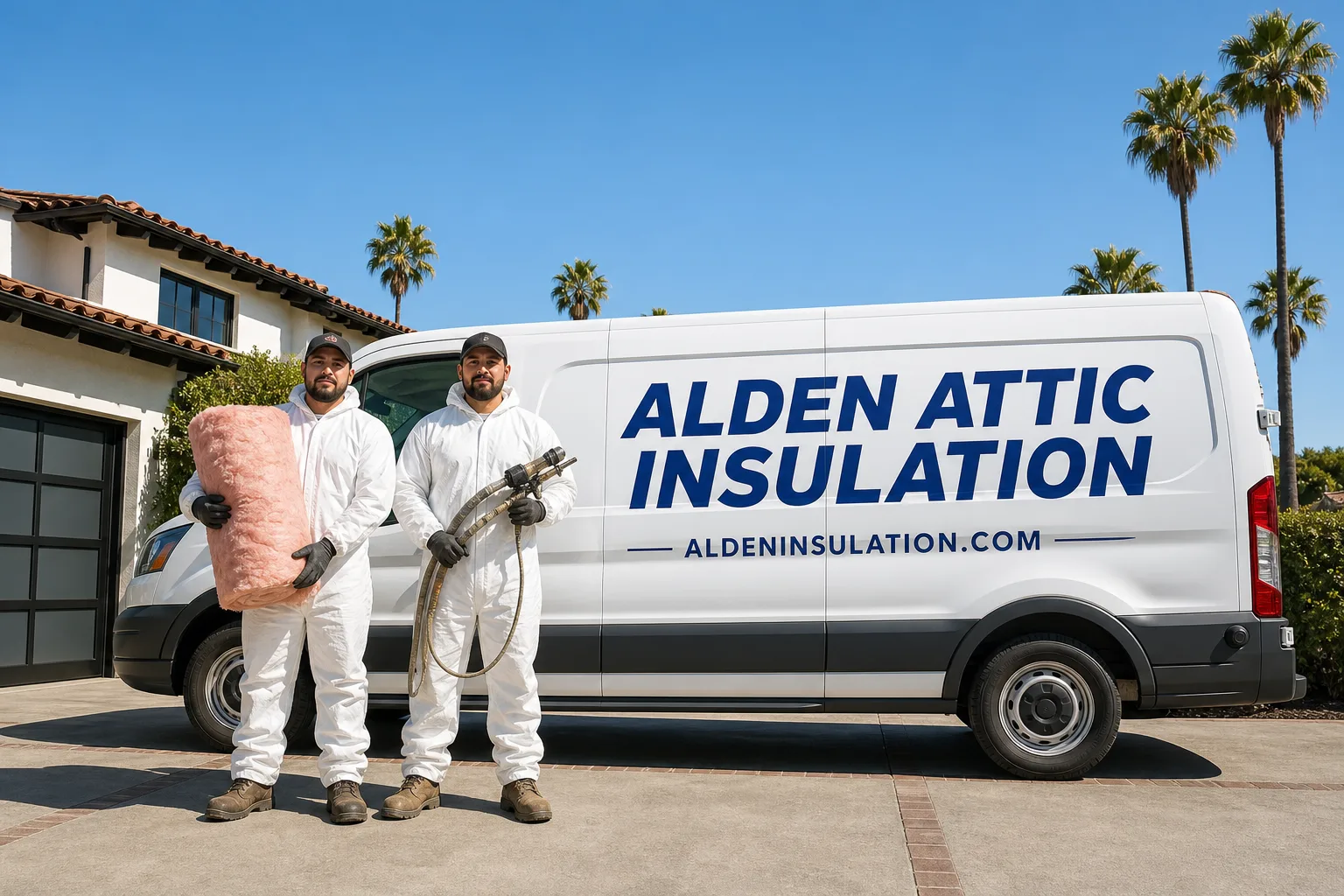
Fast, Reliable Attic Insulation Across Diamond Bar
Most attic insulation jobs in Diamond Bar run between $1,800 and $4,200 depending on square footage, current R-value, and whether we’re topping off or doing a full removal and replacement. We get calls from Diamond Bar homeowners every week about upstairs rooms that won’t hold temperature, and we’re usually on-site within 24 to 48 hours with a written quote in hand before any work starts. If your attic insulation is failing, call us at (254) 272-5876 and we’ll give you a straight answer about what’s going on up there.
Diamond Bar sits at the junction of the 57 and 60 freeways, and that position shapes how attics here perform. The steady layer of vehicle exhaust and airborne grit that drifts against the south-facing hills means insulation here loads up with dark, dust-fouled fiber faster than attics in cleaner-air cities like Yorba Linda just a few miles east. We account for that when we assess your attic, because it changes what the fix should look like.
Why Alden Attic Insulation Is Diamond Bar’s Preferred Attic Insulation Company
Alden Attic Insulation is part of the Garrison Partners family, established in 2002. We operate independently under The Garrison Standard, which means written prices, written guarantees, and a background-checked crew that shows up inside the window we promised. Diamond Bar homeowners tend to appreciate that kind of discipline, especially the ones who’ve been burned by a contractor that no-showed or moved the number at the door.
Bryce Holloway leads our team, and he holds every job in Diamond Bar to the same standard: the written price you approve is the number on the invoice, and every job carries a 365-Day Done Right Promise. If the work fails within a year, we come back and make it right at no charge. No fine print, no arguing about what “failure” means.
Our technicians are uniformed and background-checked, and calls are answered by a live person 24/7. Not a voicemail, not a form. When you call about an attic problem in Diamond Bar, a real human picks up.
Insulation Contractors in Diamond Bar
Insulation contractors in Diamond Bar need to understand what the 57/60 corridor does to attic fiber, because it’s not a problem you’ll find in a textbook. The fine brown grit that settles on south-facing hill lots gets pulled into attics through soffit vents and works its way through the insulation, compressing it and fouling the material. A contractor who just blows fresh fiber over the old stuff is leaving the problem in place. A proper job starts with an honest assessment of what’s up there.
Full Removal and Replacement
When old R-19 batts have been crushed down to R-8 or lower, the right call is usually full removal. We vacuum out the old material, air-seal the top plates, and blow in fresh fiberglass to R-38 or higher depending on what your attic framing can handle. On a typical Diamond Bar two-story from the 1970s to 1990s, that runs $2,800 to $4,200.
Top-Up Over Existing Insulation
If the existing insulation is still in decent shape but measuring low on R-value, a top-up is faster and less expensive. That involves blowing additional fiber over the existing layer to bring the attic up to current Department of Energy recommendations for Southern California. Most top-ups in Diamond Bar run $1,000 to $2,200. We install Owens Corning, Johns Manville, Knauf, Rockwool, CertainTeed, Icynene, Demilec, and GreenFiber products, and we’ll tell you exactly which one we’re putting in and why before the blower ever comes off the truck.
Attic Ventilation in Diamond Bar
Attic ventilation in Diamond Bar fails in a specific way: the ridge and soffit vents clog with the same fine grit that drifts in off the 57 and 60, and attic heat has nowhere to escape. A sealed-up attic can hit 140 degrees or more in August, which cooks the insulation’s effective R-value and radiates heat down into the living space. Even the best insulation money can buy won’t perform if the attic can’t breathe.
Baffles and Soffit Prep
Before new insulation goes in, we check that soffit vents are clear and that baffles are in place to keep airflow moving from the eaves up to the ridge. In Diamond Bar’s hillside homes, roof pitch changes how air moves through the attic, and some of the 1970s and 1980s tract builds skipped baffles entirely. We fix that as part of a full insulation replacement so the system actually works as designed.
Ridge Vent Cleaning
If your ridge vent is choked with brown dust, the attic turns into an oven. On a recent call at a two-story on Steeplechase Lane near Diamond Bar Boulevard, we found the ridge vent nearly sealed shut with the same fine grit that settles out of the freeway air. Cleaning the vent and restoring airflow can be the difference between an upstairs that stays comfortable and one that’s roasting by 2pm even with the AC running.
Trusted Brands We Service in Diamond Bar
We install and remove insulation using products from Owens Corning, Johns Manville, Knauf, and Rockwool, along with four other industry-respected manufacturers. Diamond Bar homeowners can look up any of these brands independently before saying yes, because we’d rather you know exactly what’s going into your attic than take our word for it. We stock the materials locally for Diamond Bar jobs, which keeps turnaround time short. If you want to research R-value performance, fire ratings, or recycled content, we’ll point you to the right spec sheet.
Common Attic Insulation Problems We See in Diamond Bar Homes
- Compressed R-19 batts under dusty blown-in fiber. Builders in Diamond Bar’s 1970s-90s tract developments often installed R-19 batts and called it done. Two or three decades of foot traffic, freeway grit, and settling crushes that down to R-8 or lower, and the homeowner sees it as uneven upstairs temperatures.
- Clogged ridge and soffit vents. The fine brown dust that drifts off the 57/60 corridor settles on south-facing hillside lots and gets pulled into the attic through passive venting. It doesn’t take long for that to choke off the airflow that makes the insulation work.
- Skipped top-plate air sealing. Many Diamond Bar tract builds skipped air sealing at the top plates, which means conditioned air leaks straight through the insulation. You can blow R-38 over a leaking attic and still lose half the benefit. We air-seal as part of the job.
- Overheated south-facing attics. Homes on Diamond Bar’s south-facing slopes catch full afternoon sun, and without working ventilation the attic temperature spikes. That heat radiates down through the ceiling drywall and the AC fights a losing battle.
Pricing for Attic Insulation in Diamond Bar, CA
Here’s what we charge in Diamond Bar, straight up. A basic top-up over existing insulation runs $1,000 to $2,200 for a typical 1,200 to 1,800 square foot attic. Full removal and replacement, which includes vacuuming out old material, air-sealing top plates, installing baffles, and blowing fresh fiberglass to R-38 or better, runs $2,800 to $4,200. Larger homes or attics with accessibility problems fall on the higher end. The written price is in your hand before any tools come off the truck, and the number you approve is the number on the invoice. Call (254) 272-5876 for a free estimate.
We Also Serve Cities Near Diamond Bar
Our Attic Insulation team handles jobs in Diamond Bar and the surrounding communities weekly. We cover Walnut, Pomona, Chino Hills, and Rowland Heights with the same written pricing and 365-Day Done Right Promise. Scheduling is coordinated through our Los Angeles office, and crews serve Diamond Bar locally.
Serving Diamond Bar, CA - Our Local Coverage Area
We’re based in the Diamond Bar area and know this community well. Use the map below to see our service coverage - if you’re nearby, we can almost certainly help.
FAQs About Attic Insulation in Diamond Bar
We typically reach Diamond Bar homes within 24 to 48 hours for a free assessment, and same-week installation is common. Calls are answered by a live person 24/7, so you’ll know the schedule before you hang up. If your attic is actively failing and you need someone out fast, call (254) 272-5876 and we’ll tell you exactly when a tech can be there.
That’s the 57/60 corridor effect. Diamond Bar sits at the junction of two busy freeways, and the vehicle exhaust and fine grit in the air settle against the south-facing slopes and get pulled into attics through the venting. The discoloration is mostly surface dust and airborne particulates, but it signals that the insulation is loading up with foreign material that compresses it and reduces its effective R-value. If you’re seeing dark, fouled fiber, it’s worth an assessment.
It depends on what the batts actually measure now. If they’re still fluffy and dry and the attic is clean, a top-up to R-38 or higher is often the right call. If they’ve been compressed to R-8 or R-10, or if there’s dust, rodent activity, or moisture damage, replacement is the only way to get the performance you’re paying for. We’ll measure and tell you plainly, because we’d rather do the right job once than sell you a top-off that won’t hold temperature.
Yes. Diamond Bar’s hillside lots create varied roof pitches, and south-facing slopes catch full afternoon sun, which drives attic temperatures higher than on flat lots. Some of the 1970s and 1980s tract builds also skipped baffles entirely, which blocks the soffit-to-ridge airflow the insulation depends on. We account for terrain and roof pitch when we spec baffle placement and vent cleaning, because a flat-land venting recipe won’t work on a Diamond Bar hillside.
We install Owens Corning, Johns Manville, Knauf, and Rockwool products, among others. Each has different R-value per inch, recycled content, and fire-resistance profiles, and we’ll explain the trade-offs in plain language before you decide. You’re welcome to research any of these brands independently. Call (254) 272-5876 and we’ll walk you through the options for your specific Diamond Bar attic.
Written by Bryce Holloway, Owner at Alden Attic Insulation, serving Diamond Bar since the company’s founding under The Garrison Standard.