
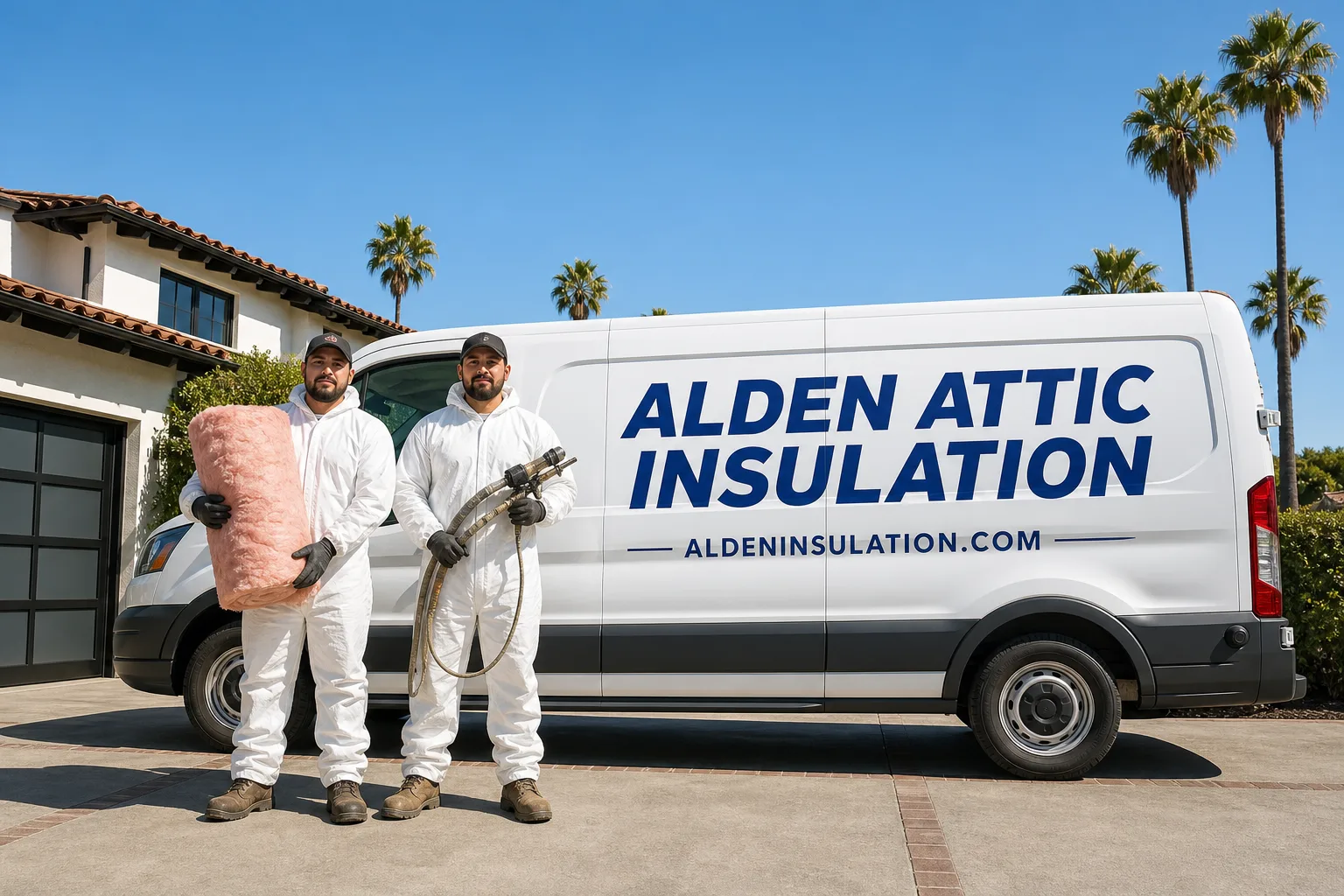
Fast, Reliable Blown In Insulation Across Alpine
Blown in insulation in Alpine runs $1.45 – $3.10 per square foot installed, with most full-attic jobs landing between $1,900 and $4,600 depending on square footage, current R-value, and whether we’re removing old material first. Alpine’s elevation and valley position mean your attic works harder than most in San Diego County, and getting the material, density, and air sealing right matters more here than in coastal neighborhoods. We dispatch crews to Alpine daily from our San Diego office, and we answer the phone live around the clock at (254) 272-5876. If your attic is under-insulated or you’ve found rodent damage up there, call us for a written price before any work starts.
Why Alden Attic Insulation Is Alpine’s Preferred Blown In Insulation Company
Alpine homeowners call us because the job gets done on schedule and the price on the proposal is the price on the invoice. Every technician who steps into your home is background-checked, arrives in uniform, and works to The Garrison Standard, the operating code we’ve held since 2002 as part of the Garrison Partners family. That standard means written pricing before work begins and a written 365-Day Done Right Promise on every job. If the insulation fails within that year, we come back at no charge. No debate, no renegotiation.
We know Alpine’s rhythm. We know that a windy afternoon off Alpine Heights Road can shift attic temperatures by 30 degrees before dinner. We know that West Victoria Drive homes with older construction often have recessed can lights leaking conditioned air into the attic. And we know which vents along South Grade Road properties are most vulnerable to Santa Ana-driven ember intrusion. That local knowledge shapes how we spec material, where we air-seal, and how fast we move when you call.
Blown In Cellulose Insulation in Alpine
Blown In Cellulose Insulation is our most common recommendation for Alpine attics, and it’s what we installed in a home on Alpine Heights Road after rodent contamination ruined the old fiberglass batts. Cellulose, typically GreenFiber in our jobs, is dense, fire-resistant, and handles Alpine’s daily temperature swings better than most fiberglass options when installed at the correct pounds-per-square-foot density. For an average 1,500-square-foot attic in Alpine, blown-in cellulose to R-49 runs $2,200 – $3,800 including removal of old material and air sealing of penetrations.
Cellulose Density and Fire Resistance
Here’s what matters in Alpine specifically: density. Cellulose installed too loose settles unevenly within two seasons, leaving thin spots over your bedroom ceiling. We blow at 3.5 – 4.0 pounds per cubic foot, which resists settling and creates a tighter thermal barrier. The borate treatment in GreenFiber cellulose also adds measurable fire resistance, which matters when ember intrusion is a real threat during Santa Ana conditions.
Air Sealing Before Cellulose
We won’t blow cellulose over unsealed attic floor penetrations. Wire chases, plumbing vents, and recessed lights all leak conditioned air into the attic, and cellulose alone doesn’t stop that. Our crew air-seals those openings first with foam or caulk, then blows insulation to the target R-value. That’s the difference between insulation that meets spec and insulation that actually cuts your PG&E bill. Alpine’s temperature swings are unforgiving to attics that leak.
Blown In Fiberglass Insulation in Alpine
Blown In Fiberglass Insulation works well in Alpine when homeowners want a lighter material or when we’re topping off existing fiberglass batts that haven’t been contaminated by rodents. We install Owens Corning and Johns Manville blown fiberglass, and a typical Alpine attic job to R-49 runs $1,900 – $3,400. Fiberglass performs fine in Alpine’s dry climate, but it doesn’t resist settling as well as dense-packed cellulose, and it offers less air-blocking value on its own.
When Fiberglass Makes Sense in Alpine
We recommend blown fiberglass in Alpine when the attic is clean, the existing insulation is fiberglass, and the homeowner wants a straightforward top-off rather than full removal. It’s also a good fit for attics with tight access hatches where cellulose’s higher density would make future service work harder. The key with fiberglass in Alpine is wind protection: we verify soffit and gable vent covers are rated for high-wind conditions so the material doesn’t shift or degrade during Santa Ana events.
Fiberglass and Ember Protection
One thing we flag for every Alpine fiberglass installation: ember screens. If your gable vents don’t have 1/8-inch mesh screens, wind-driven embers can enter the attic and contact insulation directly. We check this on every job and recommend screen upgrades where needed. The insulation itself is non-combustible, but the framing around it isn’t, and Alpine’s fire season is not the time to leave that risk unaddressed.
Trusted Brands We Service in Alpine
We install and service blown-in insulation using products from Blown In Insulation brands homeowners can research before committing: GreenFiber cellulose, Owens Corning fiberglass, and Johns Manville fiberglass. We stock these materials for Alpine jobs, which means we’re not waiting on a supply house in El Cajon when your attic is open and your schedule is tight. If you want to read spec sheets before saying yes, ask us and we’ll point you to the manufacturer data for exactly what’s going into your attic.
Common Blown In Insulation Problems We See in Alpine Homes
- Wind-driven ember intrusion through vents: Santa Ana winds push embers into soffit and gable openings, where they contact insulation and framing. Homes on Alpine Heights Road and along South Grade Road see this more than most, and it degrades blown-in material while creating a fire vector. We check vent screens on every job and upgrade where needed.
- Settling from temperature swings: Alpine’s daily swing between hot inland afternoons and cold valley nights causes loose-fill insulation to shift and compress, dropping R-value over time. Cellulose installed at proper density resists this better than loose fiberglass, and we spec density accordingly.
- Rodent contamination in rural attics: Alpine’s rural and wooded lots mean mice, rats, and squirrels find their way into attics more often than in dense suburbs. Droppings and urine-soaked insulation lose thermal performance, smell, and create health hazards. We remove contaminated material, sanitize, air-seal entry points, and re-insulate.
- Compressed batts from foot traffic and storage: Older Alpine homes often have attics used for storage, and compressed fiberglass batts lose most of their R-value. Blown-in material solves this because it fills around framing and stored items rather than flattening under weight.
Pricing for Blown In Insulation in Alpine, CA
Here are the numbers we quote Alpine homeowners, in writing, before work starts. Blown-in cellulose runs $2,200 – $3,800 for a typical 1,500-square-foot attic to R-49, including removal of old material where needed. Blown-in fiberglass runs $1,900 – $3,400 for the same scope. If you have rodent contamination requiring full removal and sanitizing, add $600 – $1,200 depending on attic size and severity. Air sealing runs $400 – $900 for most Alpine homes. The written price you approve is the number on the invoice. Call (254) 272-5876 for a free estimate, and we’ll have a real person out to measure your attic and give you exact numbers.
We Also Serve Cities Near Alpine
Our crews cover the full east county region. In addition to Alpine, we handle blown-in insulation jobs in Jamul, Lakeside, El Cajon, and Santee. Same scheduling, same written pricing, same 365-Day Done Right Promise at every location. If you’re in one of those areas and your attic needs attention, call us and we’ll route the nearest available crew.
Serving Alpine, CA - Our Local Coverage Area
We’re based in the Alpine area and know this community well. Use the map below to see our service coverage - if you’re nearby, we can almost certainly help.
FAQs About Blown In Insulation in Alpine
Alpine’s wildfire exposure means we recommend dense-packed cellulose with borate fire resistance and we verify ember screens on all attic vents before finishing any job. Fiberglass is non-combustible but doesn’t offer the same air-blocking density, so in high-risk areas like Alpine Heights Road we lean cellulose plus aggressive air sealing. Every Alpine job includes a vent and ember-screen check at no extra charge. Call (254) 272-5876 and we’ll walk your attic with you.
Yes, if it’s installed at the right density. Alpine’s hot inland days and cold valley nights cause loose-fill to settle unevenly within a season or two, which is why we blow cellulose at 3.5 – 4.0 pounds per cubic foot rather than the lower densities some crews use to cut material costs. Properly dense-packed cellulose resists settling for decades. The 365-Day Done Right Promise covers any settling that does occur within the first year.
Look for fine gray dust on furniture, scratching noises at dawn or dusk, droppings visible near the attic hatch, or unexplained rises in your energy bill. Any of these suggests rodent activity has contaminated your insulation, and in Alpine’s rural lots this happens more often than homeowners expect. We remove the contaminated material, sanitize the attic, seal entry points, and re-insulate. Call (254) 272-5876 for an assessment and a written removal-and-replacement quote.
We dispatch crews to Alpine daily, and in most cases we can schedule an estimate within 48 hours and complete the job the same week. Same-day emergency response is available for situations like a rodent-infested attic that’s affecting indoor air quality. Calls are answered by a live person 24/7, so you’ll never wait on a call-back when you’re dealing with an attic problem.
Yes, and it’s often the better choice for wooded lots because blown-in material fills irregular cavities and around roof trusses more completely than batts. The main vulnerability on rural Alpine properties is wildlife entry, which is why we air-seal penetrations and recommend attic hatch gaskets before insulating. Dense-packed cellulose also helps dampen the temperature fluctuations that open, wooded properties experience during clear winter nights. Call (254) 272-5876 for a free estimate and we’ll spec the right material for your property.
Written by Bryce Holloway, Owner at Alden Attic Insulation, serving Alpine and the surrounding east county region with the Garrison Standard since 2002.