
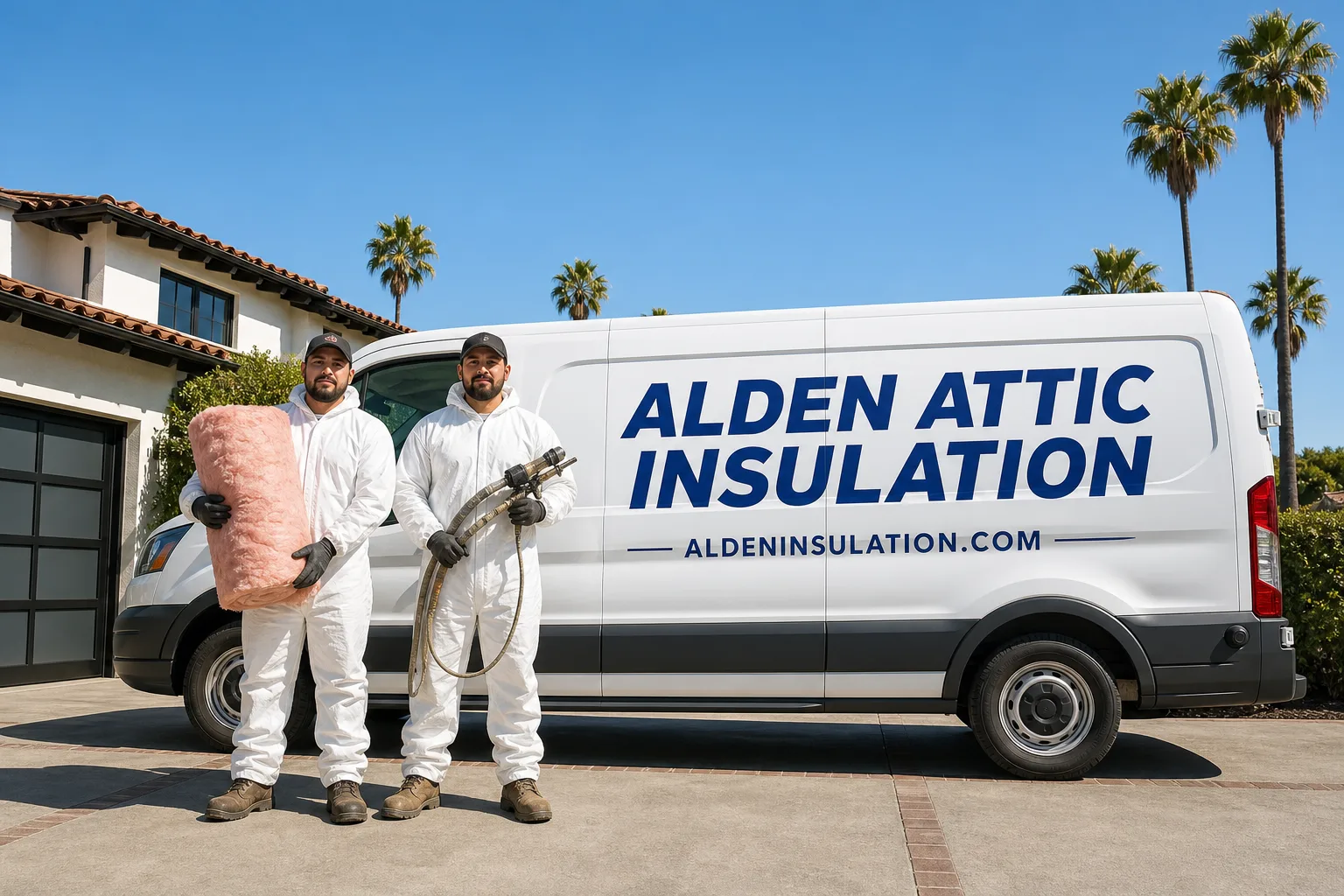
Fast, Reliable Attic Insulation Across San Diego
Attic insulation in San Diego runs $1,400 – $3,800 for a typical 1,500 – 2,200 square foot home, depending on the material and whether you need Insulation Removal - San Diego before we install the new layer. Most jobs take one day, and we answer the phone at (254) 272-5876 when you call. Here’s what separates a disciplined insulation crew from the contractor you regret hiring: a written price before the first tool comes off the truck, a 365-day written guarantee, and technicians who show up inside the window they promised.
We’re Alden Attic Insulation, part of the Garrison Partners family since 2002. Bryce Holloway runs our San Diego operation, and he holds every crew to The Garrison Standard: written prices, written guarantees, background-checked techs in uniform. If you live in Clairemont, Normal Heights, Mira Mesa, or anywhere else in metro San Diego, we know what your attic is doing in August and what it’s doing in June during a heavy marine layer. That local knowledge matters more than most homeowners realize.
Key Takeaways:
- Most San Diego attic insulation projects cost $1,400 – $3,800 and finish in one day.
- Coastal condensation, not heat, is the top insulation killer west of I-5.
- Every job carries a 365-Day Done Right Promise in writing.
- We install Owens Corning, Johns Manville, Knauf, and Rockwool products.
- Call (254) 272-5876 any time, day or night. A live person answers.
Why Alden Attic Insulation Is San Diego’s Preferred Attic Insulation Company
San Diego homeowners have been burned by no-shows and door-price revisions. We built our reputation on the opposite behavior. When you call Alden for Attic Insulation, you get a specific arrival window, a written quote that includes every line item, and a crew that doesn’t leave until the job passes inspection for air flow, coverage depth, and baffle placement.
The 365-Day Done Right Promise means exactly what it says. If anything we installed fails within one year, we return and correct it at no charge. That’s a free second visit if the work doesn’t hold up. We don’t bury that promise in fine print. It’s in the written guarantee you get before you sign anything.
Every technician who walks into your San Diego home is background-checked and uniformed. You know who’s in your attic and why. The calls ring to a live person, day or night, not a voicemail that gets returned three days later. That matters at 6:00 p.m. on a June evening when the marine layer is thick and your west-facing rooms won’t cool below 78 degrees.
We see the failures other contractors miss because we’ve worked San Diego attics long enough to know what the coastal air does to insulation. See Attic Insulation in San Diego for the full picture of how we work in this market.
Attic Ventilation in San Diego
Attic Ventilation in San Diego is about moving moisture out of the attic cavity, not just moving hot air. The marine layer that rolls through Point Loma and Mission Bay parks itself in attic spaces and condenses on the underside of the roof deck. Without proper ridge vents, soffit vents, and baffles, that moisture sits on your insulation and slowly destroys it from the outside in.
When we assess ventilation, we check ridge vent coverage along the full ridge line, confirm soffit vents aren’t blocked by old batt insulation shoved into the eaves, and measure whether air actually moves from low to high. A lot of San Diego homes built between 1950 and 1980 have passive ventilation only, and it’s rarely adequate for modern insulation depths. We quote ventilation corrections as a separate line item so you see exactly what you’re paying for. Most ventilation prep and baffle installation runs $400 – $900 depending on attic size and how many bays need baffles.
Our insulation and ventilation work in San Diego carries the same 365-Day Done Right Promise as any other job: if the venting doesn’t perform, we come back and correct it at no charge.
Baffle Installation and Prep
Baffles keep insulation from blocking airflow at the eaves. Without them, you can blow R-38 fiberglass and still have a dead attic. We install baffles in every bay before blowing or laying insulation, which means the price you approve is the price you pay, and the ventilation actually works.
In coastal San Diego neighborhoods, baffles are often missing because the original build never anticipated someone adding insulation later. On a 1960s ranch in Clairemont, we found not a single baffle installed. The soffit vents were there, but they were buried under collapsed R-11 batts.
Ventilation and Marine-Layer Failure
Coastal fog air is heavy with moisture. When that air moves through a vented attic, it cools against the roof deck and leaves condensation behind. Over months, that moisture wets the insulation, rusts the roof nails, and invites mold. Good ventilation doesn’t prevent all condensation, but it dramatically shortens how long moisture lingers.
We tell San Diego homeowners this: if you see rust streaks on roof nails or damp sheathing, ventilation correction comes before new insulation. Blowing new material over a wet attic just traps the problem under a blanket.
Radiant Barrier in San Diego
Radiant Barrier in San Diego works by reflecting radiant heat away from the attic floor before it reaches your insulation and living space. In east-county and inland San Diego neighborhoods where summer temperatures push into the 90s and 100s, a properly installed radiant barrier can reduce attic temperatures by 20 – 30 degrees on a July afternoon.
But here’s what matters on the coast: radiant barrier is not a cure for marine-layer condensation. We’ve seen contractors staple foil directly over old batts against the roof deck in Pacific Beach and La Jolla, trapping moisture against the sheathing and ruining the radiant benefit. That’s a failure of installation method, not material. We install radiant barrier with an air gap, and we never install it over wet or compromised insulation. Radiant barrier on a typical San Diego attic runs $900 – $2,200 depending on access and square footage.
Coastal vs. Inland Applications
In La Jolla and Pacific Beach, radiant barrier helps less than proper ventilation and air sealing. The heat load is lower along the coast, and the moisture load is higher. We tell coastal homeowners to fix ventilation first. Inland, where the marine layer burns off by mid-morning and the attic cooks until sunset, radiant barrier delivers measurable cooling benefit.
No blanket rule covers every San Diego attic. We measure the attic temperature loading, check for west-deck condensation, and write a recommendation based on what we find, not on what’s easier to sell.
What Radiant Barrier Costs to Do Right
Radiant barrier installed against the roof deck or over the attic floor with a proper air gap costs more than the cheap staple-it-over-everything approach because the install takes longer and requires more attention to detail. We quote the work honestly. If your attic needs barrier plus ventilation correction, we tell you upfront and give you both line items.
Trusted Brands We Service in San Diego
We install and remove insulation using products from Owens Corning, Johns Manville, Knauf, and Rockwool, along with other brands you can research before saying yes. What matters to us is that the material meets the R-value we quote and holds its loft in San Diego’s coastal humidity. Owens Corning fiberglass and Rockwool mineral wool are two we reach for most often: fiberglass for blown-in coverage in standard attics, Rockwool for fire resistance and moisture tolerance near the coast. We also provide San Diego Reflectix service when radiant barrier is the right solution. Our San Diego crews stock the most common materials locally, so there’s no multi-week wait on a typical job.
Common Attic Insulation Problems We See in San Diego Homes
- Marine-layer condensation rotting west-facing roof decking. The fog rolls in off the Pacific and sits in attics across Mission Bay, Ocean Beach, and Point Loma. When it condenses on the west sheathing, it wets the insulation below and rusts the nails. We’ve pulled batts that looked fine from below but were soaked against the decking.
- Original R-11 batts collapsed and doing nothing. Homes built in the 1950s and 1960s in Clairemont, Linda Vista, and the College Area got R-11 batts as standard. Fifty years later, those batts are compressed, dust-filled, and performing far below their rating. Rooms never cool, and SDG&E bills climb every year.
- Air leaks through can lights and top plates ignored. San Diego attics over living spaces leak cool air through every unsealed penetration. Contractors who skip air sealing blow new insulation over the leaks and call it done. The new material never performs because the conditioned air skips straight through to the attic.
- Radiant barrier installed wrong against the roof deck. In National City and Chula Vista, we see foil stapled directly over old batts with no air gap. The foil traps moisture, the sheathing stays wet, and the radiant benefit disappears. On the worst ones, the existing insulation underneath is moldy and needs removal before anything new goes in.
Pricing for Attic Insulation in San Diego, CA
Attic insulation projects in San Diego run $1,400 – $3,800 for a standard home. Blown-in insulation to reach R-38 in a 1,200 square foot attic typically lands between $1,400 and $2,200. Batt insulation replacement, including pulling old material first, runs $2,000 – $3,400. Insulation top-up, where the existing material is salvageable and we blow in more to reach current code, usually runs $600 – $1,300. Radiant barrier adds $900 – $2,200. Ventilation prep and baffle installation runs $400 – $900.
What moves the price: attic accessibility, how much old insulation we’re removing, the presence of hazardous or moldy material, and whether the existing ventilation holds. We give you one written number before work starts. That number is the number on the invoice. Estimates are free. Call (254) 272-5876 and we’ll schedule a walkthrough.
We Also Serve Cities Near San Diego
Our crews serve the wider San Diego metro daily. If you’re in San Diego, Coronado, National City, Chula Vista, or Lemon Grove, we’ve got a local team that can be at your door on schedule. Response times vary by traffic and the 5 and 805 corridors, but a live person answers the phone around the clock to coordinate your visit.
Serving San Diego, CA - Our Local Coverage Area
We’re based in the San Diego area and know this community well. Use the map below to see our service coverage - if you’re nearby, we can almost certainly help.
FAQs About Attic Insulation in San Diego
San Diego’s marine layer keeps attic dew points high along the coastal strip, so condensation, not heat, is the region’s top attic-insulation killer. West-facing roof decks collect condensation from the fog, which wets the insulation, rusts the nails, and collapses older batts long before they look worn from below. Inland San Diego attics dry out faster and fail from heat and dust, not moisture. If you’re within a few miles of the ocean, ventilation and air sealing matter more than more R-value.
Yes, in most cases. We hold same-day slots for failed insulation, wet attics, and ventilation emergencies, and a live person answers the phone 24/7 at (254) 272-5876. If the marine layer just did a number on your west rooms and you need someone to look at it now, call. We’ll give you a straight answer about what we can do today.
Usually not without fixing ventilation first. Pacific Beach and La Jolla attics run cooler than inland but wetter, so a radiant barrier installed against the roof deck can trap moisture against the sheathing and make condensation worse. We’d rather correct ridge and soffit venting and air seal the attic floor before recommending barrier in the coastal strip. Inland, where the sun beats down all afternoon, radiant barrier earns its keep. Call (254) 272-5876 for an honest read on your attic.
If the existing material is dry and intact but underperforming, repair or top-up usually gets the job done. If the batts are wet from marine-layer condensation, collapsed from age, or contaminated with rodent droppings or mold, replacement is the right call. We tell you which one we’d pick for our own house, and we show you the evidence in photos before we touch anything. In Clairemont, we pulled original R-11 batts from a 1962 ranch that looked fine from below but were damp against the west sheathing. That’s a replacement, not a top-up.
We install Owens Corning, Johns Manville, Knauf, Rockwool, CertainTeed, Icynene, Demilec, and GreenFiber. You can look up every one of those brands before we arrive. For most San Diego homes, we recommend Owens Corning fiberglass blown-in to R-38 or Rockwool batts where moisture resistance matters. The quote tells you exactly what we’re installing and at what R-value.
Written by Bryce Holloway, Owner at Alden Attic Insulation, serving San Diego since 2002.