
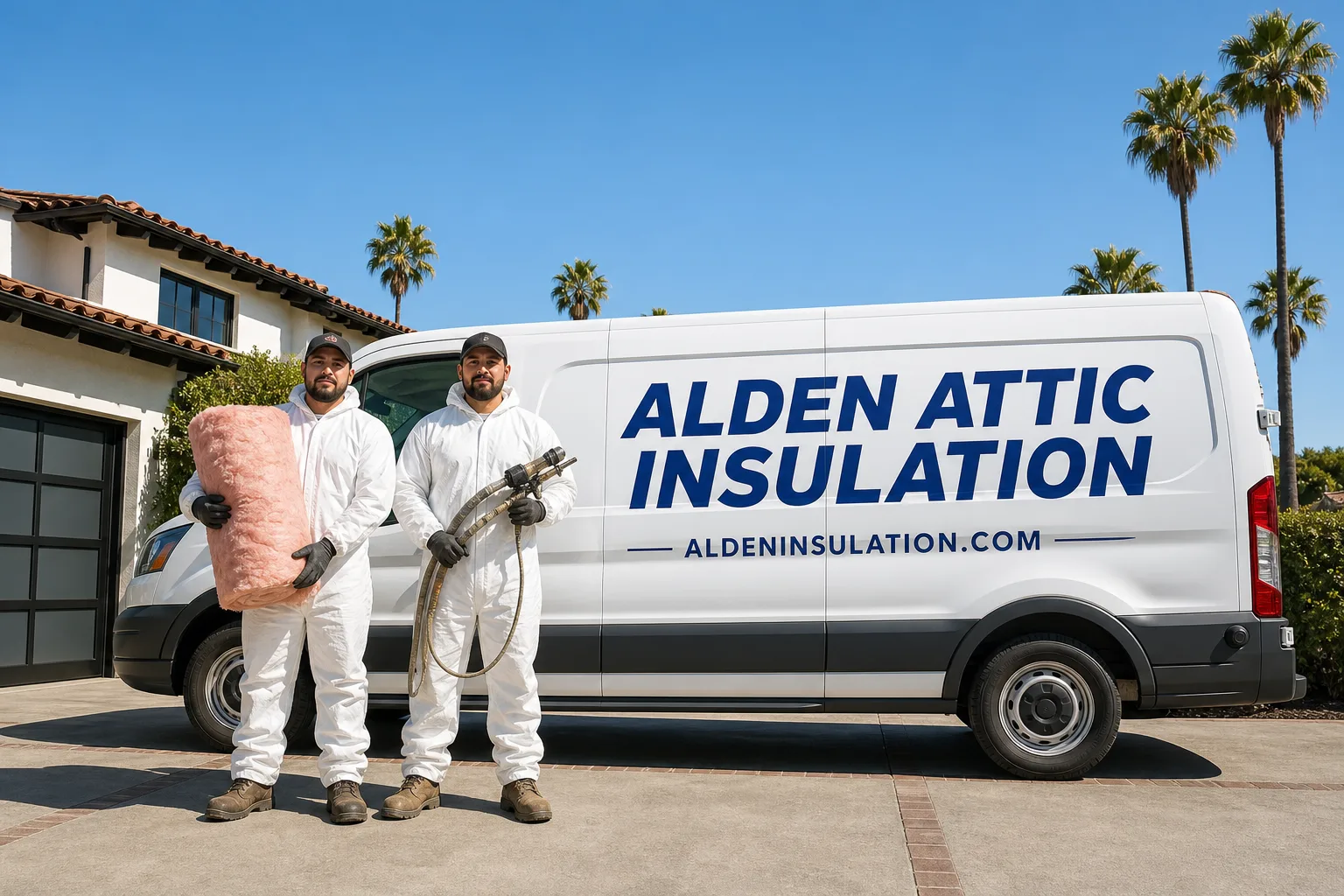
Attic Insulation Stopped Working
When attic insulation stops doing its job, the most common cause is one of three things: the insulation has settled or been compressed over time, it has been damaged by moisture or pests, or it was never the right type or depth for your home in the first place. Any of these leaves your living space exposed to whatever the air outside decides to do. Your local Alden Attic Insulation team can assess the situation, put a written price in front of you before anything starts, and fix it the same visit in most cases.
What’s Happening
Attic insulation that has stopped working almost always means the thermal barrier between your living space and the outside air has failed – either physically degraded, been displaced, or is simply too thin to do the job anymore. When that barrier breaks down, your heating and cooling system runs longer, works harder, and still can’t keep up.
Insulation does one thing: it slows the movement of heat. In summer, it keeps outdoor heat from pushing down through your ceiling. In winter, it holds the warmth your furnace or heat pump produces inside the house where it belongs. When it fails, you feel it before you see it. Rooms get harder to keep comfortable. Your energy bills climb without an obvious reason. Some floors feel colder in January than they should. None of that is normal, and none of it fixes itself.
Why It Happens
1. Settlement and Compression Over Time
Blown-in insulation – fiberglass or cellulose – naturally settles over the years, and batt insulation can be compressed by foot traffic in the attic, stored boxes, or an HVAC contractor who stepped across it. Compressed insulation loses R-value fast; a 10-inch batt pushed down to 4 inches performs like a 4-inch batt. You can often spot this yourself: pull down the attic hatch and look across the floor. If you can see the tops of the joists clearly, or if the insulation looks patchy and uneven, settlement is likely your problem.
2. Moisture Damage
A roof leak, a poorly vented bathroom exhaust fan, or even seasonal condensation can saturate insulation. Wet fiberglass loses nearly all its thermal resistance, and wet cellulose clumps and compacts. Mold can follow. Signs to look for: dark staining on the insulation surface, a musty smell when you open the attic hatch, or visibly clumped material where insulation should be loose and fluffy. If you see any of these, stop walking through the attic – disturbing moldy material spreads spores – and call your local Alden Attic Insulation team instead.
3. Pest Damage and Displacement
Rodents nest in batt insulation and tunnel through blown-in material, creating gaps and voids that act like open windows in your thermal envelope. Birds and squirrels entering through a damaged soffit do the same. The giveaway is uneven coverage when you look across the attic floor, or visible nesting material mixed in with the insulation. Contaminated insulation typically needs full removal before new material goes in – you can’t simply add on top of it.
4. Inadequate Depth from the Start
Homes built before the mid-1990s were often insulated to standards that no longer meet current best practices for energy performance. If your home has never had insulation added or updated, there’s a real chance what’s up there was never enough to begin with. Look for the insulation depth marker – a ruler-shaped card sometimes stapled near the attic access. If you can’t find one, your local Alden Attic Insulation team can measure existing R-value on the first visit and tell you exactly where you stand.
What to Do Right Now
- Open the attic hatch and look – carefully. You don’t need to climb in. A flashlight and a look from the opening will show you whether the insulation is visibly thin, wet, matted, or missing in patches. Note what you see and, if it’s safe to do so, take a photo with your phone.
- Check for visible moisture. Look at the underside of the roof decking and the top surfaces of the insulation. Dark staining, frost, or clumping means moisture is involved. If you see it, don’t disturb anything – call us and describe what you found.
- Don’t add boxes or stored items to the attic right now. Additional weight on compromised insulation makes the problem worse. Keep foot traffic to zero until someone has assessed the situation.
- Note when the problem started and where in the house you feel it most. A room over the garage that gets cold in January, or a bedroom that won’t cool down in summer – specific details like that help a technician zero in on the right area of the attic faster.
- Do not attempt to address electrical wiring, venting pipes, or any equipment in the attic on your own. Attics often contain live electrical runs, HVAC components, and exhaust venting. These are genuinely dangerous to work around without training. If your inspection from the hatch reveals anything that looks like wiring damage or a disconnected vent pipe, step back and call – that’s not a homeowner task.
How We Fix It
When your local Alden Attic Insulation technician arrives – inside the window we gave you, in uniform, background-checked – the first thing they do is a full attic assessment. They measure existing depth and R-value, check for moisture, look for pest damage, and identify any gaps in coverage. Then they put a written price in front of you before a single tool comes off the truck. That number doesn’t change at the invoice.
Depending on what the assessment finds, the fix is either attic insulation installation – adding new material using products from brands like Owens Corning, Johns Manville, Knauf, Rockwool, CertainTeed, Icynene, Demilec, or GreenFiber – or insulation removal followed by a clean install. If existing material is contaminated or structurally compromised, removal comes first. Most installs are completed in a single visit. The work is covered by our 365-Day Done Right Promise: if it’s not done right, we come back and make it right at no charge, backed by a written guarantee.
Frequently Asked Questions
It depends on what’s causing the failure. Settled or thin insulation means higher energy bills and discomfort, which is a real problem but not an emergency. Moisture damage is more urgent – wet insulation can lead to mold growth in the attic structure, and that gets more expensive the longer it sits. Pest contamination also warrants a prompt response. If you saw any moisture staining or signs of animals when you looked in the attic, don’t wait. Call (254) 272-5876 and describe what you found – a live person will pick up and help you figure out how quickly you need to move.
The honest answer is that it depends on your attic’s square footage, what’s up there now, and whether removal is needed before new insulation goes in. We don’t publish flat rates because a 900-square-foot attic with settled fiberglass and a 2,400-square-foot attic with contaminated blown-in cellulose are two different jobs. What we do is put a written price in your hand before any work starts – no estimates that change at the door. Call (254) 272-5876 to schedule the assessment; it costs you nothing to get the number.
Your local Alden Attic Insulation team handles same-day and next-day visits in most cases, and our phones are answered by a live person 24 hours a day, 7 days a week – not a voicemail. Call (254) 272-5876 and tell us what’s going on. We’ll tell you what’s available and get you on the schedule.
Adding new insulation on top of existing material is often the right call when what’s there is dry, pest-free, and simply thin. But if the existing material is moisture-damaged, contaminated by pests, or made from a product that doesn’t bond well with modern blown-in material, removal is the correct first step. Our technician makes that call during the attic assessment and explains the reasoning before any price is written. You’ll know exactly what’s happening and why.
Get It Fixed
Call (254) 272-5876 – a live person answers around the clock. Your local Alden Attic Insulation team will assess the attic, put a written price in your hand before work begins, and back every job with the 365-Day Done Right Promise. Book online or call now to get on the schedule.
Written by Bryce Holloway, Owner at Alden Attic Insulation, part of the Garrison Partners family since 2002.
What Our Customers Say
"Tidy crew. Vacuumed the hall and covered the hatch."
- Bea J."Clear estimate with R-value listed. No hidden extras."
- Hank T."Pulled up the old insulation and bagged it neatly. No dust in the house."
- Doug F.