
5 Mistakes to Avoid With Insulation Removal
Insulation removal mistakes mostly fall into two camps: scope underestimation and containment failure. A bad removal job can pull asbestos fibers into living space, leave structural damage hidden under fresh batts, or stick the homeowner with illegal dumping fines. Before you sign anything, know these five errors, because they’re the ones generating the most expensive callbacks we see in Los Angeles.
If you’d rather skip the research and just get a straight answer, call Alden Attic Insulation at (254) 272-5876. The estimate is free, and the written price is in your hand before any tool comes off the truck.
Mistake #1: Skipping the Asbestos Test on Pre-1980 Homes
In Los Angeles, this is not a precaution. California law requires testing for asbestos before disturbing insulation in homes built before 1980, and the contractor, not the homeowner, bears the liability for skipping it. Most older attics in neighborhoods like Westchester, Mar Vista, and the San Fernando Valley contain vermiculite or aged batt material that tests positive far more often than homeowners expect.
The test itself is straightforward: a certified lab analyzes a sample before any removal equipment enters the house. What matters is whether the contractor you hired actually does it. We’ve walked into attics where a previous crew had already started pulling material and “forgot” to mention the house was built in 1962. That’s not an oversight. That’s someone gambling with your family’s lungs to save half a day.
A legitimate removal company will show you the lab results before work begins. If the test comes back positive, the material requires licensed abatement, not just bagging and hauling. Ask specifically: “Who performs the asbestos test, when do I see the results, and what happens if it’s positive?” If the answer is vague, get another contractor.
Mistake #2: No Containment Between the Attic and Living Space
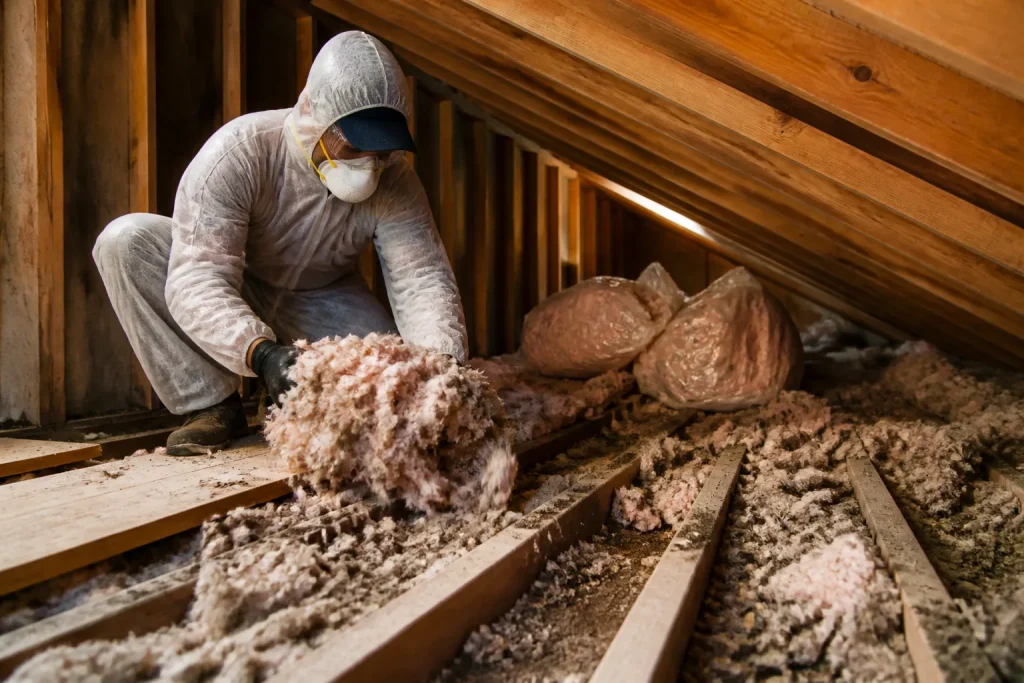
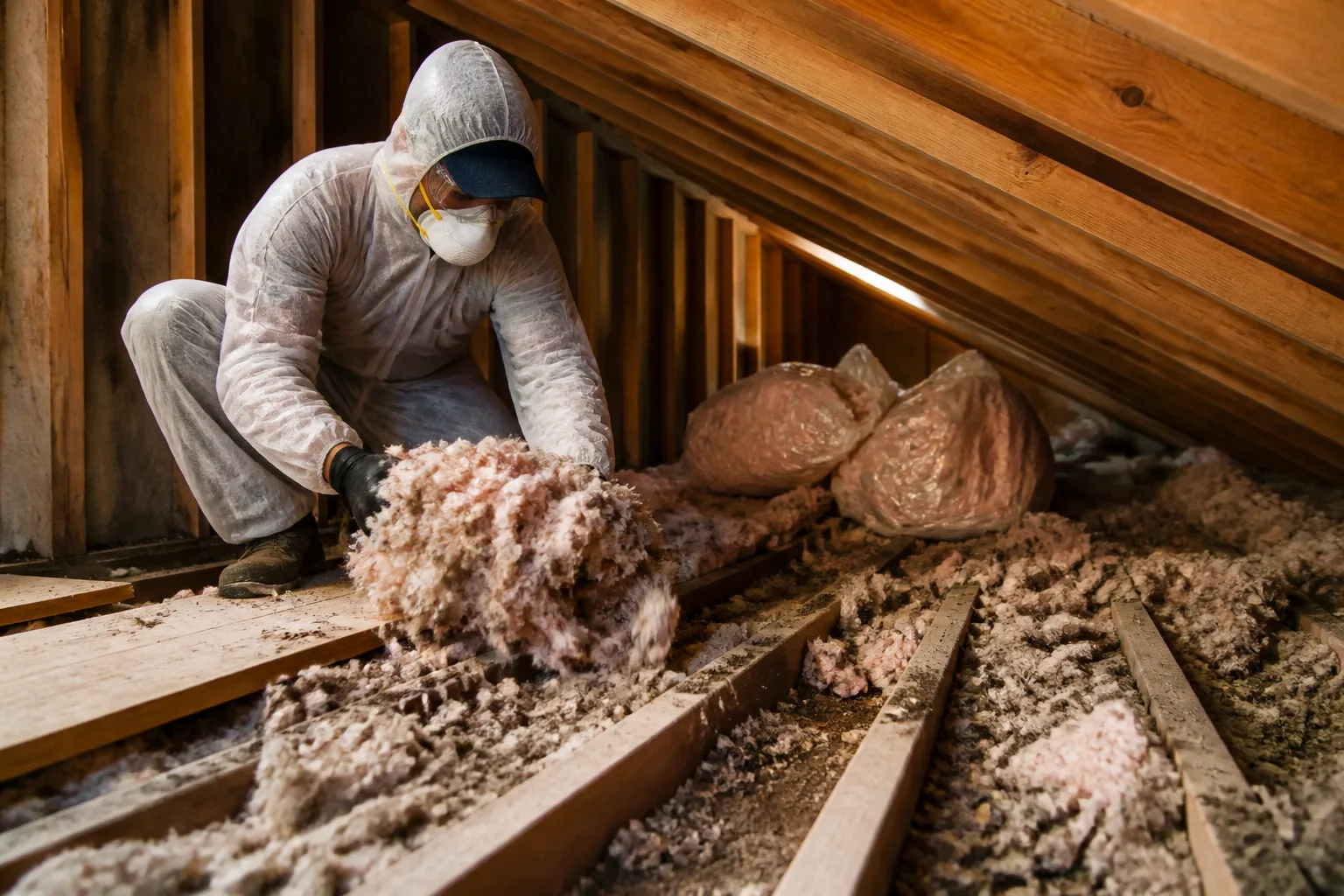
Insulation removal is a dust-generating job, and attics in Los Angeles homes are rarely sealed as well as homeowners assume. Most attics have open chases, recessed lights that leak air, or plumbing penetrations that connect directly to the living space below. If the removal crew is running a commercial vacuum without negative pressure containment, fine insulation fibers and decades of accumulated dust get pulled downstairs.
Negative pressure means the attic stays at lower air pressure than the rest of the house while the vacuum runs. A proper setup uses a HEPA-filtered vacuum unit placed outside, sealing the attic access, and covering any registered openings into the living space. The air inside the attic gets pulled through the vacuum constantly, so any dust that goes airborne gets captured instead of drifting down through the ceiling.
When you’re vetting a contractor, ask: “What’s your containment protocol during vacuum removal?” A real answer includes plastic sheeting at the access point, sealing registers, and HEPA filtration on the vacuum unit. A weak answer sounds like “we cover the floor.” That protects carpet, not air quality.
The insulation was gone. The job wasn’t done.
Mistake #3: Removing Without Inspecting What’s Underneath
Removal is the only time an attic’s structure, ductwork, and entry points are fully exposed. Once fresh insulation goes in, that access is gone. Contractors that rush from removal to reinstall without pausing to document what they found are leaving money on the table and problems in the attic.
We regularly find three things under old insulation in Los Angeles homes:
- Disconnected or crushed ductwork. Rats and squirrels chew through flex duct in Silver Lake and Echo Park attics constantly. If the duct is disconnected, you’re paying to heat the attic, not the bedroom below.
- Water staining or roof deck damage. Old insulation holds moisture stains that show exactly where leaks have been. That evidence disappears under fresh batts.
- Pest entry points. Gaps around the eaves, vent openings with missing screens, and plumbing penetrations are all visible during removal. Close them.
A disciplined crew documents the attic with photos after removal and reviews findings with the homeowner before any new material goes in. In our experience, this conversation takes fifteen minutes and often saves thousands of dollars in future repairs. Skipping it because the reinstall truck is already scheduled is the most expensive efficiency error in attic work.
Mistake #4: No Written Scope for Disposal and Haul-Away
Here’s a scenario we’ve seen in Los Angeles more than once. The contractor quotes a low number, pulls the old insulation out, and then tells the homeowner haul-away is extra, or that disposal is the homeowner’s responsibility, or worst of all, drives the bags to a canyon in Angeles National Forest and dumps them. Illegal dumping carries fines up to $25,000 in Los Angeles County, and the homeowner can be held liable if they can’t prove where their material went.
Your scope of work should specify, in writing:
- The exact method of disposal (licensed transfer station, recycling facility, or approved landfill)
- Who transports the material and on what date
- The volume estimate and the per-square-foot removal rate
- Confirmation that the disposal facility receipt will be provided to the homeowner after the job
“We’ll take care of it” is not a guarantee. At Alden Attic Insulation home locations, the written price includes removal, bagging, haul-away, and disposal receipt. The number you approve before work starts is the number on the invoice. That’s The Garrison Standard, and it’s non-negotiable.
Mistake #5: Reinstalling Too Quickly, Before Air Sealing
The window between removal and reinstall is the only time your attic’s air leaks are fully accessible. Ceiling penetrations, top plates, wire chases, recessed light housings, the attic hatch itself, all of it is right there. Once new insulation goes down, finding those leaks again means pulling material back up.
Air sealing is the step where a homeowner gets the highest return per dollar in attic work. In Los Angeles, homes run air conditioning for five to eight months a year. Hot air moves from the living space into the attic through every unsealed penetration, carrying moisture with it. Sealing those gaps before new insulation goes in can cut your cooling load noticeably, and it takes a crew a few hours, not days.
Why do contractors skip it? Because the reinstall truck is already booked and the crew has another job tomorrow. Air sealing delays the “done” moment. But a removal-and-reinstall job without air sealing is a missed opportunity you can’t get back without paying for removal again.
Ask any removal bidder this question: “Does your written price include air sealing between removal and reinstall?” If the contractor hesitates, that tells you what needs to be known. When we handle insulation removal in Los Angeles, air sealing is part of the scope. It’s not an add-on, and it’s not optional.
Key Takeaways
- Homes built before 1980 in Los Angeles require asbestos testing before insulation removal, and the contractor carries the liability, not you.
- Negative pressure containment with HEPA filtration is the difference between a clean removal and fiberglass dust in your living room.
- Removal is the only time you can see and fix structural, ductwork, and pest issues. Don’t let the crew rush past it.
- Get a written scope that names the disposal method and confirms haul-away. Illegal dumping fines in LA County can land on the homeowner.
- Air sealing between removal and reinstall is the highest-value hour in attic work. Skipping it because the truck is booked is a mistake that costs you money every month.
When to Call a Professional
Blown-in fiberglass and batt removal are jobs for a contractor with the right equipment and containment protocol. If your attic contains vermiculite, if the home pre-dates 1980, or if you’re seeing dust in the living space during the job, stop and get a professional in. This is not DIY territory. A shop vac is not a HEPA negative air machine.
If you’re in Los Angeles and need help, the crew at Alden Attic Insulation offer free estimates. We inspect, quote a written price, and stand behind the work for 365 days. Call (254) 272-5876.
Related services in Los Angeles: Attic Insulation in Los Angeles and Blown In Insulation in Los Angeles.
The Bottom Line
Insulation removal is not a commodity job. The difference between a good removal and an expensive one lives in the details: asbestos testing before work starts, containment that keeps dust out of the house, documentation of what’s underneath, a written disposal plan, and air sealing before reinstall. Skip any of those five and the invoice savings disappear the first time you get hit with a cleanup bill or a repair that could have been caught during removal.
If you’re in Los Angeles and want a removal done by the book, Alden Attic Insulation offers free estimates. The written price is in your hand before work starts, the crew is background-checked and uniformed, and every job carries our Done Right Promise in writing. Call (254) 272-5876 and talk to a live person, any hour, any day.
Frequently Asked Questions
Most insulation removal jobs in Los Angeles run $1.50 to $3.50 per square foot depending on attic access, insulation type, and whether asbestos abatement is required. A typical 1,200-square-foot attic falls between $1,800 and $4,200. Call (254) 272-5876 for an exact quote, the estimate is free and the price is written before any work begins.
Yes, if your Los Angeles home was built before 1980, California law requires asbestos testing before disturbing insulation material. The contractor, not the homeowner, carries the legal liability for skipping the test. Any legitimate removal company will show you lab results before starting work.
You can, but blown-in fiberglass, old batts, and especially vermiculite create dust and airborne fibers that are difficult to contain without commercial HEPA equipment. Attics in Los Angeles homes often connect directly to living space through recessed lights and plumbing chases, which means DIY removal puts that dust in your house. For most homeowners, the math doesn’t work in favor of DIY.
Yes. The window between removal and reinstall is the only time your attic’s air leaks are fully accessible, and sealing them before new insulation goes in is one of the highest-return improvements you can make in a Los Angeles home. Skipping it means living with the same air leaks for another 20 years under fresh insulation.
We install products from Rockwool, CertainTeed, and Knauf, along with other industry-respected manufacturers. These are brands you can research independently before committing. After removal and air sealing, we’ll recommend the specific product that matches your attic’s R-value target and your home’s cooling load.
Written by the team at Alden Attic Insulation.
Need Insulation Help?
Call Alden Attic Insulation - licensed & insured, here with fast after-hours help in Los Angeles.
(254) 272-5876