
Attic Insulation Pricing Breakdown: What Los Angeles Homeowners Pay in 2026
Most attic insulation projects in Los Angeles run between $1,800 and $5,400 in 2026, with blown-in fiberglass landing on the lower end and full removal plus air sealing pushing toward the top. The per-square-foot number you see on a quote only tells part of the story. What matters more is whether removal, air sealing, and verification are actually in the scope, because those three line items are where quotes get manipulated. If you’d rather not sort through scope details yourself, call (254) 272-5876 and we’ll walk you through a written price.
We’ve sat across from homeowners in Studio City and Sherman Oaks holding two quotes that look identical at a glance: $2,600 for “attic insulation.” One includes removal of the old batts and air sealing around every penetration. The other doesn’t. The first contractor will show up, do the job, and the attic will actually hold its R-value. The second will blow new fiberglass over failing insulation and call it done. Both charged the same number. That’s the problem with a blended per-square-foot price, and it’s why we write every Alden Attic Insulation quote with line items separated, so you can see exactly what you’re paying for.
What Attic Insulation Actually Costs in Los Angeles in 2026
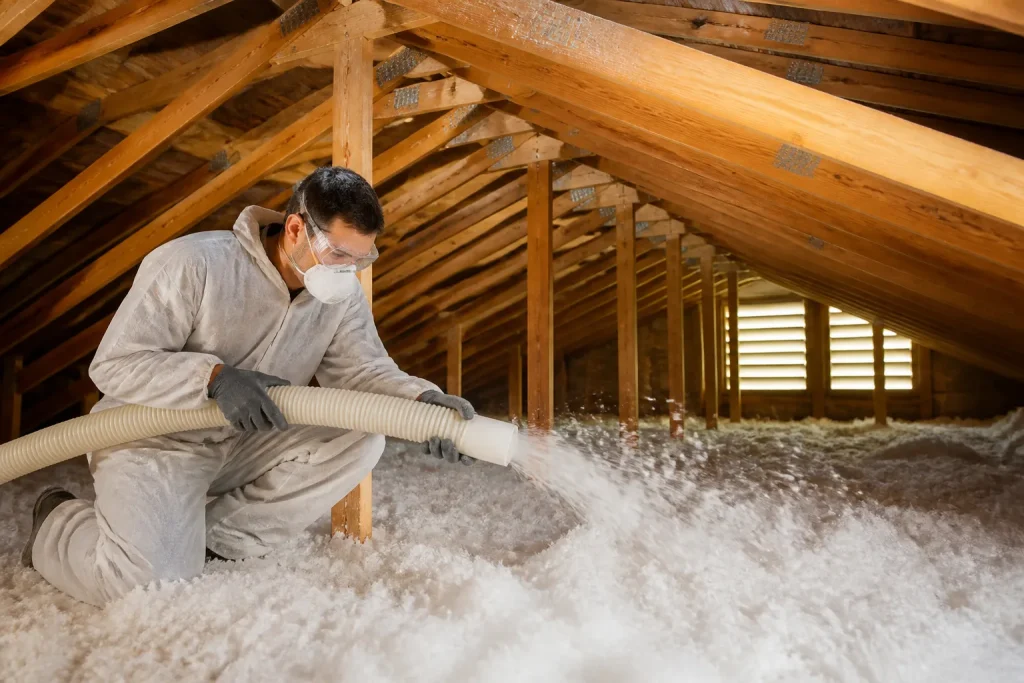
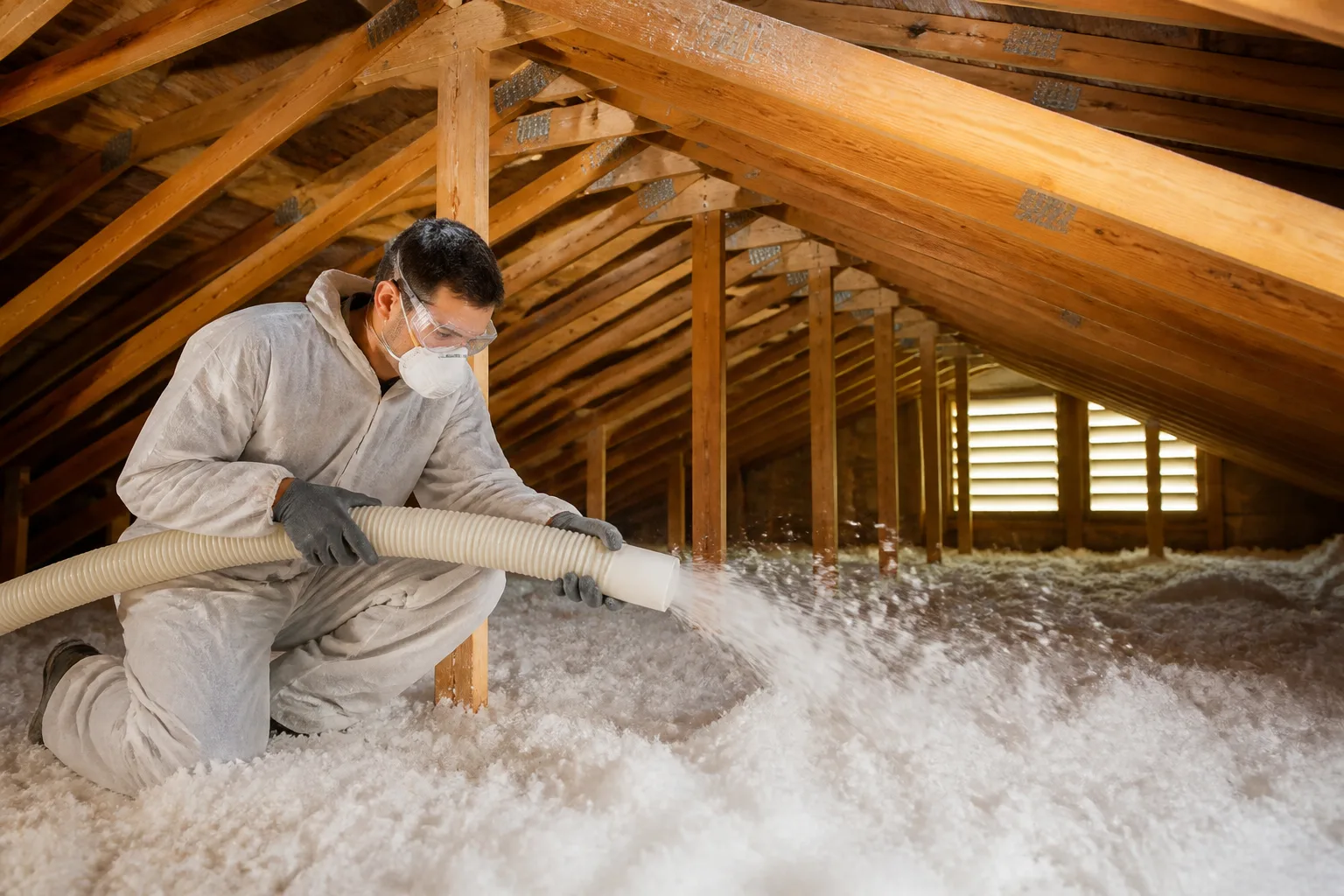
Here’s the direct answer: expect to pay $1.50 to $2.30 per square foot for blown-in fiberglass, $1.75 to $2.80 per square foot for blown-in cellulose, and $1.00 to $1.80 per square foot for batt installation, assuming a straightforward attic accessible by ladder. Those numbers include labor and material for a typical 1,200 to 1,800 square foot attic in the Los Angeles basin. A smaller attic in a 900-square-foot bungalow in Highland Park might total $2,100. A larger two-story in Encino could hit $6,000 once removal and air sealing enter the picture.
Here’s the breakdown that matters, the one most quotes don’t give you:
- Material (blown-in fiberglass): $0.55 to $0.75 per square foot. This is the loose insulation itself, typically Knauf or Owens Corning branded fiberglass. In our experience, Knauf holds its loft well in LA’s dry heat and doesn’t settle the way cheaper unbranded material can.
- Material (blown-in cellulose): $0.65 to $0.90 per square foot. Cellulose has a higher R-value per inch, which matters in shallow attics where you’re fighting for depth. We’ve used it in older homes in West Adams where the rafter bays are tighter than modern framing.
- Labor: $0.75 to $1.40 per square foot. This is the part that’s gotten more expensive in 2026, and not just in Los Angeles. Skilled insulation crews are in short supply nationally. LA has its own additional pressure, which I’ll get to below.
- Existing insulation removal: $0.80 to $1.60 per square foot when it’s needed. In Los Angeles homes built before 1980, removal is often the right call, especially if the old material is compressed, damp, or rodent-damaged. We pulled batts out of a 1962 ranch in Tarzana last month that had an R-value closer to R-9 than the R-19 it started with.
- Air sealing: $300 to $900 depending on penetration count. This is the line item that separates a real insulation job from a compliance risk, and I’ll explain why in the next section.
One number homeowners in Los Angeles should know: the $1.20-per-square-foot quote and the $2.30-per-square-foot quote can both be legitimate, or both be traps. The difference lives in what’s actually in the scope. A $1.20 quote with air sealing and removal included is a better deal than a $2.30 quote that’s material only. If the estimate you received doesn’t line-item these components, the number on the bottom isn’t a real number. It’s a conversation starter.
The Title 24 Cost Most LA Quotes Leave Out
Los Angeles sits in California climate zone 3, and the 2022 Title 24 building code, which governs current compliance, requires attics to meet R-38 minimum insulation. That’s roughly 12 to 14 inches of blown-in fiberglass or 10 to 11 inches of cellulose, depending on the specific product. What many Los Angeles contractors won’t mention is that R-38 is a system performance number, not a material depth number. If your attic has recessed lights, a whole-house fan, plumbing vents, or a poorly sealed attic hatch, the insulation you install can’t actually perform at R-38 because conditioned air is leaking through those penetrations into the attic.
The compliance path that actually works: air sealing first, insulation second, documentation third. Air sealing means cans of expanding foam around every plumbing and electrical penetration, weatherstripping and an insulated cover on the attic hatch, and boxes or dams around recessed lights (or replacing old cans with IC-rated fixtures). That sealing costs $300 to $900 on a typical Los Angeles attic. Contractors who skip it and blow insulation to depth will technically pass a visual inspection. They’ll also leave you with an attic that underperforms, a house that still heats up in August, and an energy bill that doesn’t move. We include air sealing as a line item on every Alden quote because skipping it builds a callback into the project on purpose.
If your attic hasn’t been touched since the Regan administration, you should also know that Title 24 compliance for a remodel or addition triggers attic insulation requirements. It’s not optional. The building department in Los Angeles will want to see the insulation certificate, which brings me to a line item that gets cut from low-ball scopes constantly: the written R-value verification.
What Post-Palisades Rebuild Is Doing to Pricing and Scheduling
Here’s what we’re seeing in the western LA basin in 2026: crew availability is tight. The Palisades rebuild is pulling skilled insulation crews toward the coast, because those jobs are large, funded, and often scheduled months in advance. That means a homeowner in Brentwood or West LA who calls for insulation in March may be waiting three to five weeks for a qualified crew, where two years ago the same call got a next-week appointment. Material lead times are shorter than they were in 2022, but specific products do move. CertainTeed fiberglass batts have had intermittent stock gaps in the Los Angeles supply chain this year, and Rockwool, which we specify for fire-hardening applications, has been moving fast for rebuild projects.
Scheduling affects total cost more than most homeowners realize. If your attic insulation is part of a larger project, like a phased remodel with a fixed inspection date, waiting for a cheaper crew may not be cheaper. Missed inspection dates mean re-permitting fees and delayed trades behind the insulation. We’ve seen a homeowner in Mar Vista save $400 on the insulation bid and lose $1,100 re-booking an electrician and a drywall crew because the insulation wasn’t ready for the rough-in inspection. That’s not a savings. It’s a timing tax.
In our experience, the practical move in 2026 is to book insulation four to six weeks before you need it, and to get a written schedule commitment, not a verbal one. The Garrison Standard, which Alden operates under, means the crew arrives inside the window that’s on the written estimate. Not a half-day “whenever we get there” range. The actual window. If you’re on Attic Insulation in Los Angeles project that has to align with other trades, that commitment is worth real money.
Three Line Items That Separate a Complete Scope from a Low-Ball Quote
A complete attic insulation scope in Los Angeles has three line items that low-ball quotes routinely omit. Here’s what they are, what they cost, and why they matter:
- Existing insulation removal: $0.80 to $1.60 per square foot. If the old material is compressed to half its original depth, water-stained, or full of rodent droppings (which is common in LA neighborhoods with mature tree canopy and rat pressure, like Los Feliz and parts of Pasadena), blowing new insulation over it doesn’t fix the problem. It buries it. Removal gives you a clean deck for air sealing and lets the new material reach its rated depth. We quote removal honestly, including the disposal fee, because the number you approve should be the number on the invoice.
- Attic hatch cover and seal: $150 to $350. The attic hatch is a hole in your ceiling. In a Los Angeles summer, an unsealed hatch leaks conditioned air into a 140-degree attic all day, every day. A rigid insulated cover with weatherstripping is one of the highest-return line items in the whole scope. We install them on every job we do, and we’ve never had a homeowner say they’d rather save the $200 and keep the leak.
- Post-installation R-value verification with written documentation: $150 to $300. This is a document that states what material was installed, at what depth, in which areas of the attic, and what estimated R-value the assembly achieves. It’s the thing your Title 24 inspector wants to see, and it’s the thing that proves the job was done before anyone signed off. If a quote doesn’t include a written verification, the contractor is either planning to skip the certification or doesn’t know who issues it. Either way, you should ask.
Those three line items together typically add $1,100 to $2,300 to the total, depending on attic size. That’s not markup. That’s the actual work required to install insulation that performs and complies. The $1.20-per-square-foot quote that omits all three isn’t cheaper. It’s just less work on paper and more surprises at invoicing. The Garrison Code is simple on this point: write every line item before the first tool comes off the truck, and stand behind the work for 365 days. That’s how Alden Attic Insulation home has operated in Los Angeles.
The Rebate and Tax Credit Math for 2026
Here’s the offset math that can move a $3,500 project to a $2,900 project if you handle documentation correctly. Southern California Edison currently offers an insulation incentive for qualified attic insulation upgrades, typically in the $0.15 to $0.25 per square foot range. On a 1,500-square-foot attic, that’s $225 to $375. Separately, the federal 25C tax credit sits at its 2026 cap of $1,200 for insulation and air sealing materials, applied as a non-refundable tax credit on your federal return. Combined, a qualifying Los Angeles project can net $400 to $800 back, which is real money.
The catch is documentation, and it’s the point where most homeowners lose the credit. The IRS and SCE both require proof of what was installed, at what R-value, and in what square footage. That means the post-installation verification document isn’t just a Title 24 formality. It’s the paper trail that makes the rebate and the credit legitimate. A contractor who won’t provide written verification is also a contractor whose work you can’t claim. We provide the full documentation packet on every Alden job: product data sheets for the specific material installed (whether that’s Knauf fiberglass, Rockwool batts, or Icynene foam), square footage, depth installed, and estimated R-value. You handle the filing. You have everything you need to file correctly.
If you’re planning to claim the 25C credit, keep the invoice and the verification document with your tax records for the year the work was completed. And if the SCE incentive requires pre-approval or a participating contractor, verify that before you sign. We’ve seen homeowners discover after the fact that their contractor wasn’t on the utility’s qualified list, which voids the incentive. Ask the question while you’re getting quotes, not after the job is done.
When to Call a Pro
Attic insulation is not a dangerous DIY project the way a garage spring or a steep roof is. But it is a project where the failure mode is silent. A homeowner can rent a blower, buy bags of fiberglass, and blow their own attic over a weekend. What they can’t easily do is identify rodent damage, air seal around recessed lights correctly, verify depth across irregular rafter bays, or document R-value for a rebate they didn’t know existed. If the attic has old knob-and-tube wiring, vermiculite insulation (which requires testing before disturbance in Los Angeles homes of a certain era), or a low-slope roof that leaves little workspace, that’s a professional call regardless of your weekend availability. Blown-in insulation in the wrong place, over the wrong thing, is exactly the kind of mistake that gets discovered later, by an inspector or by an energy bill that never improves.
If you’re in Los Angeles and want to talk through your specific attic, we’re the Blown In Insulation in Los Angeles crew that will give you a written price before any work starts, and a written guarantee when it’s done. We also handle full Insulation Removal in Los Angeles when the old material has to come out first. Every Alden technician is background-checked, arrives in uniform inside the scheduled window, and answers to the Garrison Standard on every job. The products we install come from brands you can research independently, including Knauf, Rockwool, CertainTeed, and Icynene, and we’ll tell you exactly which one we’re specifying and why, before you ever approve a number.
The Bottom Line
Attic insulation in Los Angeles in 2026 costs $1,800 to $5,400 on a typical home, with blown-in fiberglass at $1.50 to $2.30 per square foot and the total moving based on whether removal, air sealing, and verification are actually in the scope. Title 24 compliance requires R-38, and the air sealing that makes that R-38 real adds $300 to $900 most low-ball quotes omit. Post-Palisades scheduling pressure in the western LA basin means booking four to six weeks out is the norm, not the exception. And if you document the job correctly, SCE’s incentive and the federal 25C credit can put $400 to $800 back in your pocket on a qualifying project.
If you’re in Los Angeles and need help figuring out what your attic actually needs, Alden Attic Insulation offers free estimates with a written price before any work starts. Call (254) 272-5876 and you’ll get a live person on the line, day or night. Not a voicemail. Not a form that disappears into an inbox. A real human who can talk through your roof, your budget, and what the scope should actually include. We’ve been doing this in Los Angeles, and every job is covered by a written guarantee. If it fails in that year, we come back and make it right at no charge. That’s the Garrison Standard, and we don’t know another way to work.
Frequently Asked Questions
Expect to pay $1.50 to $2.30 per square foot for blown-in fiberglass, $1.75 to $2.80 for blown-in cellulose, and $1.00 to $1.80 for batt installation, including labor and material. These are Los Angeles 2026 numbers, and the total on a typical 1,200 to 1,800 square foot attic runs $1,800 to $5,400 depending on whether removal and air sealing are part of the scope. Call (254) 272-5876 for an exact written quote on your attic, free of charge.
In most Los Angeles attics, replacement is the better financial choice. If your existing insulation is compressed, water-stained, or rodent-damaged, adding new material on top doesn’t restore the R-value or fix the underlying problem. Removal typically costs $0.80 to $1.60 per square foot, and spending that once gets you a clean deck and a warranty that’s worth something. For a smaller or newer attic, spot repair or topping up may be appropriate. We’ll tell you which way the numbers run on your specific roof before any work starts, at (254) 272-5876.
Title 24 requires R-38 minimum attic insulation for Los Angeles homes in climate zone 3. That’s approximately 12 to 14 inches of blown-in fiberglass or 10 to 11 inches of blown-in cellulose, but the R-38 number is a system performance target, not just a depth target. If your attic penetrations aren’t air sealed before insulation goes in, the setup won’t actually perform at R-38 even at the right depth. Written verification after installation is what proves compliance to a Los Angeles building inspector.
We answer the phone 24/7, and in many Los Angeles neighborhoods we can get a technician out for an estimate within 24 to 48 hours. Installation scheduling is running three to five weeks out in the western LA basin right now due to post-Palisades rebuild demand, so if you have a project that needs insulation by a specific date, call (254) 272-5876 as soon as you know the date. We’ll give you a written schedule commitment, not a half-day range, and we honor it.
Written by the team at Alden Attic Insulation.
Need Insulation Help?
Call Alden Attic Insulation - licensed & insured, here with fast after-hours help in Los Angeles.
(254) 272-5876