
Johns Manville Attic Insulation in Los Angeles: A Homeowner’s Guide
Johns Manville (JM) attic insulation performs as well as anything Owens Corning makes, and in older Los Angeles homes it often fits better. The reason comes down to dimensional tolerance: JM batts are cut to a tighter width spec, which matters when your 1950s attic has joists spaced anywhere from 14 to 16 inches apart. If you’d rather skip the research and get a written price, call (254) 272-5876 and we’ll walk your attic with you.
What Makes Johns Manville Worth Asking About in Los Angeles
Most Los Angeles homeowners inherit whatever insulation brand the last contractor happened to stock. That’s a missed opportunity. Johns Manville has been manufacturing insulation in the U.S. since 1858, and their attic products hold up well against the two things that punish insulation in Southern California: heat and irregular framing.
Here’s what separates JM from the pack in practical terms:
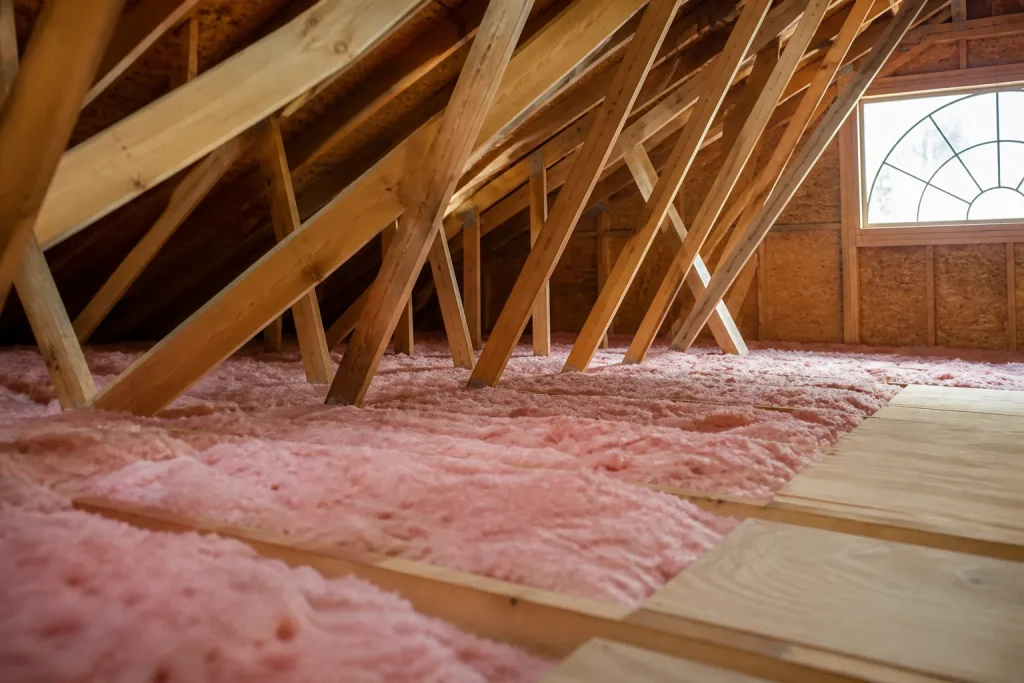
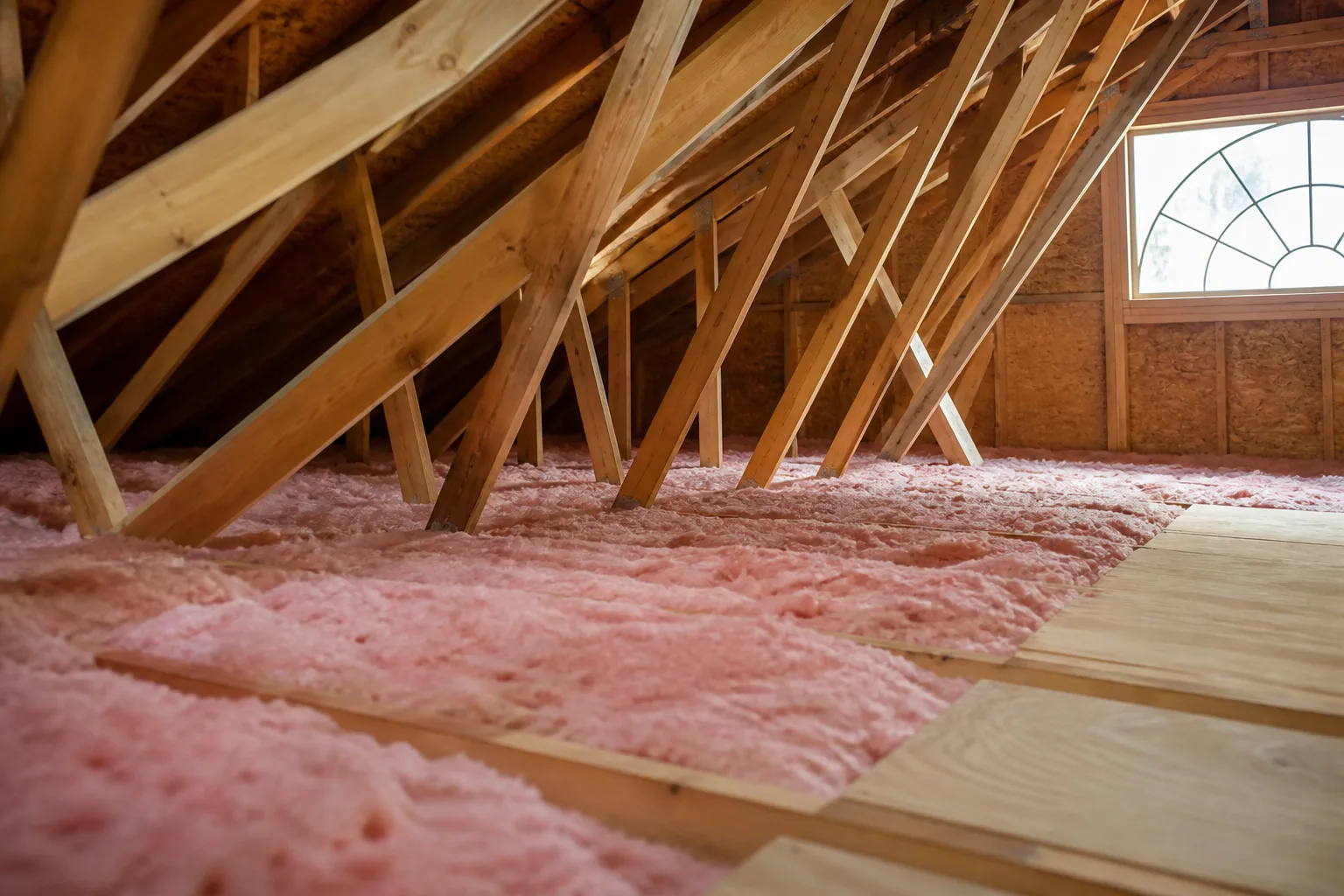
- Tighter batt tolerances. JM’s ComfortTherm and Kraft-faced batts are manufactured to a dimensional variance tighter than the industry standard. In pre-1970 Los Angeles attics where joist bays run narrow, wide, or crooked, that means fewer hand-trimmed batts and fewer gaps at the wall line.
- Climate Pro blown fiberglass. JM’s loose-fill blown product settles to a predictable R-value per inch when installed to their published coverage tables. We’ll get into why that matters below.
- Formaldehyde-free binders. All current JM fiberglass products are made without formaldehyde. For homeowners with kids, allergies, or just a low tolerance for chemical off-gassing in a hot LA attic, that’s a real consideration.
- Product-level transparency. JM publishes installation data sheets per product, including bags-per-1,000-square-feet charts. A homeowner can verify exactly what their contractor should have installed.
We install JM products regularly, alongside Knauf and CertainTeed, because homeowners in Los Angeles deserve to research what goes into their attic before saying yes. If you want a deeper look at how the full attic insulation picture works in Los Angeles, we’ve written a separate guide on that.
Climate Pro Blown Fiberglass: The Settled R-Value Question
Blown fiberglass settles. Every manufacturer knows this, which is why coverage charts call for blowing above your target depth. The question is how much settling you actually get, and here’s where JM’s Climate Pro earns its keep.
Climate Pro is spec’d at roughly R-3.25 per inch at settled density. Competitor blown fiberglass products typically land around R-3.15 to R-3.20 per inch. On paper, that’s a 2 to 3 percent difference. Over 1,000 square feet of attic at an R-38 target, that small per-inch advantage means you need about 11.7 inches of settled Climate Pro instead of 12 inches of a competitor’s product. Your roof deck doesn’t care about the math, but your heating and cooling bill notices it over a decade.
Los Angeles sits mostly in California Climate Zone 9, where Title 24 code minimum for attic insulation in existing homes is R-38. That’s a settled depth, not a blown depth. We’ve walked attics across Los Angeles where a previous contractor blew to R-38 on the blower dial, let it settle to R-30, and called the job done. The homeowner never knew until their upstairs bedroom hit 84 degrees in July.
When you’re reading a JM Climate Pro data sheet, look for the “Minimum Settled Thickness” column and the “Maximum Coverage per Bag” column. Those two numbers tell you if your contractor’s bid is honest. If a quote says 20 bags for 1,200 square feet and the JM chart says 28, that’s a red flag. Written pricing removes that argument entirely, which is part of why we put every price in writing before a single tool comes off the truck.
JM Batts and the “Friction Fit” Advantage in Older LA Homes
If your home in Los Angeles was built before 1970, your attic joist spacing is probably not what the lumber store sells today. Pre-war framing in neighborhoods like Echo Park, West Adams, and parts of Pasadena runs to true-dimension lumber: actual 2x6s and 2x8s, not nominal. Joists were often spaced by eye. A bay that starts at 15 inches can narrow to 14 by the time it hits the exterior wall.
This is where a friction-fit batt earns its name. A properly sized batt should press lightly against both joist faces and the ceiling below, staying in place by friction alone. No staples, no wires, no sagging. JM’s batt products hold their width better than many competitors because of those tighter dimensional tolerances, which means a 15-inch JM batt stays a 15-inch batt after it comes out of the bag.
What we’ve seen in practice: in a 1948 home over in Highland Park, we pulled out old batts that had been hand-cut to fit irregular bays, gaps at every joist. The homeowner’s attic measured 108 degrees in August. We re-insulated with JM batts in the standard bays and hand-fit Rockwool in the odd ones, then air-sealed the top plates. The upstairs bedroom dropped about eight degrees the same week.
A note on installation: batt insulation in an irregular attic is not a job you want a rush crew doing. Each bay gets measured, each batt gets fitted. If your contractor won’t walk the attic with you before the job, that tells you something.
What JM’s Warranty Actually Covers (And What It Doesn’t)
This is the section most guides skip, and it’s the one that saves Los Angeles homeowners from an expensive misunderstanding.
Johns Manville product warranties cover manufacturing defects. That’s it. If the fiberglass delaminates, if the kraft facing peels, if the product arrives from the factory out of spec, JM replaces the product. The warranty does not cover installation errors. It does not cover settling from improper blow depth. It does not cover air leakage through unsealed top plates. It does not cover the labor to remove and replace failed insulation.
In other words, a JM warranty is only worth as much as the contractor standing in front of it. That’s the part to verify before you hire anyone in Los Angeles. Ask what the contractor covers if the insulation fails to perform. Get it in writing. If the answer is “the manufacturer covers that,” you’re about to get caught between two parties pointing at each other.
We carry our own coverage because we think the person who installed it should answer for the install. Every job we do in Los Angeles includes what we call the Done Right Promise: the work is covered in writing for a full year, and if it fails in that window, we come back and fix it at no charge. No deductibles, no pro-rated math, no “that’s a manufacturer issue.” The product warranty from JM covers the material. Our guarantee covers the labor. You need both.
How to Read a JM Installation Data Sheet Before You Sign Anything
Every JM product ships with an installation data sheet, and most are available as PDFs on the JM website. If your contractor can’t hand you one for the product they’re proposing, that’s a signal. Here’s what to look for:
- Coverage table. This shows bags per 1,000 square feet at different settled R-values. For Climate Pro in Los Angeles aiming at R-38 settled, you’ll see a specific number, typically in the low 20s of bags per 1,000 square feet depending on the exact product code. If your quote shows significantly fewer bags, ask why.
- Minimum settled thickness. This tells you how many inches of settled insulation equals your target R-value. R-38 is usually around 11 to 12 inches settled for Climate Pro. Blown depth at installation will be higher, sometimes 14 or 15 inches, because fiberglass settles after it leaves the hose.
- Attic card placement. JM specs call for a card posted near the attic access showing the installed R-value and date. Many Los Angeles homes have never seen one. Ours go up on every job.
- Product code matching. The data sheet covers one specific product code. Climate Pro has several. Make sure the sheet your contractor provides matches the code on the bags that actually show up.
This is not grade-school busywork. We’ve been called out to Los Angeles attics where the insulation that was installed didn’t match the product on the invoice, and the homeowner only found out when they tried to file a warranty claim. Written pricing and a written guarantee are the floor, not the ceiling, for what a contractor should provide.
Los Angeles Climate Reality: Zone 9 and What It Means for Your R-Value
Most of Los Angeles falls into California Climate Zone 9, including the San Fernando Valley, mid-city, and the eastern neighborhoods. Zone 9 is classified as hot-dry, which means your attic is a solar oven from May through October. On a 95 degree day, an uninsulated attic in Van Nuys can hit 130 degrees or higher. That heat doesn’t stay in the attic. It radiates through the ceiling into your living space, and your AC fights it for six straight months.
Title 24’s minimum for attic insulation in existing Los Angeles homes is R-38 for fiberglass. That’s the code floor, and it’s a decent target for a finished attic conversion or a simple top-up. But here’s what we tell Los Angeles homeowners: if your home has vaulted ceilings, a flat roof section, or can lights that can’t be sealed easily, R-38 might leave warm spots. R-49 is worth considering for attics with tricky geometry or older ductwork running through the hot zone. The extra material cost is modest relative to the comfort gain.
JM’s Climate Pro charts run up to R-60, so the product scales fine. The real variable in Los Angeles is air sealing. Insulation slows heat transfer, but it does nothing for the stack effect that pulls hot attic air down through unsealed top plates, recessed light housings, and plumbing penetrations. In our experience, half the benefit of an attic insulation job in Los Angeles comes from the air sealing done before the insulation goes in. If you’re getting blown-in insulation in Los Angeles, make sure the quote includes sealing.
The Bottom Line
Johns Manville makes attic insulation that deserves more attention than it gets in Los Angeles. Climate Pro holds R-value per inch as well as anything on the market, and JM batts fit older LA homes better than most because of their dimensional consistency. The catch is the same as with any brand: the product is only as good as the installation, and the product warranty only covers material defects. Your contractor’s workmanship guarantee is a separate document, and you should read both before work begins.
If you’re in Los Angeles and want a straight answer about what your attic needs, Alden Attic Insulation offers free estimates with written pricing before any work starts. Call (254) 272-5876 and we’ll walk the attic with you, show you what’s there, and tell you what it’ll cost.
Frequently Asked Questions
Most JM attic insulation projects in Los Angeles run $1,800 to $4,500 depending on square footage, current R-value, and whether you need air sealing or old insulation removal in Los Angeles. Blown Climate Pro at R-38 typically lands on the lower end for a standard 1,200 square foot attic, while batt work in irregular older homes runs higher because of the labor. Call (254) 272-5876 for a written price based on your attic, not a square-foot guess.
For most Los Angeles homes, the difference is marginal, not material. JM batts hold their width slightly better in irregular joist bays, which matters in pre-1970 construction. Owens Corning has broader retail availability. Both are fiberglass with similar settled R-values. The installer matters more than the label. We install JM regularly because the dimensional consistency works well in the older attics we see across Los Angeles.
Title 24 requires R-38 settled fiberglass for most existing homes in Los Angeles, which sits in California Climate Zone 9. New construction and additions may trigger R-49 in some jurisdictions. The code minimum is a floor, not a target. We typically recommend at least R-38, with R-49 considered for homes with vaulted ceilings, flat roof sections, or poorly sealed attics.
No. JM’s product warranty covers manufacturing defects in the material, not errors made during installation. Settling caused by blowing too thin, gaps from badly cut batts, and air leaks from skipped sealing are contractor issues, not product issues. That’s why our Done Right Promise covers the labor and the install in writing for a full year, with a free return visit if the work fails.
Written by the team at Alden Attic Insulation.
Need Insulation Help?
Call Alden Attic Insulation - licensed & insured, here with fast after-hours help in Los Angeles.
(254) 272-5876