
Knauf Attic Insulation in Los Angeles: A Homeowner’s Guide
Knauf attic insulation is one of the most commonly installed products in Los Angeles homes, yet most homeowners have never heard the name. The company is a major manufacturer, but it sells through contractors and builders, not big-box retail shelves. If your attic has fiberglass batts or blown fiberglass from the last 15 years, there’s a reasonable chance it’s Knauf. Here’s what you need to know about the product line, what makes it different, and how to make sure any Knauf install in your attic actually does its job.
Key Takeaways
- Knauf is a major US insulation manufacturer that sells primarily through contractors, not direct to homeowners.
- The two products Los Angeles homeowners encounter most are EcoBatt (batt insulation) and Jet Stream Ultra (blown-in fiberglass).
- Knauf’s formaldehyde-free binder matters mainly for installer safety and indoor air quality during installation, not long-term off-gassing in your attic.
- Brand matters less than installation quality. Coverage tables between Knauf, Owens Corning, and Johns Manville are close enough that contractor execution is the real variable.
- You should always receive a product data sheet, bag count, and depth documentation with any Knauf insulation install in Los Angeles.
What Knauf Insulation Actually Is
Knauf Insulation is a family-owned German manufacturer with a substantial US production footprint. If you haven’t heard of them, that’s by design. The company sells through distribution channels that serve insulation contractors, drywall supply houses, and production builders. Homeowners in Los Angeles encounter Knauf products when a contractor shows up with them, not because they saw a commercial.
The two Knauf products you’ll see in Los Angeles attics are EcoBatt and Jet Stream Ultra. EcoBatt is their fiberglass batt line, which comes in pre-cut widths for standard stud and joist spacing. Jet Stream Ultra is their blown-in loose-fill fiberglass, installed with a machine that feeds the material through a hose. Both are fiberglass-based, which is the standard material for most Southern California attic work. In Los Angeles, fiberglass holds up well because our attics don’t face the moisture issues common in humid climates, and the material doesn’t settle as severely as cellulose when installed at the right density.
One thing worth understanding: Knauf doesn’t make spray foam, mineral wool, or cellulose. If a contractor in Los Angeles tells you they’re installing “Knauf spray foam,” that’s not a thing. Knauf makes fiberglass products. The other brands we install at Alden Attic Insulation home include Owens Corning, Johns Manville, Rockwool, CertainTeed, Icynene, Demilec, and GreenFiber, so we’re familiar with the full spectrum of what’s available.
EcoBatt and the Formaldehyde-Free Binder Question
Knauf’s EcoBatt line uses a plant-based binder instead of the formaldehyde-based binders traditionally used to hold fiberglass fibers together. This was a meaningful shift when the product launched, and it’s still a selling point you’ll hear from contractors in Los Angeles.
Let’s be direct about what this actually means. The people who benefit most from a formaldehyde-free binder are the installation crews who handle the material every day, cutting it, fitting it, and breathing the dust. For homeowners, the practical difference is smaller. By the time the batts are in your attic and you’re back in your living room, the exposure window has passed. That said, if you have chemical sensitivities, choosing a formaldehyde-free product like EcoBatt is a reasonable precaution, and it costs no more than conventional batts in most Los Angeles supply houses.
We’ve pulled apart enough attics in Los Angeles to know that an old fiberglass batt from 1995 looks nearly identical to an EcoBatt from last year. The difference is in the binder chemistry, not the visible appearance. If you’re checking your own attic and want to know what’s up there, look for the kraft paper facing on the batts. Knauf prints its name and product code on the facing, usually along the edge. No facing means it’s unfaced, which is standard for attic floors in Los Angeles where vapor retarders aren’t required by code in most climate zones.
Blown-In Knauf: Jet Stream Ultra and Coverage Specs
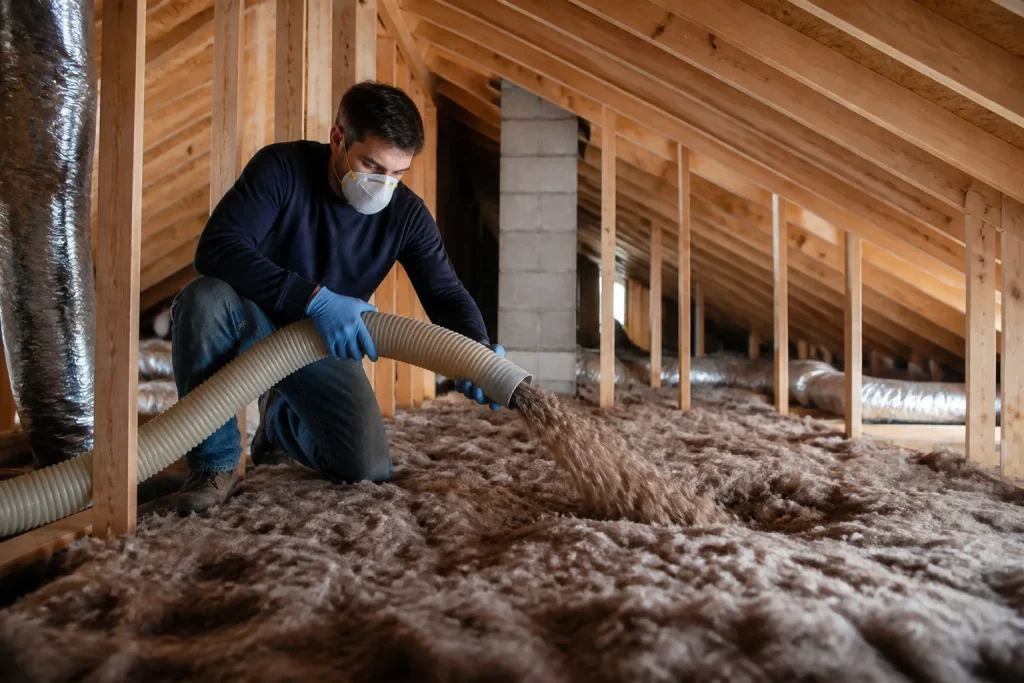
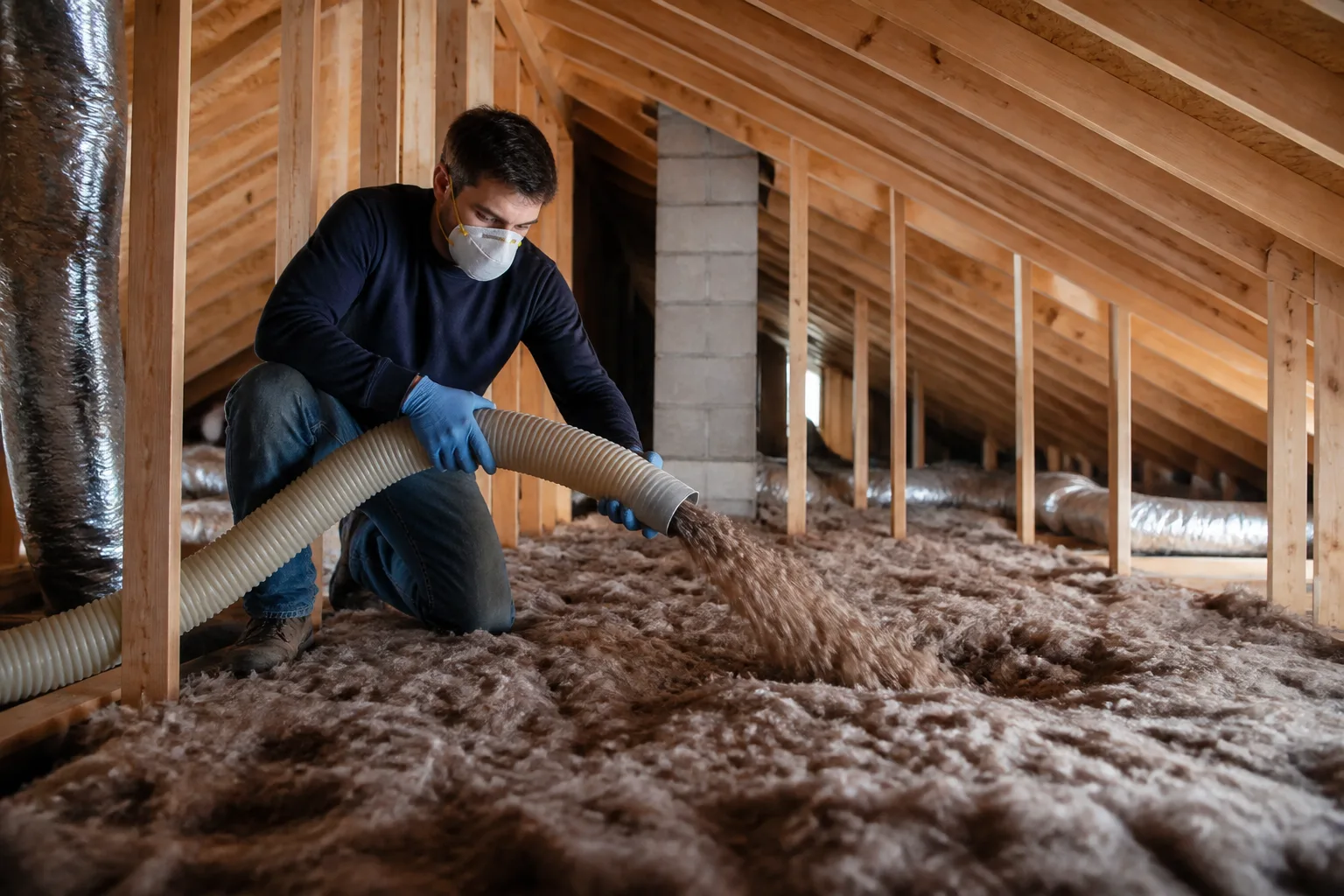
For blown-in insulation in Los Angeles, Knauf’s Jet Stream Ultra is a common sight. This is a loose-fill fiberglass product installed with a pneumatic blowing machine. The material comes compressed in bags, and the installer feeds it into the machine, which fluffs it and pushes it through a hose into the attic.
The coverage math is where homeowners need to pay attention. Jet Stream Ultra’s coverage tables specify how many bags are needed to achieve a given R-value at a given settled depth over a given square footage. For example, to hit R-38 in a 1,000-square-foot attic, the table calls for a specific bag count and a specific installed depth, typically around 14 to 16 inches of loose material depending on the exact product variant. The equivalent Owens Corning and Johns Manville blown fiberglass products land within a bag or two of each other at the same R-value. The numbers are close enough that brand selection matters far less than whether the installer actually put in the specified number of bags and hit the specified depth.
Here’s the thing that doesn’t get said often enough: a blown-in fiberglass install from any brand is only as good as the installer’s attention to depth. Loose-fill settles. The settled depth is the number that matters for long-term performance, and a contractor who just eyeballs it and moves on is leaving R-value on the table, regardless of whether the bags say Knauf, Owens Corning, or Johns Manville.
A quick comparison of what to expect at R-38 in Los Angeles:
- Knauf Jet Stream Ultra: roughly 14 – 16 inches installed depth, bag count varies by square footage but lands around 50 – 55 bags per 1,000 square feet.
- Owens Corning AttiCat: similar depth range, similar bag count, within roughly 5% of Knauf’s coverage.
- Johns Manville Climate Pro: same story. The three brands are functionally interchangeable at equal R-value.
What this means for you: if two Los Angeles contractors quote you R-38 blown insulation and one specifies Knauf while the other specifies Owens Corning, the quotes should be close in price. If one is dramatically cheaper, the difference is almost certainly in installation practice, not material quality. In our experience, the contractor who can show you a coverage table and a bag-count calculation is the one worth talking to.
Los Angeles R-Value Requirements and California Energy Code
California’s energy code is stricter than most of the country, and Los Angeles attics are subject to Title 24 requirements that have tightened over the years. For new construction and major remodels, the code typically requires attic insulation of R-30 to R-38 across most of the Los Angeles basin, though your specific zone may differ. Existing homes are not required to be brought up to current code unless you’re doing a permitted remodel that triggers the requirement.
But here’s what matters practically: most older Los Angeles homes don’t have anywhere near R-38. If your house was built in the 1970s or 1980s, there’s a good chance the attic has R-19 or less, some of it compressed, some of it shifted around by old wiring work or rodent activity. That’s a real energy cost, especially in summer when attics in the San Fernando Valley or the San Gabriel Valley routinely exceed 130 degrees.
For new Knauf installations, the R-value printed on the bag assumes a specific installed thickness. A bag of EcoBatt R-38 is roughly 12 inches thick. A blown installation at R-38 needs the measured depth that the coverage table specifies. If you’re having insulation installed in Los Angeles, ask the contractor to show you the depth ruler in the insulation before they climb down. A photo of a yardstick standing in the material with the measurement visible is the minimum reasonable proof that the install hit the spec. We’ve been doing this long enough to know that any contractor who refuses that request is telling you something.
For context on what insulation type fits your Los Angeles home, see our Attic Insulation in Los Angeles page.
When Knauf’s Low Brand Recognition Becomes a Risk
Because Knauf doesn’t advertise to homeowners, most Los Angeles residents can’t tell a proper Knauf install from a substitution. That creates an opening for the kind of contractor who quotes one product and delivers another.
The substitution risk works like this: the contract says “blown-in fiberglass, R-38.” The technician shows up with generic or off-brand bags, or a mix of whatever was left over from the last job. The homeowner looks at an attic full of white fluff, sees R-38 on the invoice, and never knows the difference. In Los Angeles, where attic access is often through a small ceiling hatch and nobody’s up there verifying bag counts, this happens more than it should.
What you should look for on any Knauf install:
- Bag labels with the Knauf name and product code. Jet Stream Ultra bags are clearly marked. If the bags are blank, plain white, or from a brand you’ve never heard of, ask questions before the hose starts running.
- A product data sheet. Every legitimate Knauf product has a manufacturer data sheet with R-value, coverage, and fire safety information. Your contractor should be able to hand you this before or on install day.
- Bag count on the invoice. The invoice should state how many bags were installed and the projected settled R-value. If it just says “R-38” with no supporting numbers, you’re trusting a stranger’s word.
- Depth verification. A photo of a ruler or depth gauge in the installed material. This is the minimum standard for a blown-in job.
This documentation standard isn’t unique to Knauf. It applies to any blown-in insulation in Los Angeles, whether it’s Jet Stream Ultra, Owens Corning AttiCat, or GreenFiber cellulose. The brand matters less than the proof that the specified product went in at the specified depth.
When to Call a Pro
You can inspect your own attic insulation with a flashlight and a tape measure. That’s worth doing once a year, especially after heavy rain or if you’ve had pest activity. But if you find that your insulation is compressed, moldy, uneven, or measuring well below the R-value you thought you had, it’s time to bring in someone who does this every day. Insulation work in a Los Angeles attic is hot, dusty, and physically demanding. A trained crew can complete in a day what would take a homeowner a full weekend and three trips to the hardware store.
If you need Blown In Insulation in Los Angeles or your existing insulation needs to come out first, we handle Insulation Removal in Los Angeles as well. Every job we do at Alden Attic Insulation includes a written price before work starts and a written guarantee good for 365 days. If the work fails within that window, we come back and make it right at no charge. That’s the Done Right Promise, and it’s part of The Garrison Standard that every job gets held to.
What a Proper Knauf Install Should Include
Let’s say you’ve decided to move forward with Knauf insulation in your Los Angeles attic. Here’s what the final package should look like when the crew is done:
- Product data sheet for the exact Knauf product installed, whether EcoBatt or Jet Stream Ultra.
- Written bag count on the invoice if it was a blown-in job, along with the projected settled R-value.
- Photos of the installed material with a depth gauge or ruler visible, showing the measurement at multiple points in the attic.
- Written warranty that matches what was quoted. At Alden, that’s a full 365 days in writing, with a free return visit if the work fails.
- A clean job site. Insulation work creates dust and debris. A professional crew covers the work area and cleans up before leaving. No loose fiberglass in your hallway.
We pulled one out of a garage over in Sherman Oaks last month where the previous contractor had literally swept the leftover blown fiberglass into the homeowner’s storage boxes. The insulation itself was fine, but the job wasn’t done. That’s the difference between a crew that respects the house and one that just wanted to get the invoice signed. A proper Knauf install in Los Angeles should leave you with documentation, not doubt.
The Bottom Line
Knauf makes solid insulation. EcoBatt and Jet Stream Ultra perform on par with their Owens Corning and Johns Manville equivalents, and the formaldehyde-free binder in EcoBatt is a legitimate point in its favor, particularly for installers. But the most important variable in any Knauf attic insulation project in Los Angeles isn’t the brand. It’s whether the contractor installs the specified amount at the specified depth and gives you documentation proving it. If you’re in Los Angeles and need help sorting out what’s in your attic or planning an insulation upgrade, Alden Attic Insulation offers free estimates. Call (254) 272-5876 and we’ll take it from there.
Frequently Asked Questions
Yes. Knauf EcoBatt and Jet Stream Ultra meet the same ASTM standards as Owens Corning and Johns Manville fiberglass products. At equal R-value, the three brands perform within a few percentage points of each other in real-world Los Angeles attic conditions. Installation quality matters more than brand selection.
Most Los Angeles attic insulation projects run $1,900 – $4,200 depending on square footage, current R-value, attic accessibility, and whether air sealing is included. Knauf products price within roughly 5% of their Owens Corning and Johns Manville equivalents, so the brand rarely moves the quote much. Call (254) 272-5876 for an exact quote, estimates are free.
California Energy Code currently calls for R-30 to R-38 attic insulation in most Los Angeles climate zones for new work and major remodels. Many older homes have R-19 or less. For a blown Knauf Jet Stream Ultra install at R-38, expect roughly 14 to 16 inches of settled material, verified with a depth measurement before the crew leaves.
Ask for the bag count, the product data sheet, and a photo of the installed depth with a ruler or depth gauge visible. A contractor who installed the specified bags and hit the specified depth should be happy to provide all three. If they resist, treat that as a red flag in Los Angeles, where attic access makes it easy to cut corners without the homeowner noticing.
Written by the team at Alden Attic Insulation.
Need Insulation Help?
Call Alden Attic Insulation - licensed & insured, here with fast after-hours help in Los Angeles.
(254) 272-5876