
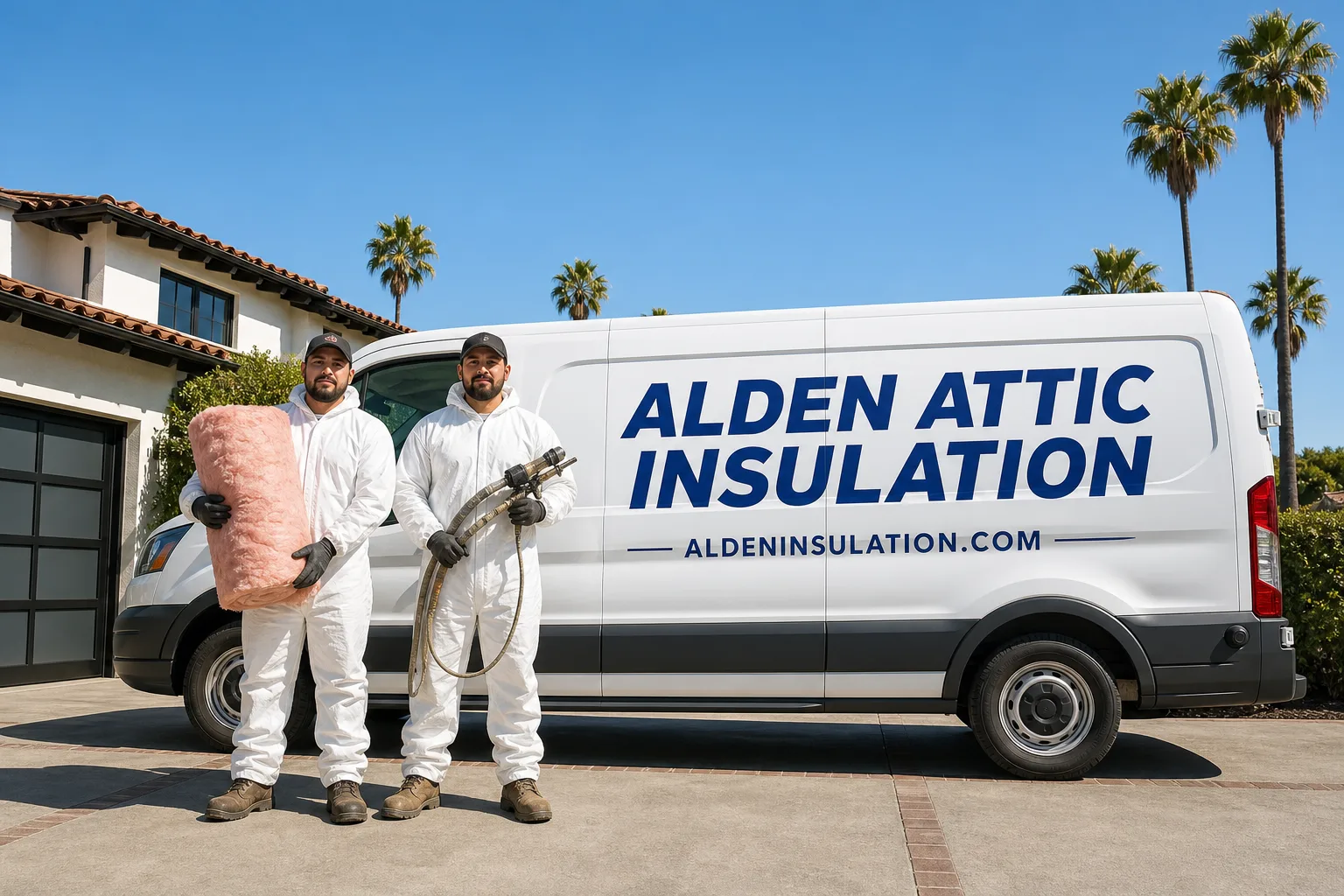
Fast, Reliable Blown In Insulation Across Crestline
Blown in insulation in Crestline usually costs between $1,400 and $3,800 for a typical cabin or A-frame attic, and our crews reach most Crestline homes the same day you call. That price covers the material, the machine work, and a written guarantee. We’re not a valley crew guessing at mountain conditions. We know what 4,600 feet of elevation does to an attic, and we know the narrow driveways off Highway 18. Call (254) 272-5876 and a live person answers, 24/7.
Crestline homes are different. They’re not tract houses. They’re cabins built in the 1960s and 1970s, A-frames with vaulted ceilings, and additions that were never insulated to any modern R-value. If your heating bill runs high all winter and the upstairs never holds heat, the problem is almost always the attic. Our Blown In Insulation team handles these jobs every week, and we’ve built our whole process around Crestline’s specific conditions.
Why Alden Attic Insulation Is Crestline’s Preferred Blown In Insulation Company
Crestline homeowners keep hiring us for a simple reason: we show up when we say we will, and the price we quote is the price on the invoice. Bryce Holloway, who leads our crews, runs every Crestline job under The Garrison Standard. That means a background-checked technician in uniform arrives inside the scheduled window, not a vague half-day range. The written price is in your hand before any tool comes off the truck.
We’re independently owned and operated, and we’ve been part of the Garrison Partners family since 2002. Every job carries the 365-Day Done Right Promise: if the insulation work fails within a year, we come back and fix it at no charge. Written guarantee, not a verbal promise. That’s the difference between us and a contractor who quotes low at the door and revises it after the work starts.
Homeowners off Lake Gregory Drive, in the Cedar Pines Park area, and along Waters Drive have all seen the same thing: our techs know how to work in tight mountain homes without knocking holes in drywall or blocking soffit vents. We answer the phone with a real person, day or night. When you’re looking at a $600 propane bill and a cold upstairs bedroom, you don’t want a voicemail.
Blown In Cellulose Insulation in Crestline
Blown in cellulose insulation in Crestline is a dense-pack or loose-fill application of recycled paper fiber treated with borate, blown into attic floors, knee walls, and vaulted rafter cavities with a long hose. It’s the go-to material for the steep, irregular A-frame attics common around Crestline because it conforms to odd-shaped rafter bays better than batts ever will. Homeowners near Highway 138 and in the Talmadge Road corridor typically choose cellulose when they need to add R-value without tearing out finished ceilings. A typical blown-in cellulose job in Crestline runs $1,400 to $3,200 depending on square footage and the current R-value.
Dense-Pack in Vaulted Rafter Bays
Crestline A-frames tend to have vaulted ceilings with bare fiberglass stuffed between rafters. That setup loses heat through every rafter bay. Dense-pack cellulose blown at the right pressure fills those cavities completely, hitting an even R-38 without compressing the old batts or blocking the soffit vents. It’s the single most effective fix we do on Lake Gregory Drive and the surrounding streets.
Fire-Rated Borate Treatment
Mountain fire risk is real in the San Bernardino National Forest. Cellulose carries a borate treatment that resists fire, insects, and mold. That matters in Crestline, where older cabins sit under dense tree canopy and winter moisture never fully leaves the attic until late spring. We install GreenFiber and other brands so you can look up the spec sheet yourself before saying yes.
Blown In Fiberglass Insulation in Crestline
Blown in fiberglass insulation in Crestline is loose-fill glass fiber blown into attic floors and hard-to-reach cavities, and it’s often the right call for low-clearance attics and flat-ceiling cabins that don’t need the dense-pack treatment. Fiberglass doesn’t absorb moisture the way cellulose can, which matters in Crestline’s freeze-thaw winter cycles. A typical blown-in fiberglass job here runs $1,300 to $3,800, with the higher end covering large attics and air-sealing work. We install Owens Corning, Johns Manville, and Knauf fiberglass, among others.
Freeze-Thaw Moisture Resistance
Here’s what happens in a Crestline winter: daytime sun melts snow on the roof deck, it refreezes at night, and the cycle pushes moisture into the attic. Fiberglass loose-fill doesn’t mat down or lose R-value when it gets damp the way cellulose can near the eaves. For cabins with known roof leaks or heavy snow load, we often recommend fiberglass in the floor and cellulose in the walls.
Quick Lift for Low-Clearance Attics
Some Crestline cabins have attic access barely big enough to fit a shoulder through. A standard batt crew from the valley will take one look and leave. We don’t. Blown-in fiberglass goes through a 2-inch hose, which means we can insulate a low-clearance attic or a tight carport-overhang cavity without cutting new access holes. The job gets done, not rescheduled.
Trusted Brands We Service in Crestline
We install and remove insulation using GreenFiber, Owens Corning, Johns Manville, and Knauf, among others. We don’t push one brand. We match the material to the job: GreenFiber cellulose for dense-pack rafter bays, Owens Corning or Johns Manville fiberglass for attic floors and low-clearance spaces. Because we stock these materials for Crestline runs, we can usually start work within a day of your call, not a week later. You can research every brand we use before we arrive. We’d rather you know exactly what’s going into your attic.
Common Blown In Insulation Problems We See in Crestline Homes
- Cellulose settling unevenly in steep A-frame rafter bays. The ridge line and knee walls end up under-insulated while the floor looks full. We re-blow at the correct pressure and density to hold an even R-value.
- Freeze-thaw moisture matting down fiberglass near the eaves. Older cabin roofs push moisture into the attic every winter, and the insulation near the drip edge turns into a damp, R-value-killing blanket. We identify the moisture source before we re-insulate.
- Valley crews refusing the job or doing it wrong. Narrow mountain driveways and low-clearance carports scare off crews that don’t know Crestline. We see clumped, dense-packed fiberglass blocking soffit vents from crews that used the wrong hose pressure. We fix that.
- Bare batts stuffed between rafters, leaving the ceiling hot in summer and cold in winter. This is the classic 1970s Crestline cabin problem. The fix is dense-pack cellulose or blown fiberglass over the top, not another layer of batts.
Pricing for Blown In Insulation in Crestline, CA
Most blown-in insulation jobs in Crestline land between $1,400 and $3,800. The range comes down to square footage, current R-value, and access: a flat one-story attic off Waters Drive costs less than a vaulted A-frame near Lake Gregory. Air sealing adds roughly $300 to $600. You get the written price before we start, and that’s the number on the invoice. No door-knock revision. No surprise line item at the end. Call (254) 272-5876 and we’ll give you an exact number for your specific attic, free.
We Also Serve Cities Near Crestline
We run crews up Highway 18 to Crestline and the surrounding mountain towns every week, so scheduling is fast. If you’re in Lake Arrowhead, Highland, San Bernardino, or Running Springs, the same written price and 365-day guarantee apply. One call covers the whole mountain.
Serving Crestline, CA - Our Local Coverage Area
We’re based in the Crestline area and know this community well. Use the map below to see our service coverage - if you’re nearby, we can almost certainly help.
FAQs About Blown In Insulation in Crestline
We reach most Crestline homes the same day you call, and same-day installation is available when the schedule allows. Our dispatch is coordinated from the Inland Empire office, and we keep materials stocked for Crestline runs specifically because so many calls are urgent: a failed rafter bay, a cold upstairs bedroom, a propane bill that won’t quit. Call (254) 272-5876 early in the morning for the best same-day window.
Yes, and that’s the most common job we do in Crestline. A vaulted A-frame with bare batts between rafters is exactly what dense-pack cellulose was designed for. We blow through a 2-inch hose into the rafter cavities, hitting an even R-38 without compressing the existing batts or tearing out finished ceilings. We’ve done this exact job on Lake Gregory Drive and throughout the Cedar Pines Park area.
Yes. At 4,600 feet, attic temperatures swing from below freezing in January to over 130°F on the deck in August. A properly insulated attic slows both directions of heat transfer: heat stays in during winter, heat stays out during summer. The result is lower propane and electric bills and a second floor that finally holds its temperature. Call (254) 272-5876 for an exact quote on your attic.
For steep A-frame rafter bays and vaulted ceilings, cellulose is usually the better choice because it dense-packs cleanly and fills irregular cavities. For flat attic floors, low-clearance spaces, and attics with known moisture issues, fiberglass holds its R-value better. We install both, and we’ll give you a straight recommendation based on your specific cabin. The call to (254) 272-5876 is free.
Yes. Blown-in insulation goes through a 2-inch hose, which means we can insulate attics and over-cavities that a batt crew can’t even access. Valley crews often turn these jobs down. We don’t, because we work them every week in Crestline. If you’ve been told your attic is too tight to insulate, call (254) 272-5876 before you believe it.
Written by Bryce Holloway, Owner at Alden Attic Insulation, serving Crestline and the surrounding mountain communities with The Garrison Standard.