
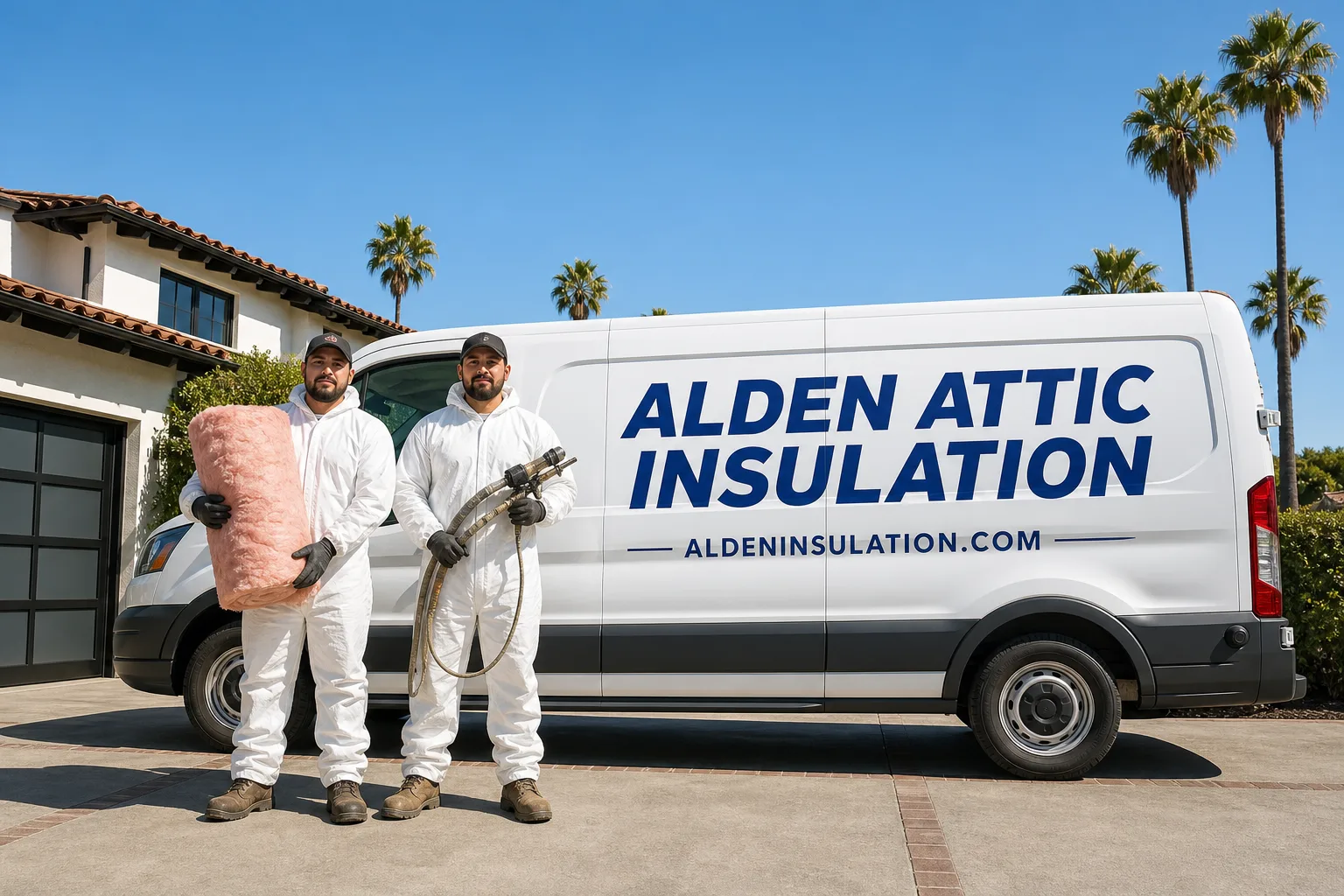
Fast, Reliable Blown In Insulation Across Solana Beach
Attic Insulation in Solana Beach costs $1,450 to $3,800 for most single-family homes, depending on square footage, current R-value, and how much air sealing the attic needs. Our crews run calls across Solana Beach every week, from the canyon-adjacent homes off Lomas Santa Fe Drive to the beachside streets west of Highway 101. Salt air and marine-layer humidity make Solana Beach attics behave differently than inland attics, and we price and prep accordingly. If you want a written quote before any work starts, call (254) 272-5876 and a live person answers, day or night.
Why Alden Attic Insulation Is Solana Beach’s Preferred Blown In Insulation Company
Solana Beach homeowners tend to ask harder questions than most. That’s fair. Coastal attics fail differently here, and plenty of contractors who work inland don’t account for what salt-laden onshore flow does to insulation and the hardware holding it together. Blown In Insulation in Solana Beach is our specialty, and we’ve seen firsthand what decades of marine exposure does to a 1970s split-level off South Cedros Avenue versus a newer build up near San Elijo Hills.
We are part of the Garrison Partners family, founded in 2002, and we operate under The Garrison Standard. That means a written price before the first tool comes off the truck, a background-checked and uniformed technician inside the scheduled window, and a written guarantee on every job for 365 days. If it fails in that year, we come back at no charge. No fine print, no renegotiation at the door.
Our work in Solana Beach includes attics with rusted fasteners, sagging insulation, and baffles that coastal canyon winds have knocked loose. We know which streets get the worst morning marine layer, and we know how that moisture compresses cellulose and fiberglass against roof decks. That local knowledge changes where we air seal first and how we stage the blow-in.
Blown In Cellulose Insulation in Solana Beach
Blown In Cellulose Insulation in Solana Beach runs $1,450 to $2,900 for a typical attic. We use GreenFiber cellulose on most of these jobs. It’s dense-packed and treated with borate, which gives it a real advantage in a coastal climate: it resists mold and doesn’t lose R-value as badly as fiberglass when the marine layer pushes humidity into the attic for weeks at a stretch. Cellulose also settles into the corners and odd cavities common in older Solana Beach homes where stud bays aren’t square and roof lines pitch sharply toward canyon edges.
Dense-pack for older coastal framing
Homes built before the mid-1980s in Solana Beach often have irregular joist spacing and shallow cavities. Dense-packed cellulose fills those voids better than batts or loose fiberglass, reducing the thermal bypasses that salt-air winds exploit. We install it at the right density so it stays put through the canyon gusts that blow off the San Dieguito River Valley.
Borate treatment and humidity
Coastal humidity means mold is a real concern in Solana Beach attics, especially where ventilation has corroded shut. Cellulose treated with borate provides an extra layer of resistance against the kind of fungal growth that marine-layer condensation promotes on the underside of roof sheathing.
Blown In Fiberglass Insulation in Solana Beach
Blown In Fiberglass Insulation in Solana Beach runs $1,550 to $3,800 depending on R-value target and attic accessibility. We typically install Owens Corning or Johns Manville blown fiberglass when a homeowner wants a non-cellulose option, or when an attic already has fiberglass and we’re topping it up. Loose-fill fiberglass is lighter than cellulose, which matters in some coastal attics where the roof structure has been stressed by years of salt corrosion on metal connectors.
Open-blow for wide, accessible attics
If your Solana Beach attic has a consistent joist bay layout and enough clearance, open-blow fiberglass goes in fast and provides even coverage at R-38 or R-49. We verify baffles at the eaves before blowing anything in. Coastal canyon winds have moved plenty of improperly baffled fiberglass away from the soffit vents, leaving a cold strip right where the attic meets the wall.
Topping up existing fiberglass
Some Solana Beach homes built in the 1990s and 2000s have R-19 fiberglass that has compacted under years of marine moisture. We can blow new material over the top after confirming the old material isn’t holding salt deposits or mold against the deck. The goal is consistent R-value, not just more product.
Trusted Brands We Service in Solana Beach
We install and service products from Owens Corning, Johns Manville, and GreenFiber, so you can look up exactly what’s going into your attic before we show up. For Solana Beach jobs we stock GreenFiber cellulose locally at our San Diego yard, which means most installs can be scheduled quickly without waiting on long order times. Whether you choose fiberglass or cellulose, you get the same written 365-day guarantee, and the same crew shows up in uniform with the equipment to get it done in one visit.
Common Blown In Insulation Problems We See in Solana Beach Homes
- Rusted attic fasteners and hatch hardware. Marine salt works on steel screws, hinge pins, and torsion springs faster than inland. We replace corroded fasteners with galvanized or stainless options before insulation goes in, because new insulation can’t fix a hatch that’s falling out of the ceiling.
- Wet, mold-stained insulation at the roof deck. When marine-layer humidity condenses on the underside of sheathing, it wicks into insulation and compresses it, dropping R-value. In some Solana Beach attics we’ve pulled insulation that tested damp from June through September without the homeowner ever seeing a visible leak.
- Wind-displaced fiberglass at the eaves. Canyon winds coming off the San Dieguito River channel push loose fiberglass away from soffit vents where baffles are missing or bent. This creates cold spots exactly where coastal pressure differences pull moisture in.
- Corroded ventilation screens letting salt air in. Older gable and ridge screens corrode and open up gaps, which invites wind-driven salt mist to mat down insulation and attack framing. We check ventilation pathways on every Solana Beach estimate before recommending how much material to add.
Pricing for Blown In Insulation in Solana Beach, CA
A typical blown-in insulation project in Solana Beach runs $1,450 to $3,800. Smaller attics with easy access and minimal air sealing land on the low end. Larger homes, steep roof pitches, rusted fastener replacement, and adding baffles push toward the top. If you’re topping up an existing attic that just needs another few inches of material, expect $1,450 to $2,200. Full removal of damaged insulation and a fresh blow-in runs higher. Every quote is written, line-itemed, and in your hand before any work starts. Call (254) 272-5876 for a free estimate and we’ll send a tech to your Solana Beach home, not a salesperson.
We Also Serve Cities Near Solana Beach
Our crews cover the coastal corridor and the inland valleys around Solana Beach, including Del Mar, Encinitas, San Marcos, and Vista. If you live just over the city line, you still get the same written pricing, the same 365-day guarantee, and the same Blown In Insulation team that knows how coastal salt and canyon winds affect attics in this stretch of North County.
Serving Solana Beach, CA - Our Local Coverage Area
We’re based in the Solana Beach area and know this community well. Use the map below to see our service coverage - if you’re nearby, we can almost certainly help.
FAQs About Blown In Insulation in Solana Beach
Yes. Because Solana Beach sits directly on the marine layer and salt-laden onshore flow, unheated attics and open crawlspaces absorb enough airborne salt to corrode steel fasteners and ventilation hardware years faster than inland San Diego, so every blown-in job here starts with checking and treating rusted or failing fasteners before a single bag is opened. We also verify that baffles are in place, because coastal canyon winds move loose insulation quickly.
Call (254) 272-5876 and we’ll inspect your attic’s hardware and ventilation before quoting insulation.
In most Solana Beach attics, dense-packed GreenFiber cellulose holds its R-value better under repeated marine-layer humidity, because the borate treatment resists mold and the denser pack doesn’t slump when air moisture gets high. Loose-fill fiberglass from Owens Corning or Johns Manville is still a good fit for large, well-ventilated attics, but it compresses faster when humidity wicks into it. We’ll tell you which one suits your attic based on what’s actually there, not what’s easier for us to carry up the ladder.
Ask for a written side-by-side material recommendation when you call (254) 272-5876.
Every two years is a sensible interval in Solana Beach because salt air corrodes ventilation hardware and fasteners on a faster cycle than inland. A quick inspection catches rusted screens and displaced baffles before moisture gets into the insulation. If you’re within two miles of the coast, annual checks are even better. We can add a reminder visit to your file after we install.
Yes, if the old material is dry and structurally sound. If we find salt-soaked, compressed, or mold-stained insulation, it needs to come out first. Blowing new material over wet or moldy insulation locks the problem in and voids the value of the upgrade. Our crews will show you what’s up there and give you a written removal price only if it’s actually needed.
We install GreenFiber cellulose and Owens Corning or Johns Manville blown fiberglass. Each of those brands publishes specs you can look up yourself. We don’t substitute off-brand material to shave cost, and your written quote names the product before we order it.
Call (254) 272-5876 for a free estimate. A live person answers, day or night.
Written by Bryce Holloway, Owner at Alden Attic Insulation, serving Solana Beach as part of the Garrison Partners family since 2002.