
Signs of Poor Attic Insulation
If your home feels drafty in winter, stuffy in summer, or your energy bills keep climbing for no obvious reason, poor attic insulation is almost certainly the cause. Attic insulation degrades, settles, gets damaged, or was simply never installed correctly in the first place – and when it fails, the effects show up all over the house.
The attic is where most of a home’s heat escapes in winter and where outdoor heat pushes in hardest during summer. When the insulation layer between your living space and the outside world is thin, damaged, or missing in spots, your HVAC system works harder to hold the temperature you set. You feel it in the rooms. You see it in the utility bill. And in older homes, you often feel it most in the rooms directly below the attic floor – fluctuating temperatures, cold ceilings in winter, hot bedrooms in summer. These aren’t minor comfort issues. They’re signals worth taking seriously.
Why It Happens
Settled or Compressed Insulation
Blown-in insulation – whether fiberglass, cellulose, or mineral wool – naturally compresses over years of temperature cycling and minor vibration from everyday life in the house. What started at the right depth slowly packs down to a fraction of its original thickness. You can often spot this yourself by pulling the attic hatch and shining a flashlight across the floor joists: if the insulation sits well below the top of the joists, it has settled and is no longer doing the job it was installed to do.
Moisture Damage and Mold
A roof leak, a poorly sealed exhaust vent, or high attic humidity can soak insulation and crush its ability to hold heat. Wet fiberglass loses almost all of its insulating value, and wet cellulose can harbor mold. Signs to look for: dark staining on insulation batts, a musty smell when you open the attic hatch, or visible discoloration on the underside of the roof deck. If you see any of these, stop using the attic space as storage and call before the problem spreads.
Air Leaks Around Penetrations
Insulation stops conductive heat transfer, but it can’t stop air moving through gaps around recessed lights, plumbing stacks, HVAC ducts, or attic hatches. These air leaks account for a surprisingly large share of energy loss in otherwise well-insulated attics. The tell is usually a room that stays drafty even after a new layer of insulation was added, or frost or condensation forming around attic penetrations in cold weather.
Old or Incorrect Installation
Homes built before current energy codes went into effect often have insulation that was adequate by the standards of the time but is simply too thin for today’s expectations and energy costs. In some cases, the original installation was never done properly – gaps near the eaves, missing coverage over exterior walls, or batts installed with the vapor barrier facing the wrong direction. The clearest indicator is an attic floor with visible gaps, or insulation that stops short of the exterior walls at the edges.
What to Do Right Now
- Take photos before you touch anything. Open the attic hatch, shine a flashlight, and photograph what you see: insulation depth relative to the joists, any staining, any obvious gaps. These images help a technician assess the scope of work before they arrive.
- Check your energy bills against the same months in prior years. A steady upward trend without a rate increase points directly at building performance – usually the attic.
- Feel the ceiling in the room directly below the attic on a cold morning or a hot afternoon. If the ceiling temperature feels noticeably different from the rest of the room, heat is moving through the attic floor with little resistance.
- Do not attempt to add insulation yourself around recessed lights or electrical penetrations. Covering these incorrectly is a fire risk. Note their location in your photos and let a trained technician handle those areas.
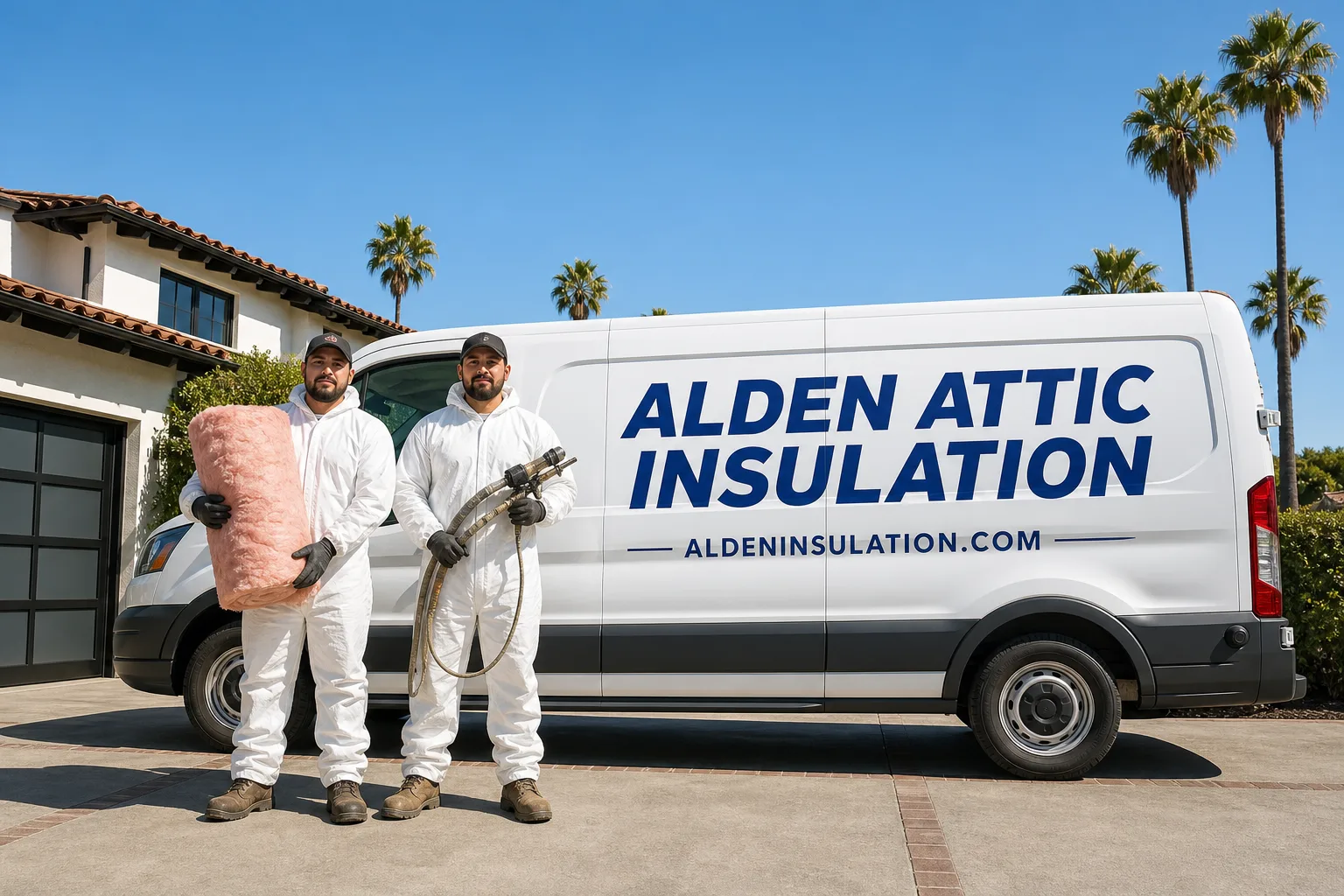
- If you smell mold or see visible moisture, do not disturb the insulation. Disturbing moldy material stirs spores into the air. Flag it in your photos and mention it when you call – removal and remediation are part of what your local Alden Attic Insulation team handles.
How We Fix It
When a technician arrives, the first thing they do is a full attic walkthrough – checking existing insulation depth, looking for moisture damage, mapping air-leak points around penetrations, and confirming that ventilation is working the way it should. That assessment drives everything that follows.
If the existing insulation is in decent condition but simply too thin, the solution is usually blown-in insulation – adding a layer of material from Owens Corning, Johns Manville, Knauf, or GreenFiber on top of what’s already there. If the existing material is damaged, contaminated, or simply wrong for the space, insulation removal comes first, then a full reinstall.
Most attic insulation jobs are completed in a single visit. Before any work starts, you get a written price – that’s not a formality, it’s how every Garrison job works. The number you approve is the number on the invoice. The finished work is covered by the 365-Day Done Right Promise: if something isn’t right within that year, we come back and fix it at no charge.
Frequently Asked Questions
Poor attic insulation is rarely an immediate safety emergency, but waiting makes it more expensive and more damaging over time. Moisture problems in particular can spread from the insulation into the roof structure and living space below. If you saw any signs of moisture, mold, or water staining during your look around the attic, don’t wait – call (254) 272-5876 and describe what you found. A live person answers around the clock.
If the existing insulation is dry, intact, and free of contamination, adding blown-in material on top is usually the right call. If it’s water-damaged, showing mold, or contains materials like old vermiculite or heavily degraded cellulose, removal comes first. Your local Alden Attic Insulation technician makes that call on-site during the initial walkthrough – it’s part of what the free written estimate covers.
We install insulation from Owens Corning, Johns Manville, Knauf, Rockwool, CertainTeed, Icynene, Demilec, and GreenFiber – brands you can look up on your own before saying yes to anything. The specific product recommended for your attic depends on the existing conditions, the attic geometry, and your goals for performance. That recommendation comes with the written estimate, so you know exactly what’s going in before work starts.
In most cases, yes – your local Alden Attic Insulation team works to schedule visits quickly, and our phones are answered by a live person 24/7, not a voicemail. Call (254) 272-5876 right now, describe what you’re seeing, and we’ll tell you when we can be there. Background-checked, uniformed technicians arrive inside the window we give you – not a vague half-day range.
Get It Fixed
Call (254) 272-5876 – a real person picks up, day or night. Or book online and your local Alden Attic Insulation team will confirm a time, arrive inside the window we give you, put the price in writing before any work starts, and stand behind every bit of it for a full year.
Written by Bryce Holloway, Owner at Alden Attic Insulation, part of the Garrison Partners family since 2002.
What Our Customers Say
"Pulled up the old insulation and bagged it neatly. No dust in the house."
- Doug F."Spray foam in the rim joist. Floors above are warmer."
- Iris L."Tidy crew. Vacuumed the hall and covered the hatch."
- Bea J.