
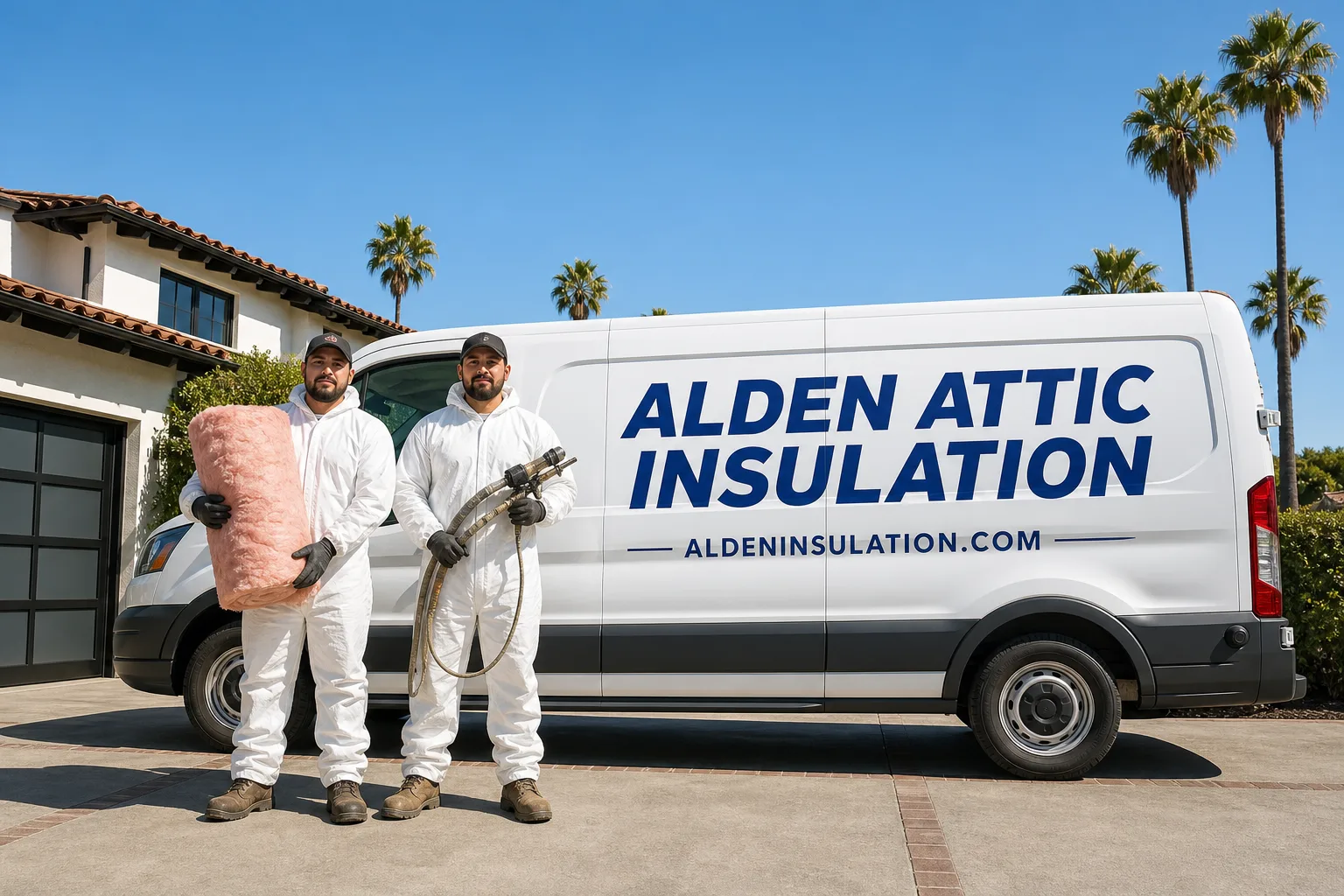
Fast, Reliable Blown In Insulation Across San Diego
Blown in insulation in San Diego most often costs between $1,400 and $3,200 for a typical 1,200-square-foot attic, depending on the current R-value, access, and whether air sealing gets done at the same time. We run crews in San Diego every weekday and answer the phones with a live person around the clock. If you’ve got an attic that swings 30 degrees between foggy mornings and afternoon sun, or one room that never holds temperature, call (254) 272-5876 and we’ll give you a straight answer about what’s going on and what it takes to fix it.
Why Alden Attic Insulation Is San Diego’s Preferred Blown In Insulation Company
Alden Attic Insulation is part of the Garrison Partners family, established 2002, and every job in San Diego runs under The Garrison Standard: a written price before any work begins, a written guarantee for 365 days, and a background-checked, uniformed technician who shows up inside the scheduled window. Homeowners in San Diego have dealt with enough no-shows and door-priced revisions. We don’t play that game.
On a fog-heavy week in Point Loma, we’re the crew that shows up at 8 a.m. because we said 8 a.m. We work with products from Owens Corning, Johns Manville, and Knauf, and we don’t hide what goes into your attic. You can look up every material we install. If something fails within the guarantee window, we return at no charge. That’s the 365-Day Done Right Promise, and it’s written on every job sheet.
Blown In Fiberglass Insulation in San Diego
Blown In Fiberglass Insulation in San Diego is the most common fix we install in attics across the city, from Mission Valley ranchers to Bankers Hill craftsman homes. Small glass fibers get pneumatically blown into the attic floor cavity, filling around framing, junction boxes, and odd angles that batts leave exposed. It settles less than loose-fill cellulose and resists moisture better, which matters in San Diego neighborhoods where marine air creeps in through unsealed top plates. Most whole-attic fiberglass blow-ins in San Diego run $1,600 to $3,000 for a 1,200-square-foot attic.
Coverage Over Existing Batts
In older San Diego homes with original fiberglass batts, we can often blow fiberglass directly over the top after checking for moisture damage and air leaks. This raises total R-value without demo work. The catch is that any compacted or wet material underneath has to come out first, or you’re just burying a problem.
R-38 to R-49 Attic Upgrades
Most San Diego attics we test sit at R-11 to R-19, which is low for a climate with cool coastal nights and warm inland afternoons. We typically recommend blowing to R-38 for homes near the coast and R-49 for inland ZIP codes closer to El Cajon and La Mesa where summer heat loads run higher. The written estimate states the target R-value in plain language, not code shorthand.
Loose Fill Insulation in San Diego
Loose Fill Insulation in San Diego gets specified when an attic has tight access, low clearance, or irregular joist spacing where batt installation would leave gaps. It’s pneumatically applied, fills cavities completely, and is often the fastest material to install in a single afternoon. Loose fill in San Diego runs $1,300 to $2,800 for typical attic coverage when installed as a standalone job. We install both fiberglass loose fill and treated cellulose depending on the attic’s ventilation and existing material.
Cellulose in Older Attics
San Diego has a lot of pre-1950 housing stock, and many of those attics still carry original lumber with irregular joist bays. Treated cellulose loose fill tucks into those odd spaces well and provides solid thermal resistance per inch. We flag any knob-and-tube wiring before blowing anything over it. That’s a fire-code and safety line we will not cross in this city.
Same-Day Replacement
If your attic lost coverage to a roof leak or rodent damage, loose fill can usually be topped-up or replaced within one scheduled visit. We pull out the bad material, air-seal what needs it, and blow fresh fill to the specified R-value. The written price you approve before we start is the number on the invoice, not a penny more.
Trusted Brands We Service in San Diego
Alden installs blown-in insulation from brands San Diego homeowners can research on their own before saying yes. We regularly work with Owens Corning, Johns Manville, and GreenFiber, and we’re familiar with the performance differences between them in coastal and inland San Diego attics. When a homeowner in Mission Hills asks why we selected Owens Corning PINK Fiberglas for their attic over GreenFiber cellulose, we have a real answer, not a sales line. Because we run San Diego jobs nearly every day, material shortages don’t strand a project for weeks. We stock what this market uses.
Common Blown In Insulation Problems We See in San Diego Homes
- Marine-layer moisture compaction. In San Diego’s beach-adjacent neighborhoods like Ocean Beach and Pacific Beach, cool fog pushes damp air through unsealed top plates and compacts loose fill into a dense mat that loses much of its R-value. We see it most in homes built before 1960.
- Blown fiberglass pushed out through unblocked vents. Coastal onshore breezes and ridge-vent airflow can gradually push loose fiberglass toward the eaves, leaving bare spots near the exterior walls. Homes in Coronado and Point Loma with older soffit venting are chronic offenders.
- Loose fill blown over knob-and-tube wiring. In North Park, South Park, and Golden Hill, original electrical systems still exist. Blowing insulation over uninsulated junction boxes and old wiring creates a fire hazard and violates code. We stop, remove what’s dangerous, and tell you exactly what a licensed electrician needs to address before we proceed.
- Settling from poor initial installation. A lot of San Diego attics were insulated by previous owners or handymen who blew material to no stated R-value and never raked it level. That leaves 3-inch valleys and 9-inch peaks. We level to the joist line and document the final depth in the write-up.
Pricing for Blown In Insulation in San Diego, CA
Here are the real numbers for the San Diego market. A standard 1,200-square-foot attic with accessible roof framing runs $1,400 to $3,200 for blown in insulation, start to finish. A smaller attic in a 900-square-foot Clairemont bungalow might come in around $1,100 to $1,600. Raising an attic from R-11 to R-49 in a larger North County home commonly falls in the $2,800 to $4,000 range if air sealing is included. What moves the price: total square footage, current R-value, attic access, whether old material has to be removed, and whether we’re air-sealing top plates and can lights before we blow. Call (254) 272-5876 for a written estimate. That estimate is free.
We Also Serve Cities Near San Diego
Our San Diego crews handle work throughout the metro. We run appointments in Coronado, National City, Chula Vista, and Lemon Grove, and we quote the same written-price policy in every one of those cities. If you’re in South Bay or the Bayshore, you’re still getting an Alden technician backed by the 365-Day Done Right Promise. You can read more about how we handle Blown In Insulation across all our locations, or see where else we cover around San Diego.
Serving San Diego, CA - Our Local Coverage Area
We’re based in the San Diego area and know this community well. Use the map below to see our service coverage - if you’re nearby, we can almost certainly help.
FAQs About Blown In Insulation in San Diego
The marine layer keeps attic dew points high enough that loose-fill insulation in older beach-adjacent San Diego homes often fails from moisture compaction rather than heat, unlike inland cities where heat is the primary enemy. In neighborhoods like Ocean Beach and Pacific Beach, fog-driven moisture moves through unsealed ceiling penetrations and settles into the fill, turning it dense and less effective. Sealing top plates, can lights, and any chase before blowing new material is the single most important step for coastal San Diego attics. If your attic insulation feels flat and matted near the ridge, call (254) 272-5876 and we’ll tell you if it’s compaction or something else.
Yes, in most San Diego homes you can blow new insulation directly over old fiberglass batts, as long as the existing material is dry, uncompacted, and free of rodent contamination or mold. We check that before adding anything. If the old batts are waterlogged from a roof leak or matted from decades of marine moisture, they have to come out first or they drag down the performance of everything you pile on top. Our techs will tell you which situation you have, in plain words, before quoting a number.
For most of San Diego, R-38 is the right target for coastal and central neighborhoods. Inland and east-county adjacent ZIP codes where summer heat runs harder should go to R-49. Homes up against the coast in Coronado or Sunset Cliffs can get solid performance at R-38 without overspending. The written estimate always states the R-value we’re blowing to, and we verify depth in multiple bays when the job’s done, not just at the access hatch.
Yes, we hold same-day slots for San Diego jobs during the week, and a live person answers the phone 24/7 to book them. If you call about an attic that lost insulation after a leak or pest damage, we’ll tell you whether we can get a crew there that day or the next morning. Calls are answered by a real human being, not a voicemail tree, and we don’t take a booking we can’t honor. For an immediate quote, call (254) 272-5876.
Before blowing fiberglass, we install baffles in every rafter bay that feeds a soffit vent and block off any openings where wind-driven material could escape. In San Diego’s coastal zones, onshore breezes push loose fill through unblocked vents and leave bare edges near exterior walls, so baffling is not optional on beach-adjacent homes. We also verify that ridge venting isn’t pulling insulation toward the peak. If your existing fill looks thinner at the eaves, that’s usually why.
Written by Bryce Holloway, Owner at Alden Attic Insulation, serving San Diego homeowners with written prices and the 365-Day Done Right Promise.