
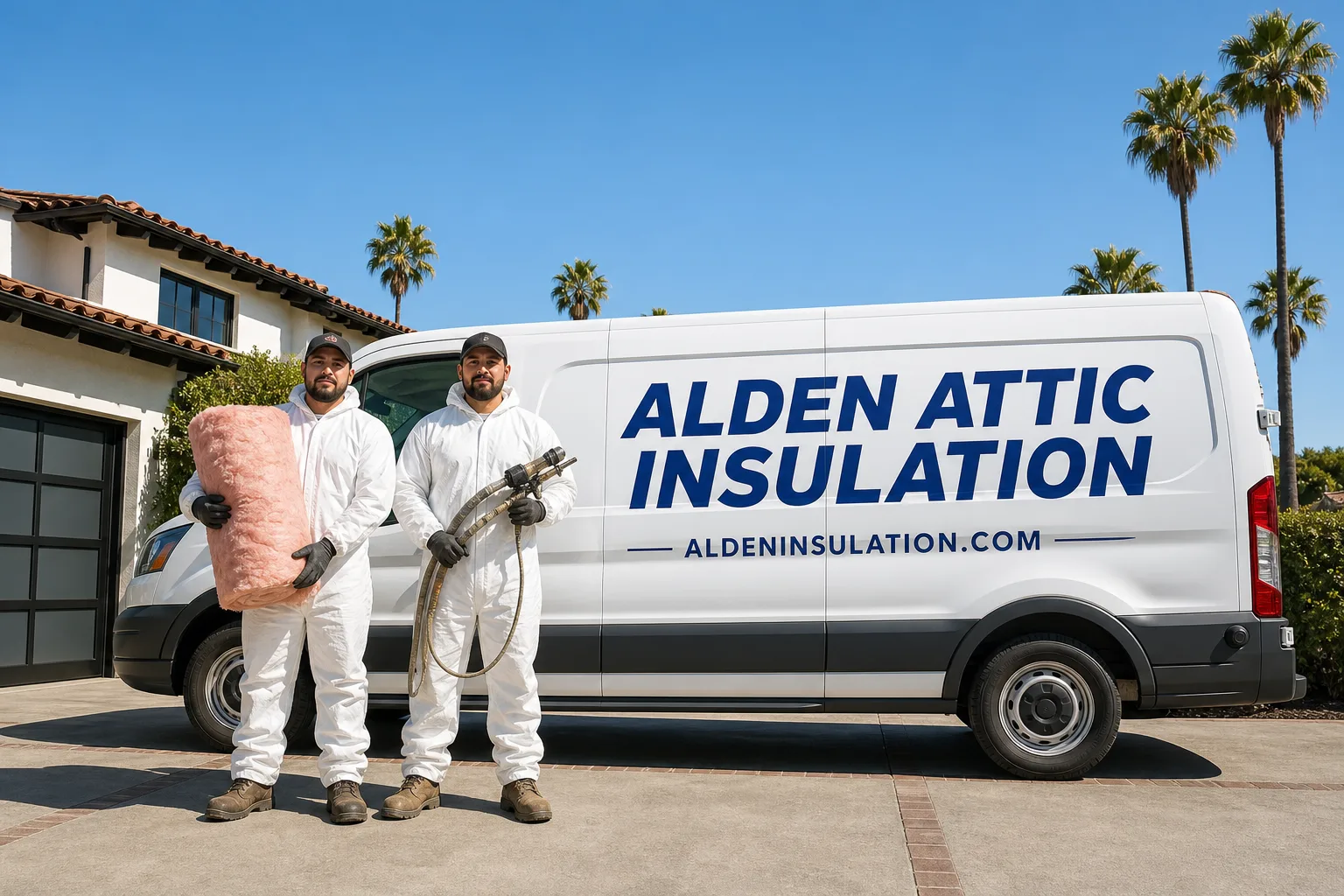
Trusted Blown In Insulation Nationwide
Blown in insulation is loose material installed into attic floors and wall cavities using a mechanical blower, and it remains the most efficient way to add R-value to an existing home without tearing out drywall. Alden Attic Insulation, led by Bryce Holloway since the operation joined the Garrison Partners family in 2002, installs blown in insulation for homeowners across the United States. Every job includes a written price before work begins and a written guarantee valid for 365 days. If you’re noticing uneven temperatures between rooms or utility bills that climb every winter, call (254) 272-5876 and we’ll walk you through what your attic actually needs.
What separates us from the contractor who quotes low and revises at the door is simple: the number we hand you in writing is the number on the invoice. No surprises, no vague half-day arrival windows, no crew you can’t identify. Our technicians are background-checked and arrive in uniform. We install materials from eight industry-respected brands, including Knauf, Rockwool, and CertainTeed, so you can research exactly what goes into your attic before you commit. The home page has more detail on our full service approach.
Cellulose Insulation
Cellulose Insulation is a dense, fiber-based loose fill made primarily from recycled paper treated with fire-retardant compounds, and it performs well in closed attic cavities where air movement is minimal. Homeowners typically choose cellulose when they want a high recycled content, strong sound-dampening, and better resistance to airflow than standard fiberglass batts. Alden Attic Insulation installs cellulose using calibrated blowers that keep coverage consistent from the eaves to the peak. Most blown in insulation projects run $1,800 to $4,800 depending on square footage and current R-value, and cellulose tends to land in the mid-range of that scale.
Dense-Pack Wall Installation
When we blow cellulose into existing wall cavities, we use the dense-pack method. The material is packed to roughly 3.5 pounds per cubic foot, which reduces settling over time and blocks convective air loops that rob conditioned air. This approach requires drilling small access holes and patching them after, a process our technicians handle cleanly. The result is a wall that holds its thermal performance for decades.
Fire-Retardant Treatment
All cellulose we install carries a Class 1 fire rating when applied per manufacturer specifications. The borate-based treatment also discourages pests from nesting in the material. That treatment is part of what makes properly installed cellulose a durable, code-compliant option for attic floors and wall cavities alike.
Blown In Attic Insulation
Blown In Attic Insulation is loose material applied directly over the attic floor to a uniform depth that achieves a target R-value, typically R-38 to R-60 in colder climates and R-30 to R-38 in warmer ones. Most homes we inspect have less than half the insulation they should, usually because builders met minimum code at the time of construction and never revisited it. Alden Attic Insulation evaluates your existing R-value, identifies air leaks, and brings the attic to the level that actually reduces energy use. Most attic insulation projects run $1,800 to $4,800 depending on square footage and the R-value you’re starting from.
Built-In Air Sealing Check
Before we blow a single bag of material, we inspect the attic floor for plumbing penetrations, electrical chaseways, and top plates that leak conditioned air into the attic. Sealing those first means the insulation you pay for actually does its job. Skiping air sealing under loose fill is one of the most common reasons homeowners see modest savings after an insulation upgrade.
Ventilation Assessment
An under-ventilated attic traps moisture and cooks roofing shingles from below. We check soffit and ridge vent flow before adding material, and we install baffles where needed so your roof deck keeps breathing. That step protects both your new insulation and the structure above it.
Blown In Cellulose Insulation
Blown In Cellulose Insulation combines the coverage speed of a blower with the density and air-blocking properties of treated recycled fiber, and it’s our most requested option for retrofit attics. It settles into odd framing cavities better than batts, fills around obstructions, and reduces sound transfer between floors. Alden Attic Insulation installs blown in cellulose with moisture meters on hand to confirm the material is dry before, during, and after application. Most blown in cellulose projects run $2,000 to $4,500 depending on square footage and the depth required to hit your target R-value.
R-Value Depth Charts
Cellulose delivers roughly R-3.5 per inch. That means hitting R-49 requires about 14 inches of settled material, and we mark depth gauges throughout the attic so our technicians hit the target everywhere, not just where it’s easiest to stand. You should never accept a job where the crew “eyeballs” the depth. We mark it and photograph it.
Settling Allowance
Cellulose settles slightly in the first year, and any competent installer blows extra to account for it. We build the settling allowance into the depth calculation from the start, so the R-value you were quoted is the R-value you have after the material stabilizes. That’s a written spec, not a verbal estimate.
Blown In Fiberglass Insulation
Blown In Fiberglass Insulation is loose glass-fiber material blown into attics and wall cavities, and it holds its loft well when installed correctly without the settling concerns some homeowners have with cellulose. It resists moisture and does not support mold growth, which makes it a strong option in humid climates. Alden Attic Insulation installs fiberglass loose fill at consistent density using calibrated equipment, and we always wear proper respirators and containment gear during the process. Most blown in fiberglass projects run $1,800 to $4,800 depending on square footage and current R-value.
Low-Dust Application
Modern blown fiberglass generates far less airborne dust than the material homeowners remember from decades past. We still run containment measures and clean the attic access area thoroughly when the job is done. The material we leave behind is uniform, dry, and free of the clumping that indicates a rushed or over-moistened install.
Open-Cell vs. Closed-Cell Context
While those terms technically describe spray foam, homeowners often hear them used when researching insulation and get confused. Blown fiberglass is a loose fill, not a foam, and it fills irregular cavities mechanically rather than expanding chemically. If your home needs air sealing at the attic floor, that gets addressed before the fiberglass goes down.
Loose Fill Insulation
Loose Fill Insulation is the broader category that includes both cellulose and fiberglass materials installed by blowing rather than rolling, and it’s the most practical retrofit option for attics with irregular joist spacing or hard-to-reach corners. It conforms to whatever framing exists, covers plumbing and electrical runs, and reaches depths that would be impractical with batts. Alden Attic Insulation installs loose fill as a complete system: air sealing first, then material to spec. Most loose fill insulation projects run $1,800 to $4,800 depending on square footage and the R-value you’re targeting.
Coverage Over Existing Insulation
In many homes, the fastest path to better performance is blowing additional loose fill directly over old, under-performing insulation. We inspect the existing material first for moisture damage or pest activity, because covering problems does not fix them. If the old material is sound, we add on top and bring the combined depth to your target R-value.
Eave and Baffle Protection
Loose fill can block soffit vents if not installed with care. We place baffles at the eaves before blowing so airflow continues from the soffit to the ridge. A blocked eave turns a ventilated attic into a sealed hotbox, and that shortens the life of your shingles and your insulation.
Blown In Insulation Contractors
Blown In Insulation Contractors range from single-truck operations to national franchises, and the difference between a bad job and a good one is almost always measurement and accountability. Alden Attic Insulation is independently owned and operated, held to The Garrison Standard, which means written prices, written guarantees, and background-checked crews that show up inside the window promised. We don’t subcontract the work to anyone else. The technicians who arrive are our technicians, in uniform and trained on our process. Most blown in insulation projects run $1,800 to $4,800, and the written price you approve is the final invoice.
The Garrison Code in Practice
The Garrison Code is not a marketing phrase here. It’s the operating rule that says every job gets a written price before work begins, every job gets a written 365-day guarantee, and every crew shows up inside a specific arrival window. If the work fails within that year, we return at no charge. That’s the standard, and it applies to every job at every location.
How to Vet Any Insulation Contractor
Ask three questions before you hire anyone: Will you put the price in writing before starting? What exactly does your guarantee cover and for how long? Are the technicians who show up your employees or subcontractors? If a contractor hesitates on any of those, keep looking. We answer all three before you ever sign anything, and we’ll put it in writing.
Brands We Service
We install blown in insulation from Knauf, a global manufacturer known for consistent fiberglass loose fill that holds its R-value across varied attic conditions. We see Knauf material perform well in retrofit attics where uniform coverage matters more than anything, and we stock their loose fill products for same-week scheduling.
We also work with Rockwool and CertainTeed. Rockwool’s stone wool insulation brings strong fire resistance and sound control, which makes it a frequent choice for bonus rooms and shared walls. CertainTeed fiberglass loose fill offers reliable performance and broad availability, and many homeowners recognize the brand from their building materials experience. Whether you have a brand preference or you want our recommendation based on your attic’s condition, we can help.
Signs You Need a Pro Right Now
- Uneven room temperatures. If one bedroom runs ten degrees colder than the hallway in winter, your attic insulation is almost certainly inadequate or unevenly distributed. That temperature gap means your HVAC system is working harder than it should, and the fix is rarely a bigger furnace.
- Ice dams forming at the roofline. Warm air escaping through a poorly insulated attic melts snow on the roof, which refreezes at the eaves and backs water under the shingles. Ice dams damage roofs, gutters, and interior ceilings, and proper attic insulation with air sealing stops the heat loss that causes them.
- Utility bills rising without explanation. If your heating and cooling costs climb year over year while your usage habits stay the same, your attic is likely leaking conditioned air. Blown in insulation plus air sealing is one of the few home improvements that pays for itself through direct utility savings.
- Drafty rooms near the ceiling. Feel cold air moving near can lights or ceiling fixtures and you’re feeling stack effect, the chimney-like airflow that pulls conditioned air up and out through the attic. Sealing those penetrations and adding loose fill breaks that cycle.
- Pest activity in the attic. Squirrels, mice, and raccoons tear up insulation for nesting material and leave behind waste that degrades indoor air quality. If you hear movement overhead, get the insulation evaluated before the damage spreads further.
Our Process, Step by Step
- 1
Attic inspection and R-value measurement. We document your current insulation depth, measure with a ruler at multiple points across the attic floor, and identify air leaks at every penetration. We photograph everything so you can see exactly what we see, then we’ll give you a written price based on the measured conditions, not a guess.
- 2
Air sealing. Before any insulation goes in, we seal plumbing vents, electrical chaseways, top plates, and any other gaps where conditioned air escapes. This is the step most contractors skip because it’s tedious and hard to see. It’s also the step that determines whether your new insulation actually performs.
- 3
Ventilation verification. We confirm soffit vents are clear and ridge or roof vents are functioning, then install baffles where needed. Proper airflow protects both your insulation and your roof deck, and we’ll tell you if your current ventilation is inadequate before we bury it under new material.
- 4
Blown in insulation application. Using calibrated equipment, we blow material to the target depth marked throughout the attic. We check density as we go and photograph the finished coverage so there’s a record of exactly what was installed.
- 5
Final inspection and written guarantee. Bryce Holloway reviews every job against The Garrison Standard before we call it complete. You get a written guarantee valid for 365 days. If the work fails within that year, we come back at no charge. That’s the 365-Day Done Right Promise, and it’s non-negotiable.
How Much Does Blown In Insulation Cost?
Most blown in insulation projects run $1,800 to $4,800 depending on square footage, current R-value, and the type of material you choose. A smaller attic of 800 square feet might land around $2,000 to $2,800 to bring R-value from R-19 to R-38. A larger attic of 1,500 square feet needing air sealing, baffle installation, and a jump to R-49 could push toward $4,000 to $4,800. Every Alden Attic Insulation quote is a written price based on your actual attic measurements, not a phone estimate that changes when the crew arrives.
What affects the price most is depth. Going from R-19 to R-49 requires nearly twice the material of going to R-38, and material cost drives the majority of the total. Air sealing work adds cost but typically pays back faster than the insulation itself because it stops the most concentrated heat loss. To avoid overpaying, get the R-value target in writing, ask what settling allowance is included if you choose cellulose, and confirm that the quote includes cleanup. Our free estimate includes the full inspection, the written price, and a breakdown of what’s included so you can compare honestly.
Where We Work
Alden Attic Insulation serves homeowners across the United States through local crews operating under The Garrison Standard. Every location is independently owned and operated, and every technician is background-checked, uniformed, and held to the same written-price, written-guarantee discipline that has defined the Garrison Partners family since 2002. Wherever your home is, the process is the same: inspect, seal, insulate to spec, and stand behind the work in writing for a full year.
Frequently Asked Questions About Blown In Insulation
Blown in insulation is loose material, either fiberglass or cellulose, installed into attics and wall cavities using a mechanical blower rather than rolled or placed by hand. It fills irregular spaces more completely than batt insulation and can be installed over existing material to increase R-value. Alden Attic Insulation installs blown in insulation as a system that includes air sealing and ventilation verification, because material alone does not solve heat loss.
A typical attic installation takes four to eight hours from setup to cleanup, depending on square footage and whether air sealing and baffle installation are included. Most single-family attic jobs are completed in one day. We schedule a specific arrival window, not a half-day range, and the crew finishes cleanup before they leave. Call (254) 272-5876 for an exact timeline based on your attic’s measurements.
Most blown in insulation projects run $1,800 to $4,800 depending on square footage, current R-value, and material type. Smaller attics fall toward the lower end, while larger spaces needing deep coverage and air sealing land at the upper end. Every quote from Alden Attic Insulation is a written price based on a measured inspection, and that number does not change at the door. Estimates are free.
Yes, we install and service blown in insulation from Knauf, Rockwool, and CertainTeed, along with five other industry-respected brands. We can scope a job around a brand you already prefer or recommend one based on your attic’s condition and your performance goals. You’ll know exactly what material is going in before the work starts.
We answer calls with a live person 24/7, and for urgent situations like storm damage that has exposed insulation or caused attic leaks, we’ll schedule the earliest available slot. Genuine emergencies move to the front of the line. Call (254) 272-5876 and you’ll speak to a real human being, not a voicemail.
Every job includes the 365-Day Done Right Promise, a written guarantee valid for a full year. If the insulation work fails within that period, whether it’s settling beyond spec, poor coverage, or a related issue, we return at no charge-part of our commitment that goes beyond any Blown In Insulation Troubleshooting guide. The guarantee is in writing before work begins, not after. That’s The Garrison Standard, and it applies to every job at every location.
Clear the attic access area inside your home so our technicians have a clean path and a place to set up the blower. Remove any items you store near the attic entrance, and if you have a finished attic with stored belongings, move valuables away from the work area. We handle floor protection and full cleanup. You don’t need to be home for the entire job, but we’ll walk you through the finished work before we leave.
Schedule Your Blown In Insulation Service Today
Written price. Written guarantee. A crew that shows up inside the window and stands behind the work for 365 days. That’s what you get when you call Alden Attic Insulation. Reach us at (254) 272-5876 any hour, day or night, for a free, no-obligation estimate. A live person answers, and you’ll have the number in writing before a single tool comes off the truck.
Written by Bryce Holloway, Owner at Alden Attic Insulation, serving homeowners nationwide since 2002.